
Cart
No products in the cart.
 English
 Български (Bulgarian)
 Hrvatski (Croatian)
 Čeština (Czech)
 Dansk (Danish)
 Nederlands (Dutch)
 Suomi (Finnish)
 Français (French)
 Deutsch (German)
 Ελληνικά (Greek)
 Magyar (Hungarian)
 Italiano (Italian)
 Norsk bokmål (Norwegian Bokmål)
 Polski (Polish)
 Português (Portuguese (Portugal))
 Română (Romanian)
 Русский (Russian)
 Español (Spanish)
 Svenska (Swedish)
 Türkçe (Turkish)
Showing all 5 resultsSorted by popularity
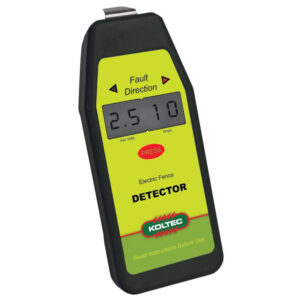
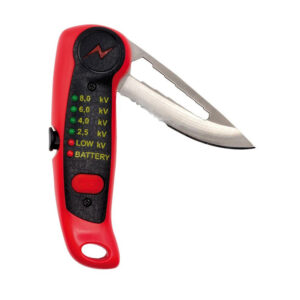
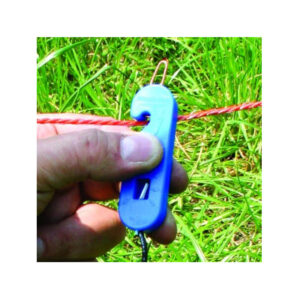
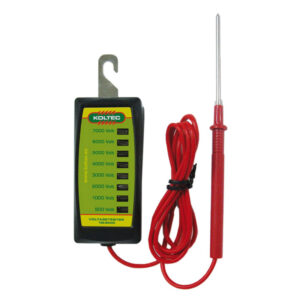
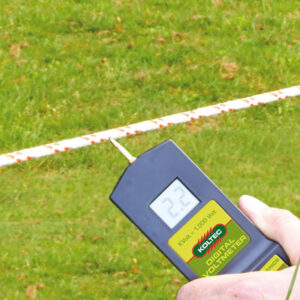
Measure and test equipment refers to tools designed to assess electric fencing systems—such as voltage testers, digital voltmeters, multi-stage testers, detectors, and pocket testers. These instruments enable industrial professionals, farmers, and field technicians to verify fence performance, detect faults, and ensure electrical safety. They support functions such as voltage measurement, current detection, and fence diagnostics.
This category includes items like detectors for electric fence systems, which can monitor both voltage and current and often display the direction of electric current. Digital voltmeters are offered that measure fence voltage up to specified kilovolt levels, typically with earth-referenced measurement. There are simple voltage testers that use neon lamps to indicate electrical presence. Also featured are multi-stage testers for electric fences and pocket-sized testers useful for boundary maintenance tasks.
These tools are used in keeping electric perimeter fences operational by measuring live voltages and detecting current leakage or discontinuities. In agriculture and livestock management, they ensure animal containment and prevent escapes by verifying fence energy output. In electrical maintenance, technicians use them to test fence integrity after storms or wear, and confirm compliance with safety regimes. Typical use cases include fence fault detection and high-voltage insulation testing.
Measure and test equipment for electric fencing are instruments whose primary function is to provide accurate readings of electrical parameters—voltage (in kilovolts), current (in amperes), and sometimes direction of current flow. They may include features such as digital displays, neon indicators, or multiple stage indicators. Technical characteristics to consider are measurement range (for example up to 9.9 kV for some digital voltmeters), resolution, and whether earth-referenced measurements are supported.
Common variations include full-function detectors that show voltage and current along with direction, simpler testers that signal voltage with lamps, multi-stage devices to indicate graduated electrical strength, and portable pocket testers good for field use. Equipment must meet electrical safety standards, such as CE marking, insulation requirements, and resistance to environmental factors like moisture or impact. Key compatibility and selection factors include expected fence operating voltage, presence of grounding, ambient environment (weather exposure, risk of physical damage), ease of readout on digital versus analog displays, and compliance with local electrical safety regulations.
MEMIDOS is a global B2B platform for industrial products, connecting purchasers directly with verified manufacturers and suppliers without intermediaries. Buyers benefit from a procurement process where payment is held in secure escrow by MEMIDOS until the order conditions—such as proper shipment—are fulfilled, protecting both payment reliability and order security. Suppliers listed on the platform are verified for industrial quality, which supports access to dependable equipment. Overall, MEMIDOS helps simplify international sourcing, improve transparency, and make procurement more efficient for technical and industrial buyers.
English
Български (Bulgarian)
Hrvatski (Croatian)
Čeština (Czech)
Dansk (Danish)
Nederlands (Dutch)
Suomi (Finnish)
Français (French)
Deutsch (German)
Ελληνικά (Greek)
Magyar (Hungarian)
Italiano (Italian)
Norsk bokmål (Norwegian Bokmål)
Polski (Polish)
Português (Portuguese (Portugal))
Română (Romanian)
Русский (Russian)
Español (Spanish)
Svenska (Swedish)
Türkçe (Turkish)