
Cart
No products in the cart.
 English
 Български (Bulgarian)
 Hrvatski (Croatian)
 Čeština (Czech)
 Dansk (Danish)
 Nederlands (Dutch)
 Suomi (Finnish)
 Français (French)
 Deutsch (German)
 Ελληνικά (Greek)
 Magyar (Hungarian)
 Italiano (Italian)
 Norsk bokmål (Norwegian Bokmål)
 Polski (Polish)
 Português (Portuguese (Portugal))
 Română (Romanian)
 Русский (Russian)
 Español (Spanish)
 Svenska (Swedish)
 Türkçe (Turkish)
Showing all 4 resultsSorted by popularity
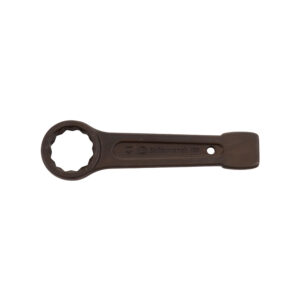
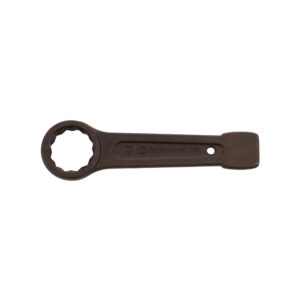
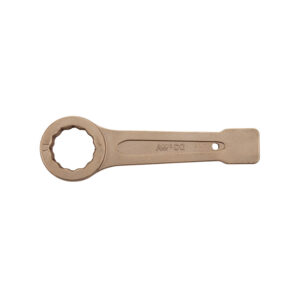
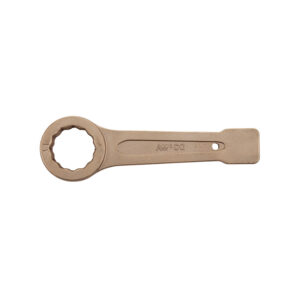
A safety wrench is a specialised hand tool designed for striking operations on nuts and bolts where conventional wrenches may slip or pose spark-hazard risks. In industrial procurement and maintenance, safety wrenches serve to increase precision, force transmission and operator protection in hazardous atmospheres, confined spaces, or explosive risk zones.
This category offers striking box wrenches / ring wrenches built for safety-critical environments. Variants are available in inch or metric sizes. Two key material options are offered: steel, and beryllium copper (BeCu). The inch-sized versions in BeCu are designed with non-sparking and non-magnetic properties. Steel versions are more conventional but carry heavier impact tolerances. Each variation includes multiple size options spanning common fastener dimensions. The featured tool design incorporates features such as safety locking and spring washers for stability during impact work.
Safety wrenches are used where fasteners require repeated impact force, such as during assembly, maintenance or disassembly of machinery. They are especially relevant in industries with explosion risk or magnetic sensitivity—oil & gas, petrochemical, mining, and laboratory environments. Common attributes include non-sparking construction and designs focused on safe impact use. In maintenance of heavy equipment, these tools allow safe hammer-on force without slippage. In ATEX or hazardous gas zones, BeCu (non-sparking, non-magnetic) versions help prevent ignition sources.
Safety wrenches in this category are striking box wrenches combined with ring wrench ends. The primary function is to grip fasteners securely and allow hammer impact to apply additional torque. Key technical characteristics include material composition (steel vs BeCu), size options (both metric and imperial/inch), and spring washer systems integrated into the wrench head to maintain grip during impact. BeCu models offer non-sparking and non-magnetic behaviour, with tested performance in accordance with EN 80079-38:2016 for impact energy up to 102 J, making them suitable for ATEX zone applications. Steel options deliver higher tensile strength but do not provide non-sparking or non-magnetic properties. Considerations for selection include the environment (explosive atmospheres, magnetic fields, corrosive conditions), compatibility with fastener dimensions, expected load and impact duty, and whether adherence to CE marking or ATEX directive is required. Variations differ by material, dimension system (inch vs metric), and safety certifications.
MEMIDOS is a global B2B platform connecting industrial buyers directly with manufacturers and verified suppliers. Without intermediaries, procurement is streamlined and pricing reflects producer costs. Buyers are protected through escrow-based payment handling, where funds are held until agreed order conditions, such as shipment, are met. The platform ensures access to high-quality safety wrenches from certified sources. For procurement professionals managing international supply chains, MEMIDOS provides greater transparency and reliability in sourcing specialised industrial tools.
English
Български (Bulgarian)
Hrvatski (Croatian)
Čeština (Czech)
Dansk (Danish)
Nederlands (Dutch)
Suomi (Finnish)
Français (French)
Deutsch (German)
Ελληνικά (Greek)
Magyar (Hungarian)
Italiano (Italian)
Norsk bokmål (Norwegian Bokmål)
Polski (Polish)
Português (Portuguese (Portugal))
Română (Romanian)
Русский (Russian)
Español (Spanish)
Svenska (Swedish)
Türkçe (Turkish)