
Cart
No products in the cart.
 English
 Български (Bulgarian)
 Hrvatski (Croatian)
 Čeština (Czech)
 Dansk (Danish)
 Nederlands (Dutch)
 Suomi (Finnish)
 Français (French)
 Deutsch (German)
 Ελληνικά (Greek)
 Magyar (Hungarian)
 Italiano (Italian)
 Norsk bokmål (Norwegian Bokmål)
 Polski (Polish)
 Português (Portuguese (Portugal))
 Română (Romanian)
 Русский (Russian)
 Español (Spanish)
 Svenska (Swedish)
 Türkçe (Turkish)
Showing all 3 resultsSorted by popularity
Ventilator extraction units are industrial machines designed to remove smoke, gases, vapours, and dust from work areas using forced air extraction or suction systems. In industrial settings such as manufacturing plants, confined spaces, or workshops, these units help maintain air quality, meet ventilation standards, and reduce exposure to harmful airborne particles. Key terms include high‐pressure ventilator extraction, mobile suction extraction, and air flow rate measured in cubic metres per hour.
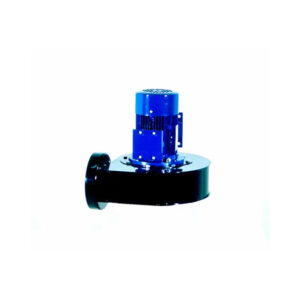
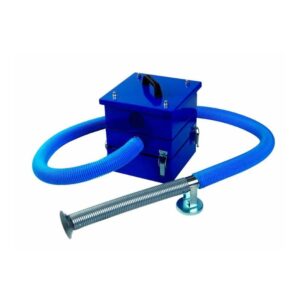
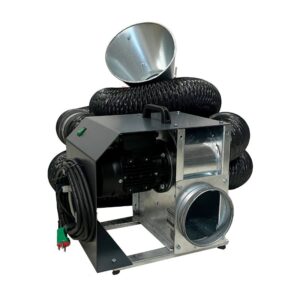
This category includes several distinct product types. One is a ventilator extraction unit by Plymoth: a three‐phase blower rated at 370 watts, capable of handling up to 1,300 m³/h and suitable for integrating with extraction arms for smoke, gas, and dust extraction. Another type is the Flowconcept high‐pressure portable ventilator extraction unit, equipped with its own hose and suction funnel, designed specifically for smoke and gas extraction, featuring a coarse separator, separate cooled motor, and CE compliance. Additionally, there is a mobile suction extractor unit from Flowconcept: a portable, low‐pressure fan intended to remove harmful gases and vapours in locations such as containers, rooms, or sewers, fitted with hose connections and designed for low noise and power consumption.
Ventilator extraction units are used across heavy industry, fabrication, maintenance, and confined space operations. For example, in welding shops, the units extract smoke and welding fumes; in paint and chemical handling facilities, they pull out hazardous vapours; in enclosed enclosures and containers, the mobile suction units remove contaminated air. Secondary terms relevant in these contexts include air quality control, occupational safety, and ventilation systems.
Ventilator extraction units are engineered around several technical characteristics. They generally consist of a motor-driven fan or blower, intake and outlet connections for hoses or ducts, and often a separator or extract arm interface. Material composition is typically metal (e.g. steel housing) able to withstand heat, particles, or chemical exposure. Performance parameters include air flow rate (e.g. 1,300 m³/h), power consumption (e.g. 370 W or 750 W), operating voltage (often 230 V; single or three-phase), hose diameters (for example Ø 80 mm, Ø 160–165 mm, or Ø 46 mm nozzle), and maximum vacuum or pressure ratings (measured in mm vp or Pa). Variations include high-pressure portable units for targeted extraction of small volumes at high vacuum, and low-pressure mobile suction units for larger volumes at lower resistance. Key standards may include CE marking and compliance with noise regulations or motor safety classes. Typical environmental conditions include moderate industrial temperatures and the presence of particulates, gases, or vapours. Selection considerations involve matching airflow and vacuum capacity to the space or containment, hose diameter compatibility, power availability, motor cooling needs, duty cycle under continuous operation, and ensuring compliance with regulatory standards for air emissions and worker exposure.
MEMIDOS is a global B2B platform that connects industrial buyers with verified manufacturers and suppliers directly—eliminating middlemen to promote operational efficiency and cost transparency. Secure escrow payment handling ensures that funds are held until order conditions such as proper shipment are fulfilled, offering protection to both purchasers and suppliers. Industrial buyers gain access to a curated range of high-quality ventilator extraction units from certified sources, simplifying international procurement and enhancing sourcing transparency across borders.
English
Български (Bulgarian)
Hrvatski (Croatian)
Čeština (Czech)
Dansk (Danish)
Nederlands (Dutch)
Suomi (Finnish)
Français (French)
Deutsch (German)
Ελληνικά (Greek)
Magyar (Hungarian)
Italiano (Italian)
Norsk bokmål (Norwegian Bokmål)
Polski (Polish)
Português (Portuguese (Portugal))
Română (Romanian)
Русский (Russian)
Español (Spanish)
Svenska (Swedish)
Türkçe (Turkish)