
Cart
No products in the cart.
 English
 Български (Bulgarian)
 Hrvatski (Croatian)
 Čeština (Czech)
 Dansk (Danish)
 Nederlands (Dutch)
 Suomi (Finnish)
 Français (French)
 Deutsch (German)
 Ελληνικά (Greek)
 Magyar (Hungarian)
 Italiano (Italian)
 Norsk bokmål (Norwegian Bokmål)
 Polski (Polish)
 Português (Portuguese (Portugal))
 Română (Romanian)
 Русский (Russian)
 Español (Spanish)
 Svenska (Swedish)
 Türkçe (Turkish)
Showing all 9 resultsSorted by popularity
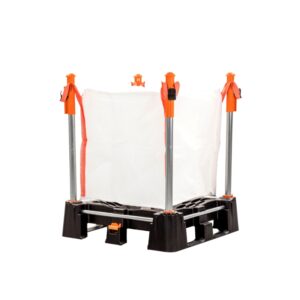
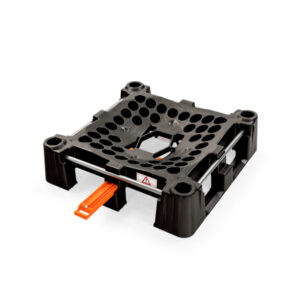
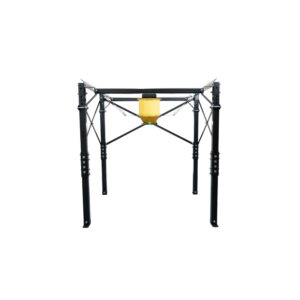
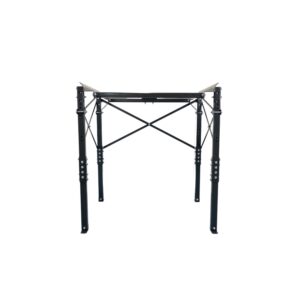
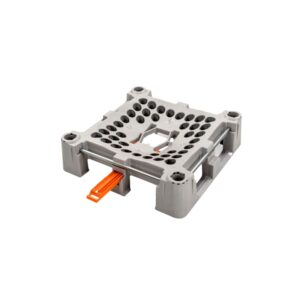
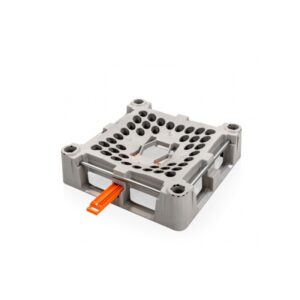
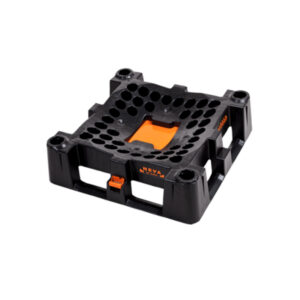
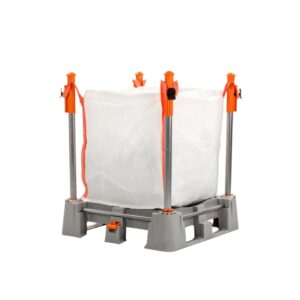
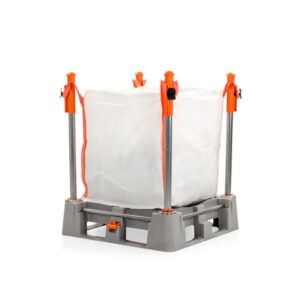
A big bag pallet system consists of pallet-based platforms and discharge frames engineered for big bag handling and storage. Key components include Neva pallets—standard and food-approved versions—and Modulo Neva discharge stations, with options like dosing valves. These systems are essential for industrial processes that demand hygienic discharge, safe containment, and standardized dimensions for bulk-material handling.
This category features Neva pallets designed for big bags, including both standard and food-approved versions. Some are engineered for stackers with forklift accessibility. Also offered are Modulo Neva discharge frames, available in basic form or equipped with a dosing valve to control flow. All components conform to a pallet bottom area of 120 × 120 cm in many instances, ensuring compatibility within the system.
Big bag pallet systems are used in food processing, chemical production, powder handling, and any environment where hygienic bulk discharge is required. They support bulk material discharge and are compatible with food-safe pallet systems used in hygiene-sensitive environments. The food-approved pallets are suited for sectors regulated by hygiene standards or involving ingestion risk. Discharge frames with dosing valves enable precise flow control, suitable for dosing or batching operations in manufacturing or batching plants.
At the core, a big bag pallet system provides a structured base (pallet) for big bags, paired with a discharge station for controlled emptying. Technical characteristics include pallet materials like polypropylene (virgin PP) and stainless steel for food-approved variants. Load capacities range up to about 1,500 kg for full Neva pallets and about 1,000 kg when adapted for stackers. Operating temperature ranges are specified (e.g. −10 °C to +40 °C) on many pallets. Discharge frames are constructed from powder-coated steel and equipped either with a simple outlet or with an integrated dosing valve to manage flow. Products are typically CE marked and certified by bodies such as IBE-BVI or Sebert where relevant.
Selection considerations include the presence or absence of food safety requirements (e.g. hygiene rating, material purity), compatibility with lifting equipment (forklifts, stackers, pallet trucks) and pallet dimensions (notably 120 × 120 cm). Variations in the system arise particularly in outlet type (simple vs dosing), stackability, material construction, and load rating. Typical industrial applications include internal storage, transportation, and staged discharge in process lines.
MEMIDOS is a global B2B platform that connects industrial buyers with verified manufacturers and suppliers directly, eliminating intermediaries. Purchasers benefit from a procurement process where funds are held in escrow until agreed order conditions—such as shipment—are met, offering security and confirming supplier reliability. Through MEMIDOS, buyers access high-quality big bag pallet system components—including hygienic pallets and discharge frames—while simplifying international sourcing and improving transparency in specification, standards compliance, and compatibility.
English
Български (Bulgarian)
Hrvatski (Croatian)
Čeština (Czech)
Dansk (Danish)
Nederlands (Dutch)
Suomi (Finnish)
Français (French)
Deutsch (German)
Ελληνικά (Greek)
Magyar (Hungarian)
Italiano (Italian)
Norsk bokmål (Norwegian Bokmål)
Polski (Polish)
Português (Portuguese (Portugal))
Română (Romanian)
Русский (Russian)
Español (Spanish)
Svenska (Swedish)
Türkçe (Turkish)