
Cart
No products in the cart.
 English
 Български (Bulgarian)
 Hrvatski (Croatian)
 Čeština (Czech)
 Dansk (Danish)
 Nederlands (Dutch)
 Suomi (Finnish)
 Français (French)
 Deutsch (German)
 Ελληνικά (Greek)
 Magyar (Hungarian)
 Italiano (Italian)
 Norsk bokmål (Norwegian Bokmål)
 Polski (Polish)
 Português (Portuguese (Portugal))
 Română (Romanian)
 Русский (Russian)
 Español (Spanish)
 Svenska (Swedish)
 Türkçe (Turkish)
Showing all 6 resultsSorted by popularity
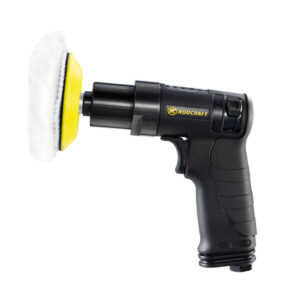
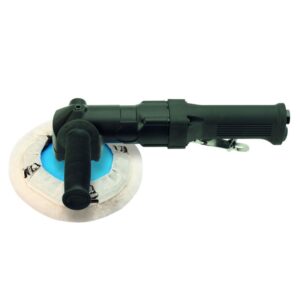
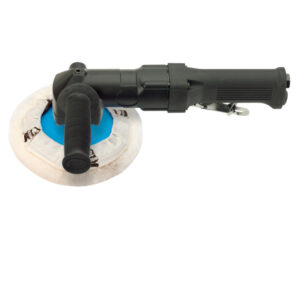
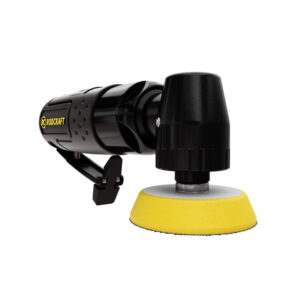
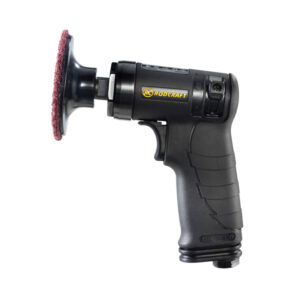
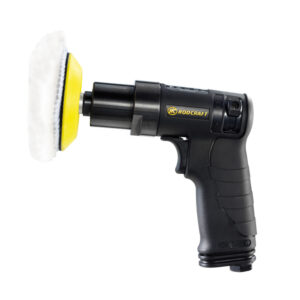
The Polishers (Air / Pneumatic) category includes compressed-air powered polishers and pneumatic polish machines. These tools are designed to deliver high rpm rotary or orbital motion to pads or discs for smoothing, buffing, or polishing surfaces. They include air-powered rotary and orbital polishers used for industrial surface finishing.
Within this category you will find air-angle polishers, mini air polishers (using 50 mm Velcro pads), air polishers with high rpm (around 15,000 rpm) and different pad sizes including 50 mm and 75 mm options. There are pneumatic single-hand polishers with short stroke (5 mm), polishers with multiple pad sizes supplied, and compact units offering high power in lightweight forms. These machines cover varying pad diameters, speed ranges, wattage levels, and compatibility with common pad attachment systems such as Velcro.
Air and pneumatic polishers are used in metal finishing, automotive bodywork, surface refinishing, and maintenance workshops. They are suitable where high gloss, scratch removal, buffing, or surface preparation are needed. Typical processes include surface smoothing, fine-finish polishing, and scratch correction. These tools also find use in repair workshops where access is limited and precision polishing on panels, trim, or moulding is required.
These tools convert compressed air into rotary motion, typically with rotation speeds from several thousand rpm up to 15,000 rpm. Key technical characteristics include pad diameter (commonly 50 mm or 75 mm), stroke length (for example 5 mm), operating power in watts, free speed and load speed, air pressure and consumption, hose diameter, and air inlet thread sizes (such as ¼" BSP). Materials used in construction often feature lightweight metals or composite housings to reduce fatigue over long periods. Variations include single-hand polishers, angle polishers, mini polishers, and polishers supplied with different pad sizes. Function differences come down to stroke type, whether an angle or straight pad, rpm range, and pad mounting method (e.g. Velcro). Standards such as CE marking are applicable, ensuring electrical safety, ergonomics and air tool performance requirements. Selection considerations should include the working environment (dust-tightness, exhaust direction), required finish quality, compatibility with existing air supply system, pad type and size, tool weight, and duty cycle.
MEMIDOS is a global B2B platform that connects industrial purchasers directly with manufacturers and verified suppliers. By sourcing through MEMIDOS you avoid middle men, which helps streamline procurement and achieve more competitive pricing. Payment is handled securely through an escrow-based system: funds are held by MEMIDOS until order conditions such as shipment are satisfied. This ensures protection for buyers and confirms payment reliability for suppliers. The platform offers access to high quality industrial tools and simplifies international procurement by providing transparency in sourcing and supplier verification.
English
Български (Bulgarian)
Hrvatski (Croatian)
Čeština (Czech)
Dansk (Danish)
Nederlands (Dutch)
Suomi (Finnish)
Français (French)
Deutsch (German)
Ελληνικά (Greek)
Magyar (Hungarian)
Italiano (Italian)
Norsk bokmål (Norwegian Bokmål)
Polski (Polish)
Português (Portuguese (Portugal))
Română (Romanian)
Русский (Russian)
Español (Spanish)
Svenska (Swedish)
Türkçe (Turkish)