
Cart
No products in the cart.
 English
 Български (Bulgarian)
 Hrvatski (Croatian)
 Čeština (Czech)
 Dansk (Danish)
 Nederlands (Dutch)
 Suomi (Finnish)
 Français (French)
 Deutsch (German)
 Ελληνικά (Greek)
 Magyar (Hungarian)
 Italiano (Italian)
 Norsk bokmål (Norwegian Bokmål)
 Polski (Polish)
 Português (Portuguese (Portugal))
 Română (Romanian)
 Русский (Russian)
 Español (Spanish)
 Svenska (Swedish)
 Türkçe (Turkish)
Showing all 5 resultsSorted by popularity
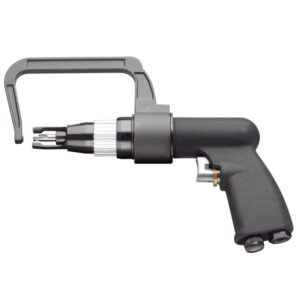
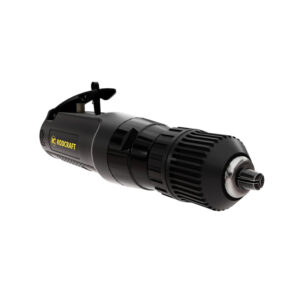
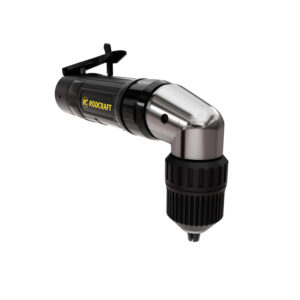
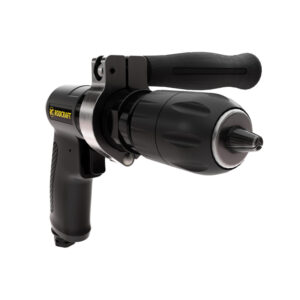
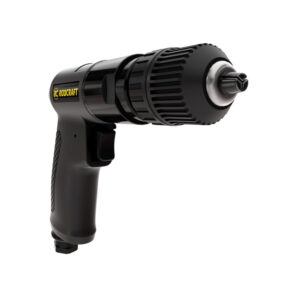
Drilling machines (Air / Pneumatic) are air-powered tools designed to rotate drilling bits for cutting, boring, or spot welding in industrial settings. These pneumatic drill machines offer precision and high torque with stable rpm and chuck sizes. They are suitable for use on metal, wood, and composite materials.
The category features several pneumatic drill machine types, each with different designs and specifications. You will see straight pneumatic drill machines with power ratings around 400 watts, 300 watts, or 500 watts paired with speeds from about 800 up to 3,000 rpm. There are also right-angle pneumatic drill machines designed for tight or constrained spaces. Additionally the range includes spot weld drill machines fitted with cutter lengths and holders for performing spot welding operations.
Pneumatic drilling machines are commonly used in heavy manufacturing, metalworking, automotive repair and fabrication, and production plants requiring drilling, reaming, or spot welding. They are also used for maintenance and assembly operations where high rotational speeds or torque are essential. These tools function as industrial drilling equipment across various applications. In sheet metal workshops or aircraft maintenance operations, the right-angle version helps reach angled surfaces without compromising precision.
These air / pneumatic drilling machines convert compressed air into rotary motion in the chuck. Primary technical characteristics include chuck size (e.g., up to 10 mm or 13 mm), motor power (commonly around 300–500 watts), rotational speed (typically 800 to 3,000 revolutions per minute), and configuration (straight or 90° angle heads). Spot weld drill machines combine a drilling function with features to apply localized heat or pressure for welding operations.
Key performance parameters comprise air pressure and supply flow, power input rating, torque output, rpm range, and cutter or bit length. Typical tolerances relate to run-out of the drill chuck, concentricity, and alignment especially in right-angle configurations. Materials used in components often include hardened steel for drive trains and chucks, and robust housings able to handle industrial duty cycles. Noise, vibration, and lubrication behavior also play roles.
Common variations include straight drills for general drilling tasks; angled head drills for hard-to-reach spots; high speed vs high torque models; and spot weld drills specialized for fusion operations. Standards and certifications might involve CE marking for machinery safety, relevant ISO norms for pneumatic tools, and compliance with workplace safety regulations (noise, dust, overpressure) in industrial environments. Selection considerations include the operating environment (ambient temperature, cleanliness), air supply compatibility (pressure, filter, moisture), duty cycle requirements, and whether access angles or space constraints demand straight or angled heads.
MEMIDOS is a global B2B platform that connects industrial buyers directly to verified manufacturers and suppliers, eliminating intermediaries. This model supports more efficient procurement and tends to yield competitive pricing. Using secure, escrow-based payment, funds are held until order conditions—such as shipment—have been fulfilled, offering protection for buyers and payment reliability for suppliers. This structure simplifies international sourcing and enhances transparency in industrial supply chains while ensuring access to high-quality pneumatic drilling equipment from trusted, well-rated providers.
English
Български (Bulgarian)
Hrvatski (Croatian)
Čeština (Czech)
Dansk (Danish)
Nederlands (Dutch)
Suomi (Finnish)
Français (French)
Deutsch (German)
Ελληνικά (Greek)
Magyar (Hungarian)
Italiano (Italian)
Norsk bokmål (Norwegian Bokmål)
Polski (Polish)
Português (Portuguese (Portugal))
Română (Romanian)
Русский (Russian)
Español (Spanish)
Svenska (Swedish)
Türkçe (Turkish)