
Cart
No products in the cart.
 English
 Български (Bulgarian)
 Hrvatski (Croatian)
 Čeština (Czech)
 Dansk (Danish)
 Nederlands (Dutch)
 Suomi (Finnish)
 Français (French)
 Deutsch (German)
 Ελληνικά (Greek)
 Magyar (Hungarian)
 Italiano (Italian)
 Norsk bokmål (Norwegian Bokmål)
 Polski (Polish)
 Português (Portuguese (Portugal))
 Română (Romanian)
 Русский (Russian)
 Español (Spanish)
 Svenska (Swedish)
 Türkçe (Turkish)
Showing all 4 resultsSorted by popularity
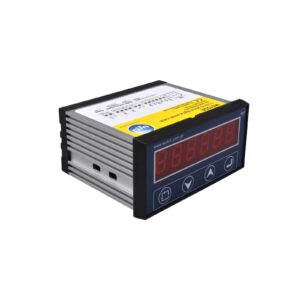
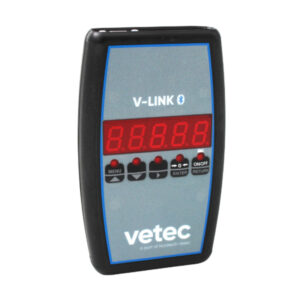
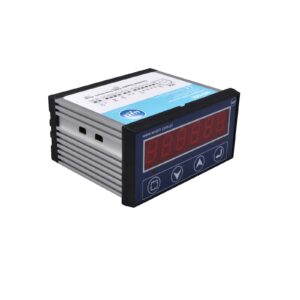
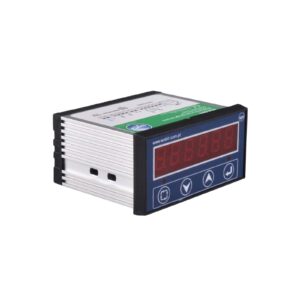
HMI and user interface panels comprise human-machine interfaces, digital displays, and related control panels used in industrial settings to present data, manage processes, and monitor performance. This category includes programmable indicators, force-sensor displays, remote displays, and input/output panels with analog and digital signal compatibility. These interfaces enable real-time visualization, parameter setup, and clear operator feedback for automation, measurement, and control systems.
This category features several digital display types powerful enough for industrial standards. You’ll find digital displays with 0-10 V or 4-20 mA analog inputs, capable of converting sensor signals to readable values. There are programmable counters that measure speed or frequency and offer external communications via USB and RS485 MODBUS. Universal force-sensor displays are also present, designed to work with load cells and provide accurate readings with built-in tare and analog/digital outputs. Remote displays with wireless capabilities are included for readouts at long range.
These interface panels are used wherever precise signal conversion, monitoring, or measurement is required. In manufacturing and process control, they are applied for speed measurement, flow monitoring, force measurement, load cell readout, and signal scaling, including functions such as signal conditioning and ensuring measurement accuracy. Remote displays with wireless output are useful in harsh environments where wiring is difficult. Programmable counters serve in automation systems tracking counts, revolutions, or other discrete events. Display panels with multiple input types and threshold relay outputs are used for safety, alarm, or batching functions.
These devices serve as the interface between physical sensors, controllers, and operators. Key technical parameters include analog input ranges (e.g. 0-10 V or 4-20 mA), resolution (for example 1 mV resolution or fractions of full scale), number of digits in display (six-digit displays are common), and refresh or sampling frequency (e.g. up to 100 Hz for certain units). Housing materials such as full aluminum profile with standards like DIN 43700 ensure mechanical durability and resistance to environmental stress. Environmental ratings such as IP classes (e.g. IP40 or IP65 for the front panel) are relevant where moisture or dust may be present. Functional variations include displays for force sensors (load cells), signal input processors, programmable counters with optional USB and RS485 MODBUS interfaces, and wireless remote displays using Bluetooth or other technologies. Compliance with CE marking is visible on many products. Key selection considerations include compatibility with signal type and level, expected environmental conditions (temperature, ingress protection), desired accuracy and resolution, interface types (analog, digital, serial), and whether relay or analog output functionality is required.
MEMIDOS operates as a global B2B platform specialising in industrial technology. Buyers connect directly with manufacturers and suppliers, avoiding intermediaries and streamlining procurement. A secure escrow-based payment system protects buyers by holding funds until agreed order conditions, such as shipment, are met. All suppliers are verified, granting access to high-quality industrial user interface panels and displays. MEMIDOS facilitates international sourcing with greater transparency and operational efficiency for procurement professionals.
English
Български (Bulgarian)
Hrvatski (Croatian)
Čeština (Czech)
Dansk (Danish)
Nederlands (Dutch)
Suomi (Finnish)
Français (French)
Deutsch (German)
Ελληνικά (Greek)
Magyar (Hungarian)
Italiano (Italian)
Norsk bokmål (Norwegian Bokmål)
Polski (Polish)
Português (Portuguese (Portugal))
Română (Romanian)
Русский (Russian)
Español (Spanish)
Svenska (Swedish)
Türkçe (Turkish)