
Cart
No products in the cart.
 English
 Български (Bulgarian)
 Hrvatski (Croatian)
 Čeština (Czech)
 Dansk (Danish)
 Nederlands (Dutch)
 Suomi (Finnish)
 Français (French)
 Deutsch (German)
 Ελληνικά (Greek)
 Magyar (Hungarian)
 Italiano (Italian)
 Norsk bokmål (Norwegian Bokmål)
 Polski (Polish)
 Português (Portuguese (Portugal))
 Română (Romanian)
 Русский (Russian)
 Español (Spanish)
 Svenska (Swedish)
 Türkçe (Turkish)
Showing all 9 resultsSorted by popularity
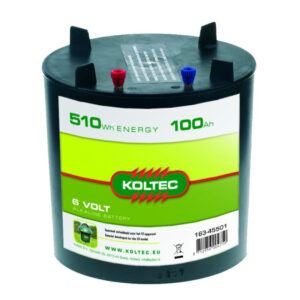
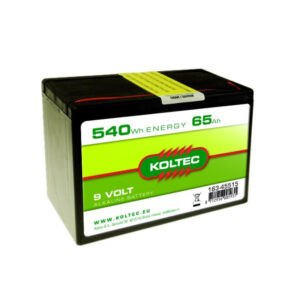
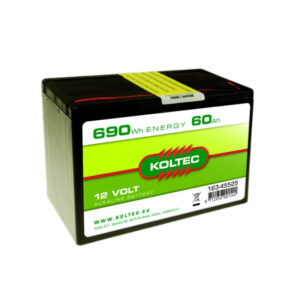
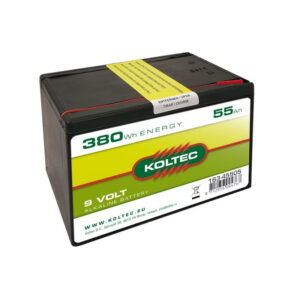
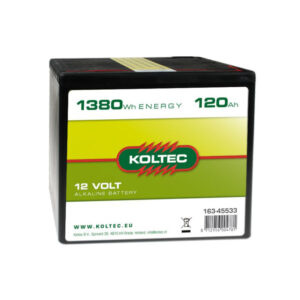
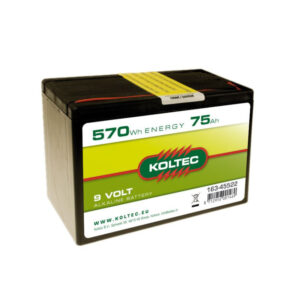
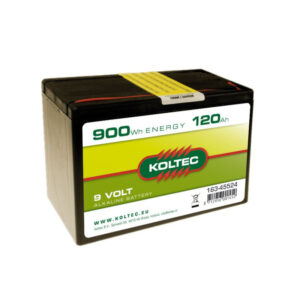
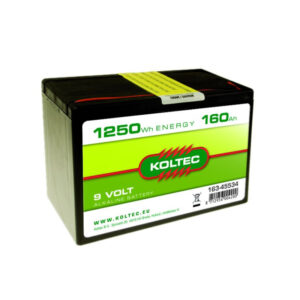
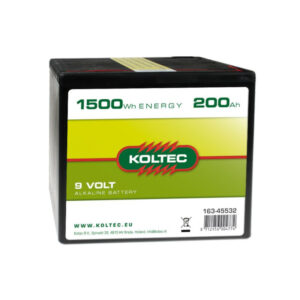
The Batteries category provides power storage units specifically designed for battery powered electric fence energisers. These alkaline batteries include high voltage (measured in volts), high capacity (ampere-hours, Ah), and substantial energy content (watt-hours, Wh), making them suitable components for industrial electric fencing systems, agriculture infrastructure, and farm management equipment.
This category offers alkaline batteries in various voltages—6 V, 9 V, 12 V—with multiple sizes and capacities. You will find round batteries and small-form batteries with capacities ranging from 55 Ah to 200 Ah, and energy storage from 510 Wh up to 1500 Wh. All batteries are supplied in standard shapes suitable for coupling with battery-powered fence energisers.
Batteries in this category are used to power electric fencing energisers where a mains supply is unavailable or impractical—such as remote agricultural lands, forestry perimeters, or grazing zones. They support systems where off-grid reliability, load endurance, and voltage stability are critical. Secondary use cases include solar-powered fence energisers and external battery energisers, where capacity, temperature tolerance, and voltage drop matter.
Batteries here are designed to deliver direct current (DC) at volt levels matching the powered device—often 6 V, 9 V, or 12 V. Key parameters include capacity in ampere-hours (Ah), indicating current draw over time, and watt-hours (Wh), representing stored energy. Higher Ah and Wh values allow longer run times under load. Construction is alkaline chemistry with rigid casing and standardized dimensions—capacity, weight, and form factor vary by model. Also given are shape classifications like “round” or “small,” which influence fit and connection style. Standards such as CE marking appear in product specifications to indicate compliance with safety and manufacturing regulations. Selection factors include matching battery voltage to energiser input, required Wh for expected operation time, ambient temperature effects on performance, and physical size to fit enclosure tolerances.
MEMIDOS serves global industrial buyers by connecting them directly with verified manufacturers and suppliers, eliminating intermediaries. This structure supports efficient procurement and competitive pricing. Payments are managed securely through an escrow-based system, where funds are held until order conditions like shipment are confirmed, protecting buyers and ensuring suppliers’ reliability. Buyers gain access to high-quality industrial batteries from verified sources, with transparent product specifications to simplify international sourcing and support dependable equipment operation.
English
Български (Bulgarian)
Hrvatski (Croatian)
Čeština (Czech)
Dansk (Danish)
Nederlands (Dutch)
Suomi (Finnish)
Français (French)
Deutsch (German)
Ελληνικά (Greek)
Magyar (Hungarian)
Italiano (Italian)
Norsk bokmål (Norwegian Bokmål)
Polski (Polish)
Português (Portuguese (Portugal))
Română (Romanian)
Русский (Russian)
Español (Spanish)
Svenska (Swedish)
Türkçe (Turkish)