
Cart
No products in the cart.
 English
 Български (Bulgarian)
 Hrvatski (Croatian)
 Čeština (Czech)
 Dansk (Danish)
 Nederlands (Dutch)
 Suomi (Finnish)
 Français (French)
 Deutsch (German)
 Ελληνικά (Greek)
 Magyar (Hungarian)
 Italiano (Italian)
 Norsk bokmål (Norwegian Bokmål)
 Polski (Polish)
 Português (Portuguese (Portugal))
 Română (Romanian)
 Русский (Russian)
 Español (Spanish)
 Svenska (Swedish)
 Türkçe (Turkish)
Showing all 5 resultsSorted by popularity
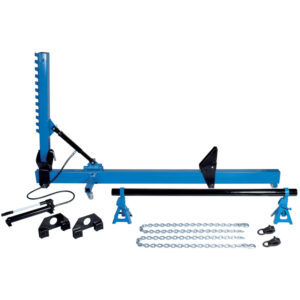
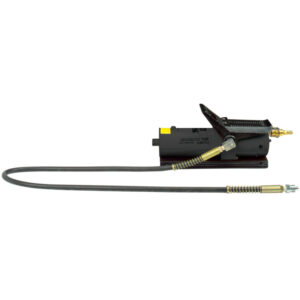
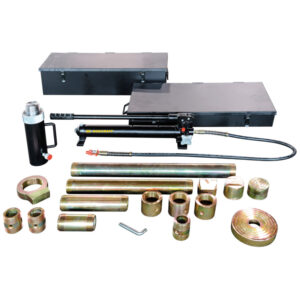
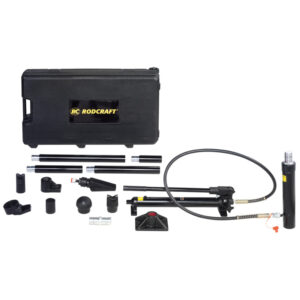
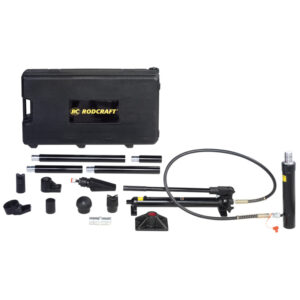
Hydraulic tools and frames refer to workshop-grade equipment using hydraulic force for vehicle body repair, structural alignment, lifting, pressing, and support work. These tools include hydraulic cylinders, frame straightening systems, and hand pumps. Targeted at automotive repair professionals, industrial technicians, and engineering procurement teams, this category ensures precise load handling, structural restoration, and high-pressure operation in industrial and vehicle-repair environments.
This category contains a variety of hydraulic tools and frame repair equipment. You will find vehicle frame straightening kits designed to realign damaged automotive frames. There are also hydraulic cylinder and hand pump sets in various capacity classes—including 4-ton, 10-ton, and 20-ton sets. Each set includes accessories such as pistons or attachments to enable tasks like pressing, expanding, clamping. The straightening kit includes a hydraulic piston and adjustable components like a side-tilting pull arm to accommodate different vehicle types.
These hydraulic tools and frames are used in collision repair shops, structural restoration garages, and industrial maintenance operations. Professionals use them to correct vehicle body deformation after accidents, press out or in panels, expand damaged metal sections, and clamp components during welding or fabricating. These devices are often described as hydraulic press tools and frame alignment equipment and are used when working on chassis straightening, body benching, or component pressing under high forces.
Hydraulic tools and frames utilize fluid power to generate force via cylinders, pumps, and frame-holding structures. Key technical characteristics include force capacity (measured in tonnes), working pressure (e.g., 700 bar in several sets), cylinder stroke or ram extension length, type of pump (hand-operated, two-stage), and materials (high-strength steel) to bear load and resist deformation. For example, a 10-tonne straightening kit may include a steel hydraulic piston and pull arm adjustable to specific angles. Sets vary by load capacity: lighter sets such as 4-ton are for smaller presses or clamps, while 20-ton sets handle heavier components and large repair tasks.
Typical industrial standards or certifications relevant include CE marking for conformity, ensuring safety and performance compliance. Common variations include cylinder-and-pump kits versus full frame alignment systems. Functionally these differ in their application: cylinder kits are modular for pressing, clamping, or expanding; frame kits provide integrated alignment tools capable of pulling or repositioning entire vehicle sections.
Selection considerations include the environment (temperature, workshop layout), compatibility with vehicle bodies or parts being worked on, required capacity versus margin for safety, operating pressure, length of cylinder stroke, and type of connections or fittings. Tolerances for ram alignment and repeatability in performance are important in precision frame work.
MEMIDOS is a global B2B marketplace specialised in industrial equipment, offering hydraulic tools and frames directly from verified manufacturers and suppliers without intermediaries. This structure reduces supply-chain complexity and supports competitive pricing. Payment is handled securely via an escrow system: funds are held by MEMIDOS until order conditions like shipment are met. Buyers gain access to high-quality industrial tools with improved transparency in sourcing. The platform aims to simplify international procurement by connecting engineering and procurement professionals directly to manufacturing sources.
English
Български (Bulgarian)
Hrvatski (Croatian)
Čeština (Czech)
Dansk (Danish)
Nederlands (Dutch)
Suomi (Finnish)
Français (French)
Deutsch (German)
Ελληνικά (Greek)
Magyar (Hungarian)
Italiano (Italian)
Norsk bokmål (Norwegian Bokmål)
Polski (Polish)
Português (Portuguese (Portugal))
Română (Romanian)
Русский (Russian)
Español (Spanish)
Svenska (Swedish)
Türkçe (Turkish)