
Cart
No products in the cart.
 English
 Български (Bulgarian)
 Hrvatski (Croatian)
 Čeština (Czech)
 Dansk (Danish)
 Nederlands (Dutch)
 Suomi (Finnish)
 Français (French)
 Deutsch (German)
 Ελληνικά (Greek)
 Magyar (Hungarian)
 Italiano (Italian)
 Norsk bokmål (Norwegian Bokmål)
 Polski (Polish)
 Português (Portuguese (Portugal))
 Română (Romanian)
 Русский (Russian)
 Español (Spanish)
 Svenska (Swedish)
 Türkçe (Turkish)
Showing all 4 resultsSorted by popularity
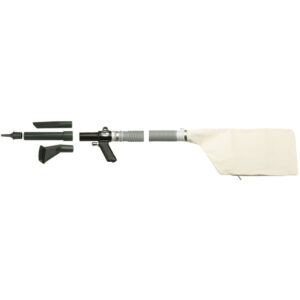
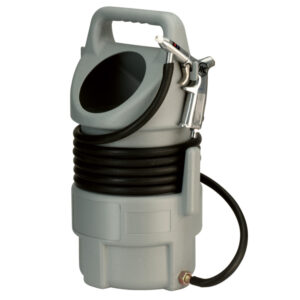
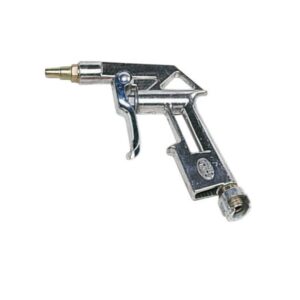
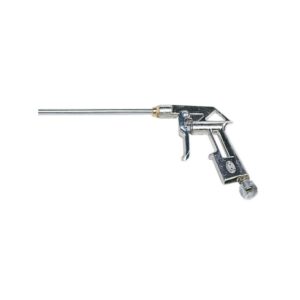
Air blow guns are pneumatic hand tools used to deliver focused blasts of compressed air for cleaning, drying, or clearing debris in industrial settings. These tools typically include different nozzle types to control airflow and reach into confined spaces. Industrial professionals sourcing air blow guns look for durability, reliable pressure performance, and compatibility with standard fittings. They are described using technical terms that reflect their functions and configurations.
This category showcases a selection of air blow guns including a short nozzle version and a long rigid outlet variant, both employing nickel-plated aluminium handles and ¼″ BSP bayonet connections for standard air systems. It also features a portable sandblasting tank with a five-metre suction hose and ceramic nozzle. These items represent both basic air blow functionality and more elaborate units designed for abrasive-based surface treatment.
Air blow guns are commonly used in workshops, maintenance departments, painting booths, and metal fabrication shops for tasks such as removing chips, dust, or moisture after machining or before painting operations. The portable sandblasting unit serves in surface preparation for corrosion removal or paint stripping. Related equipment includes abrasive blasting machines and compressed-air cleaning tools. Industries that benefit include automotive, metalworking, aerospace, and manufacturing maintenance sectors.
Air blow guns are constructed to operate with compressed air at pressures typically matching shop air supplies. Key technical parameters include nozzle length (short vs. long rigid), handle material—nickel-plated aluminium in this case—and air inlet thread type and size, here ¼″ BSP bayonet fitting. The sandblasting tank also introduces parameters such as abrasive grain size (for example 0.4-0.8 mm), hose length for suction, container capacity (10 litres), and type of nozzle material (ceramic) for abrasive resistance.
Variations within this category include simple air guns for drying or cleaning, extended-rigid nozzles for reach or access into tight areas, and sandblasting units for abrasive work. Standards and markings such as CE certification may apply where applicable in regulated environments. When selecting an air blow gun, considerations should include the working pressure of the facility, nozzle geometry, handle ergonomics, material compatibility with the operating environment (e.g. corrosion resistance), hose and connector compatibility, and air consumption rate versus available compressor capacity.
MEMIDOS operates as a global B2B platform connecting industrial buyers directly with verified manufacturers and suppliers without intermediaries. The procurement process is designed with security in mind: payment is escrow-based, meaning funds are held until order conditions such as shipment are met, offering protection for buyers while ensuring reliability for suppliers. Buyers gain access to a high quality range of air blow guns suitable for technical and industrial applications, sourced from verified providers. The platform facilitates international sourcing with improved transparency and efficiency.
English
Български (Bulgarian)
Hrvatski (Croatian)
Čeština (Czech)
Dansk (Danish)
Nederlands (Dutch)
Suomi (Finnish)
Français (French)
Deutsch (German)
Ελληνικά (Greek)
Magyar (Hungarian)
Italiano (Italian)
Norsk bokmål (Norwegian Bokmål)
Polski (Polish)
Português (Portuguese (Portugal))
Română (Romanian)
Русский (Russian)
Español (Spanish)
Svenska (Swedish)
Türkçe (Turkish)