
Cart
No products in the cart.
 English
 Български (Bulgarian)
 Hrvatski (Croatian)
 Čeština (Czech)
 Dansk (Danish)
 Nederlands (Dutch)
 Suomi (Finnish)
 Français (French)
 Deutsch (German)
 Ελληνικά (Greek)
 Magyar (Hungarian)
 Italiano (Italian)
 Norsk bokmål (Norwegian Bokmål)
 Polski (Polish)
 Português (Portuguese (Portugal))
 Română (Romanian)
 Русский (Russian)
 Español (Spanish)
 Svenska (Swedish)
 Türkçe (Turkish)
Showing 1–16 of 20 resultsSorted by popularity
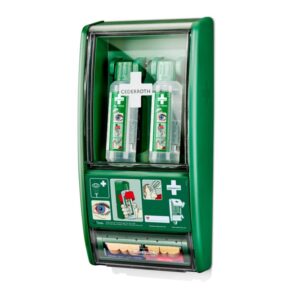
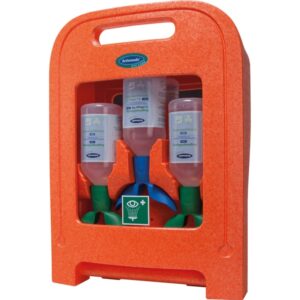
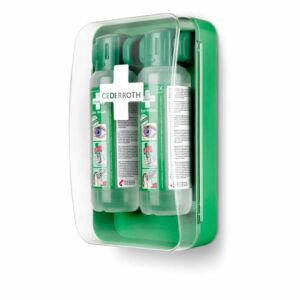
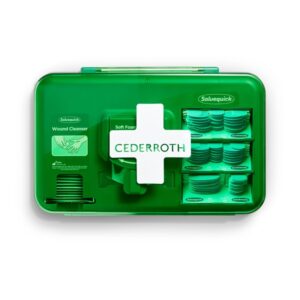
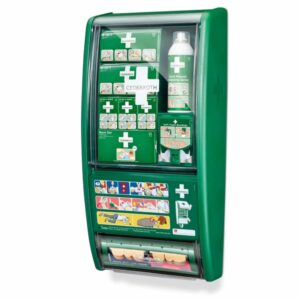
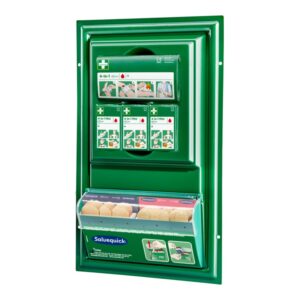
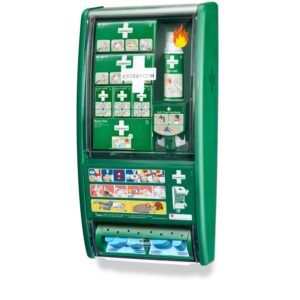
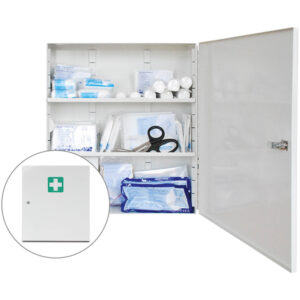
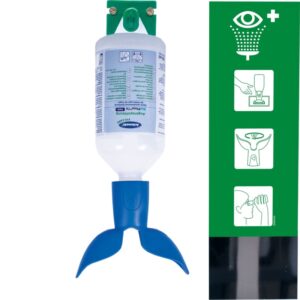
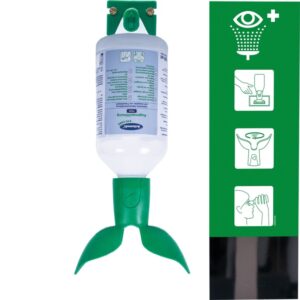
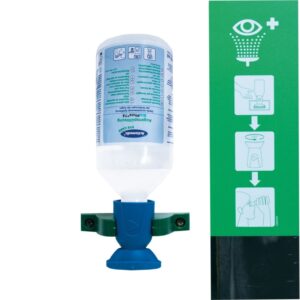
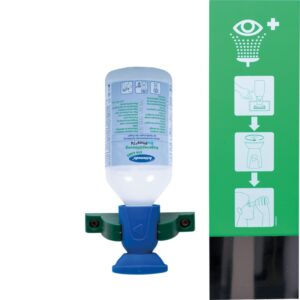
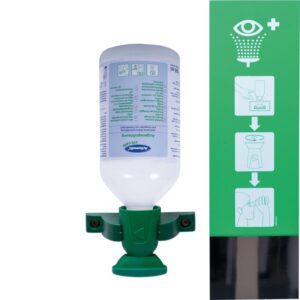
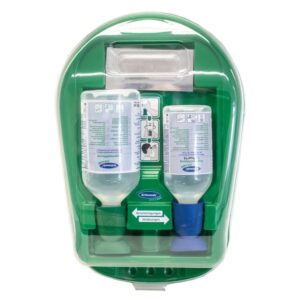
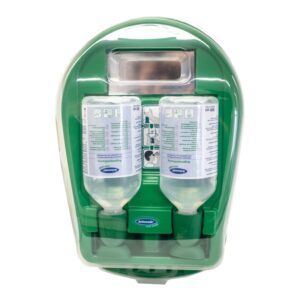
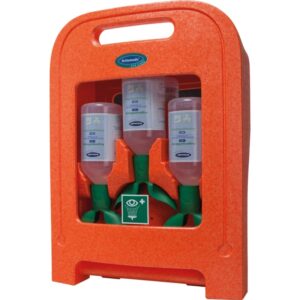
A first aid station is a dedicated unit or setup designed to provide immediate medical care in industrial environments. It typically includes components such as eye wash stations, first aid panels, burn care components, blue bandage dispensers, and refill kits. They are commonly procured as industrial safety equipment, emergency response stations, workplace first aid supplies, and compliant first aid solutions.
Within this category you will discover eye wash stations in various arrangements such as single, twin, or double bottle units with 0.9% sodium chloride or BioPhos74 phosphate buffer solutions. You’ll also find dedicated first aid panels which are wall-mounted display units, burn wound first aid stations, blue bandage dispensers, and refill kits for maintaining the contents of first aid cabinets and stations. These product types combine to support emergency care in industrial settings.
First aid stations are used in manufacturing plants, chemical processing facilities, laboratories, workshops, and any environment where employees may be exposed to hazardous substances, burns or eye injuries. They support industrial compliance and emergency eye care. These stations support regulatory safety requirements, industrial hygiene, and accident prevention. Specialized use cases include handling corrosive liquids, welding operations, or handling hot surfaces where burns and eye exposure risks are elevated.
A first aid station serves as a fixed or wall-mounted unit designed to deliver immediate care for eye injuries, burns, and minor wounds. Key technical characteristics include the type of rinsing solution (e.g. 0.9% sodium chloride, phosphate buffer solution), bottle volume (commonly 250 ml, 500 ml), number of bottles (single, twin, or double bottles), and mounting style (wall-mounted, with mirror, pictogram for instructions). Materials are typically chemical-resistant plastics or metal cabinets.
Performance parameters include rinsing time (e.g. roughly 2.5 minutes per bottle or total times depending on solution volume), shelf life of sterile solutions (often around three years), and compliance with relevant standards such as CE marking and DIN EN 15 154-4 for eye wash stations. Variations include single vs twin bottles, buffer vs non-buffer rinsing solutions, and design features such as transparent lids or pictograms for clarity.
Selection considerations for industrial buyers include environmental exposure (dust, moisture, chemical proximity), capacity required (volume and number of users), compatibility with existing safety infrastructure, solution type suited to risk profile (buffered vs saline), and compliance with local health and safety regulations. Operating conditions such as temperature and shelf life must also be evaluated.
MEMIDOS is a global B2B platform connecting procurement professionals with manufacturers and verified suppliers of industrial equipment. Buyers can purchase first aid stations directly from suppliers without intermediaries, enabling more efficient procurement and competitive pricing. All payments are handled securely via escrow, where funds are held until order conditions such as shipment are met, which ensures protection for buyers and reliability for suppliers. Through MEMIDOS, purchasers gain access to quality emergency medical equipment from certified sources, and benefit from more transparent and streamlined sourcing in international trade.
English
Български (Bulgarian)
Hrvatski (Croatian)
Čeština (Czech)
Dansk (Danish)
Nederlands (Dutch)
Suomi (Finnish)
Français (French)
Deutsch (German)
Ελληνικά (Greek)
Magyar (Hungarian)
Italiano (Italian)
Norsk bokmål (Norwegian Bokmål)
Polski (Polish)
Português (Portuguese (Portugal))
Română (Romanian)
Русский (Russian)
Español (Spanish)
Svenska (Swedish)
Türkçe (Turkish)