
Cart
No products in the cart.
 English
 Български (Bulgarian)
 Hrvatski (Croatian)
 Čeština (Czech)
 Dansk (Danish)
 Nederlands (Dutch)
 Suomi (Finnish)
 Français (French)
 Deutsch (German)
 Ελληνικά (Greek)
 Magyar (Hungarian)
 Italiano (Italian)
 Norsk bokmål (Norwegian Bokmål)
 Polski (Polish)
 Português (Portuguese (Portugal))
 Română (Romanian)
 Русский (Russian)
 Español (Spanish)
 Svenska (Swedish)
 Türkçe (Turkish)
Showing all 9 resultsSorted by popularity
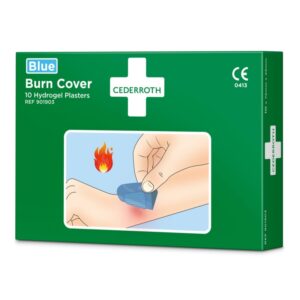
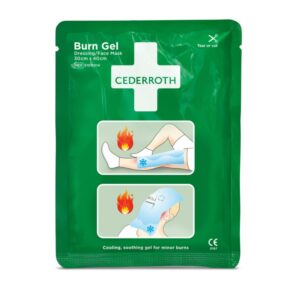
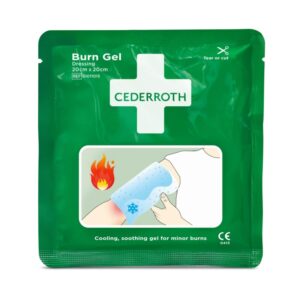
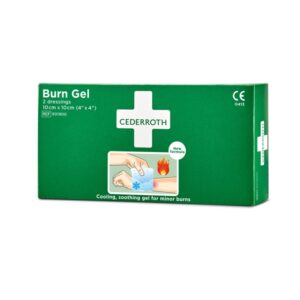
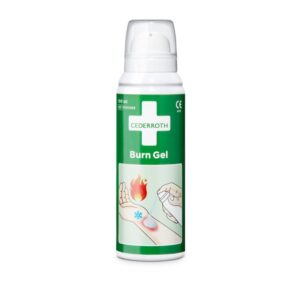
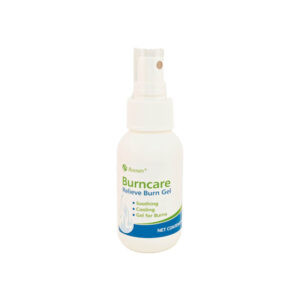
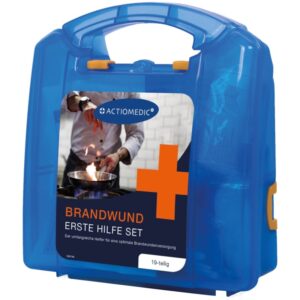
Burn care refers to a specific range of first aid and emergency treatment products designed to address burns—traumatic skin injuries caused by heat, chemicals, radiation, or friction. Common products include burn dressings, burn gel, burn kits, and hydrogel plasters for industrial first-aid and safety stations, or first response tools.
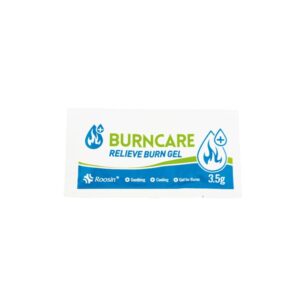
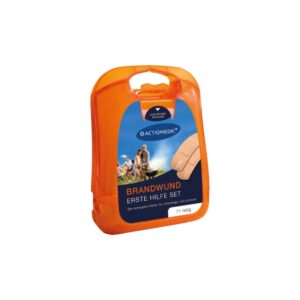
This category includes gel sprays for burns, gel bandages and face masks for burns in various sizes (for example, 30 × 40 cm, 20 × 20 cm, 10 × 10 cm), hydrogel burn wound patches, and stocked kits for burn first aid—both mini and maxi versions with wound coverings, burn gel sachets, dressings, bandages, disposable gloves, and related accessories. All items are designed for treatment and protection of burns and minor wounds.
Burn care products are essential for first aid stations, manufacturing plants, kitchens, chemical laboratories, and workplaces where thermal hazards exist. They are used immediately after a burn incident to cool the burn area, relieve pain, prevent infection, and protect damaged skin. Typical items include burn wound dressings and emergency burn kits. In environments such as food processing or industrial kitchens, special low-adhesion hydrogel patches serve both hygiene and safety purposes.
Products in this category serve the function of cooling, protecting, and treating burn injuries. Gel sprays are formulated to deliver a moist, cooling layer over the burn to reduce thermal damage. Gel bandages and face masks combine flexible dressings with cooling gel to cover larger or facial burns. Hydrogel wound patches are sterile, waterproof plasters with non-stick surfaces, often color-coded for specific environments. First aid kits pack multiple items—dressings, gels, gloves, bandages—into plastic boxes for stationary or mobile use.
Key technical characteristics include material type (hydrogel versus cloth dressings), dimensions (e.g. patches of 74 × 45 mm, masks of 10 × 10 cm, bandages width and length), sterile packaging, and compliance with relevant standards (CE marking, disposable gloves meeting DIN EN 455). Variations are based on size, number of components, or kit configuration. When selecting, factors include the burn severity expected (minor versus larger surface), environmental cleanliness, skin sensitivity, hygiene standards, storage conditions, and need for mobility versus fixed placement.
MEMIDOS functions as a global B2B platform focused on industrial and safety-first-aid equipment. It enables direct procurement from verified manufacturers and suppliers without intermediaries. This direct model contributes to procurement efficiency and offers competitive pricing. Payment is handled through a secure, escrow-based system: funds are held by MEMIDOS until key order conditions such as shipment are satisfied, protecting buyer interests. Buyers can access certified products with technical conformity from international sources while enjoying greater transparency and simplified sourcing processes.
English
Български (Bulgarian)
Hrvatski (Croatian)
Čeština (Czech)
Dansk (Danish)
Nederlands (Dutch)
Suomi (Finnish)
Français (French)
Deutsch (German)
Ελληνικά (Greek)
Magyar (Hungarian)
Italiano (Italian)
Norsk bokmål (Norwegian Bokmål)
Polski (Polish)
Português (Portuguese (Portugal))
Română (Romanian)
Русский (Russian)
Español (Spanish)
Svenska (Swedish)
Türkçe (Turkish)