
Cart
No products in the cart.
 English
 Български (Bulgarian)
 Hrvatski (Croatian)
 Čeština (Czech)
 Dansk (Danish)
 Nederlands (Dutch)
 Suomi (Finnish)
 Français (French)
 Deutsch (German)
 Ελληνικά (Greek)
 Magyar (Hungarian)
 Italiano (Italian)
 Norsk bokmål (Norwegian Bokmål)
 Polski (Polish)
 Português (Portuguese (Portugal))
 Română (Romanian)
 Русский (Russian)
 Español (Spanish)
 Svenska (Swedish)
 Türkçe (Turkish)
Showing all 9 resultsSorted by popularity
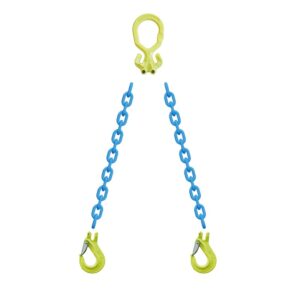
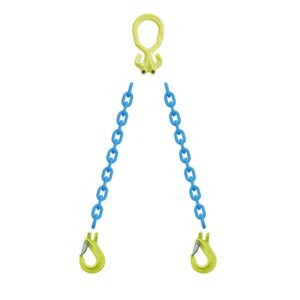
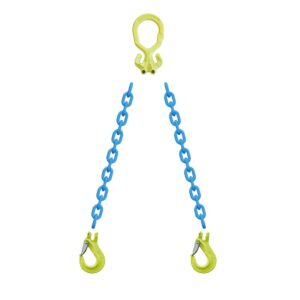
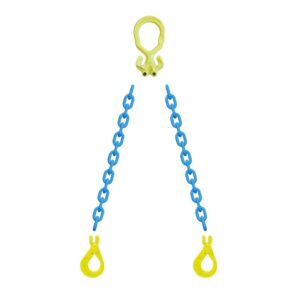
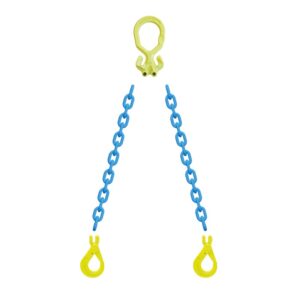
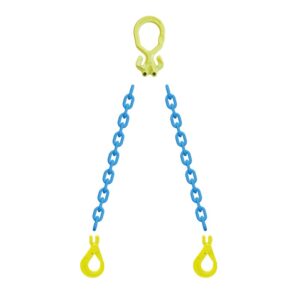
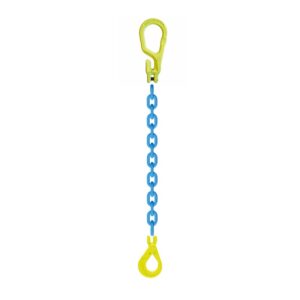
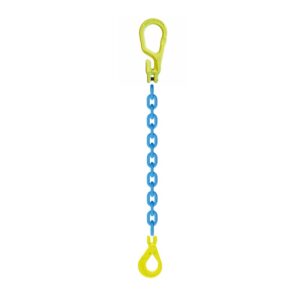
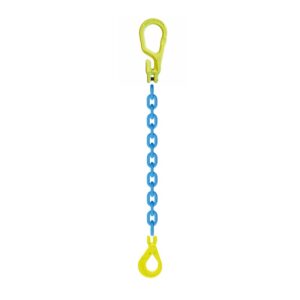
Lifting chains are industrial-grade chain slings designed for heavy load handling in lifting equipment systems. They include single-leg and double-leg (two-string) chain slings with hooks and load-bearing components. These chains are built to comply with safety standards and are suitable for rugged environments. They are used by procurement engineers, rigging specialists, and industrial lifting professionals seeking secure load attachment solutions.
This category features chain slings of various constructions and leg configurations, including single-leg (1-string) chain slings and double-leg (2-string) chain slings. Variations also include “set” configurations that come complete with safety hooks and shortening devices. Sizes are defined by chain diameter, such as 6 mm, 8 mm, or 10 mm. Users can select from different lengths, with load information provided via load-capacity or working load limit tables.
Chain slings in this category are used in lifting, rigging, and securing loads in construction, manufacturing, shipyards and material handling. They're suitable for overhead lifting, crane hook operations, and load-lifting in harsh outdoor or extreme temperature conditions. They are accompanied by working load limit data, load charts, and safety hooks. They serve professionals in heavy industry who require durable chains for lifting steel, concrete components, or machinery parts.
Lifting chains are load-bearing assemblies made from high-strength alloy steel, designed to safely lift or suspend heavy objects. Key technical characteristics include chain grade (such as Grade 10), chain diameter (e.g. 6 mm, 8 mm, 10 mm), number of legs (single or double-leg configurations), and working temperature ranges (for instance −40°C to +200°C). Load capacity or working load limit (WLL) is specified for each configuration, often indicated in tons. Standards compliance is critical: CE marking is visible, and applicable standards govern hook types, safety factor, load-rating and marking. Variations such as single-leg versus multi-leg chain slings differ in angle capacity, load distribution and number of contact points. Secondary components like safety hooks and load bearing plates are integrated in many sets. Selection considerations include environmental exposure (temperature, moisture), application load types (static, dynamic, shock), compatibility with lifting hardware (hooks, master links), and inspection intervals. Tolerances for wear, elongation and hook deformation also factor into safe service life assessments.
MEMIDOS is a global B2B platform specialised in industrial equipment, offering direct access to manufacturers and verified suppliers without intermediaries. By removing middle men, procurement of lifting chains can be more operationally efficient and competitive. A secure escrow-based payment system holds funds until the agreed order conditions, such as shipment, are met, ensuring protection for buyers while ensuring reliability for suppliers. Buyers are able to source high-quality industrial products with transparent specifications and supplier credentials. International procurement is simplified through consolidated standards, clear product data, and supplier verification.
English
Български (Bulgarian)
Hrvatski (Croatian)
Čeština (Czech)
Dansk (Danish)
Nederlands (Dutch)
Suomi (Finnish)
Français (French)
Deutsch (German)
Ελληνικά (Greek)
Magyar (Hungarian)
Italiano (Italian)
Norsk bokmål (Norwegian Bokmål)
Polski (Polish)
Português (Portuguese (Portugal))
Română (Romanian)
Русский (Russian)
Español (Spanish)
Svenska (Swedish)
Türkçe (Turkish)