
Cart
No products in the cart.
 English
 Български (Bulgarian)
 Hrvatski (Croatian)
 Čeština (Czech)
 Dansk (Danish)
 Nederlands (Dutch)
 Suomi (Finnish)
 Français (French)
 Deutsch (German)
 Ελληνικά (Greek)
 Magyar (Hungarian)
 Italiano (Italian)
 Norsk bokmål (Norwegian Bokmål)
 Polski (Polish)
 Português (Portuguese (Portugal))
 Română (Romanian)
 Русский (Russian)
 Español (Spanish)
 Svenska (Swedish)
 Türkçe (Turkish)
Showing all 12 resultsSorted by popularity
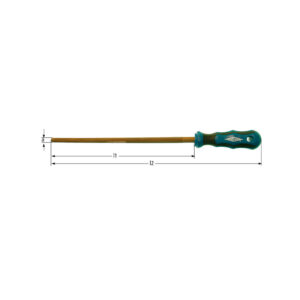
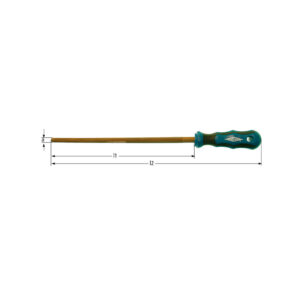
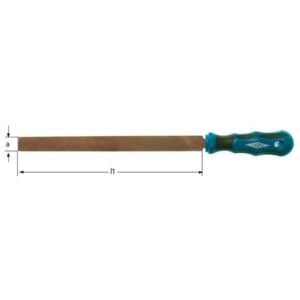
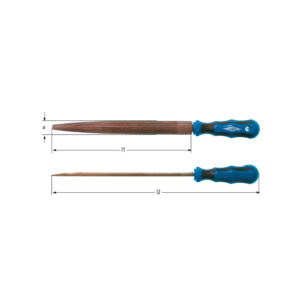
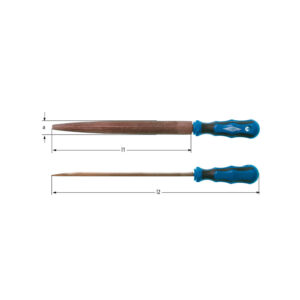
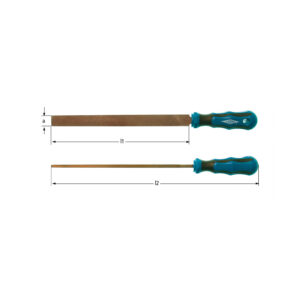
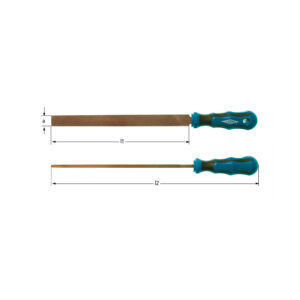


Hand files - non-sparking refers to a class of non-magnetic abrasive tools designed to smooth, shape, or deburr metal and other hard materials without producing sparks. Made from special alloys such as aluminium bronze and beryllium copper, these files are engineered for safety in hazardous industrial zones. These files are commonly specified in beryllium copper or aluminium bronze for use in ATEX-rated applications.
This category features hand files in a range of file shapes, including flat, round, half-round, triangular, and squared variants. The files are made from materials specified as aluminium bronze or beryllium copper. You will find flat files and half-round files, along with smooth cut (cut 3) and bastard cut (cut 1) finishes. Sizes vary, with some models spanning lengths such as 150mm to 400mm. All tools are categorised under non-sparking hand files, specifically the sub-categories Hand files - Aluminium Bronze and Hand files - Beryllium Copper.
Non-sparking hand files are used in environments where ignition risks must be minimised, such as in oil and gas, chemical processing, and mining. They serve for finishing tasks on metal surfaces, deburring welds, shaping pipe ends, or smoothing flanges. They are described as explosion-proof, non-magnetic, and hazardous-area hand tools. These files are also suitable for maintenance of equipment in petrochemical plants, LNG terminals, and refineries where contact with sparks or ferrous particles must be avoided.
This product class comprises manual abrasive tools that remove material by friction using cutting teeth arranged across the file surface. Materials used are non-sparking, non-magnetic alloys—principally beryllium copper and aluminium bronze. These alloys must comply with safety standards for spark risk, often including ATEX and BAM certifications, and meet magnetic permeability requirements. File dimensions include length, width, thickness, and tooth hardness or cut grade (e.g. bast- ard cut, smooth cut). Typical sizes range from 150mm to 400mm depending on shape and usage. Variations between file types lie in cross-section geometry: flat offers broad surface contact, round for curved profiles, half-round combines flat and concave surfaces, triangular for tight corners, squared for precision edges. Performance parameters include spark resistance, toughness under impact (e.g. tested under EN 80079-38 Annex E), corrosion resistance, wear behaviour, and magnetic permeability (very low). Selection considerations include ambient environment (presence of flammable gases or dust), operating temperature, dimensional tolerance in shaping workpieces, compatibility with metals being filed (to avoid unwanted cross-contamination), and required finish quality. Compliance with EN, ATEX, BAM or equivalent explosion-safety or intrinsic safety standards is often essential in regulated facilities.
MEMIDOS offers a global B2B platform focused on industrial products, providing direct access to manufacturers and verified suppliers. This model removes middlemen, enabling more efficient procurement and competitive pricing. Payment is handled via a secure escrow system, whereby funds are held until confirmed shipment or delivery conditions are met—protecting buyers and ensuring payment reliability for suppliers. The platform grants access to high-quality non-sparking hand files from materials-certified manufacturers. For procurement professionals managing international sourcing, MEMIDOS simplifies processes and improves transparency in supply chains.
English
Български (Bulgarian)
Hrvatski (Croatian)
Čeština (Czech)
Dansk (Danish)
Nederlands (Dutch)
Suomi (Finnish)
Français (French)
Deutsch (German)
Ελληνικά (Greek)
Magyar (Hungarian)
Italiano (Italian)
Norsk bokmål (Norwegian Bokmål)
Polski (Polish)
Português (Portuguese (Portugal))
Română (Romanian)
Русский (Russian)
Español (Spanish)
Svenska (Swedish)
Türkçe (Turkish)