
Cart
No products in the cart.
 English
 Български (Bulgarian)
 Hrvatski (Croatian)
 Čeština (Czech)
 Dansk (Danish)
 Nederlands (Dutch)
 Suomi (Finnish)
 Français (French)
 Deutsch (German)
 Ελληνικά (Greek)
 Magyar (Hungarian)
 Italiano (Italian)
 Norsk bokmål (Norwegian Bokmål)
 Polski (Polish)
 Português (Portuguese (Portugal))
 Română (Romanian)
 Русский (Russian)
 Español (Spanish)
 Svenska (Swedish)
 Türkçe (Turkish)
Showing all 8 resultsSorted by popularity
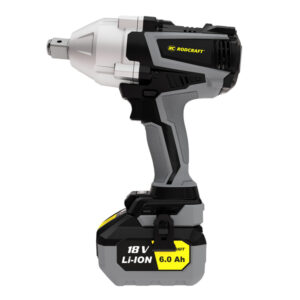
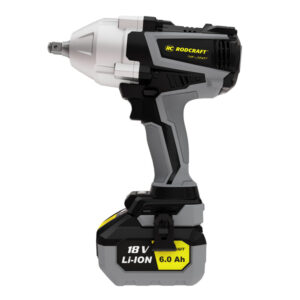
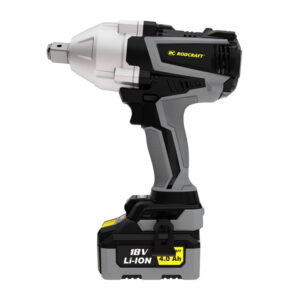
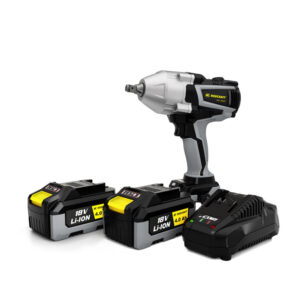
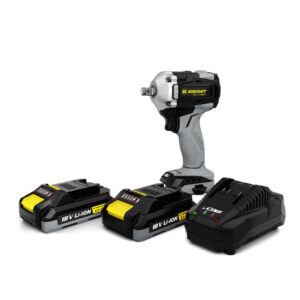
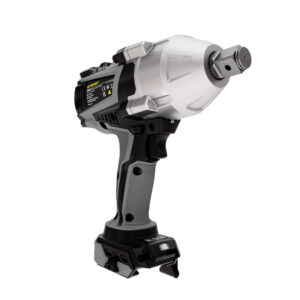
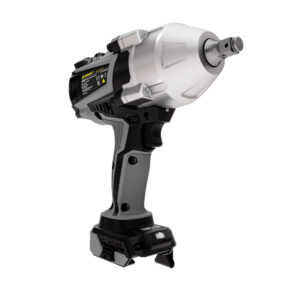
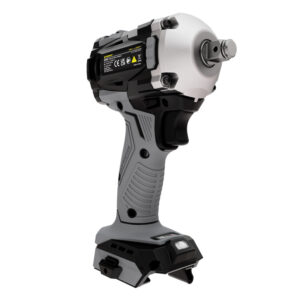
Battery impact tools are cordless impact wrenches powered by rechargeable batteries, designed for industrial fastening and unfastening applications. Commonly equipped with square drives in sizes like ½ inch and ¾ inch, they deliver high torque outputs—ranging from around 500 Nm up to 1500 Nm. These tools are essential for automotive service, heavy-duty maintenance, and professional workshop operations where portable, high-performance power tools are required.
This category includes various cordless impact wrenches available either as single tools or bundled in full kits. Some come equipped with LED lighting, multiple batteries and charger sets, and carry bags. Drive sizes vary, commonly ½″ and ¾″ square drives. For example, you will find powerful 1500 Nm units with ¾″ square drive, as well as more compact versions delivering around 500 Nm. Kits often include pairs of high-capacity battery packs (such as 4Ah or 6Ah) with chargers, while other items may be sold bare (tool only, batteries sold separately).
Battery impact tools serve in tyre servicing and wheel maintenance, where removing and installing lug nuts requires high torque and reliable square drive interfaces. They are used in commercial vehicle repair, heavy machinery maintenance and assembly, where torque output and durability are crucial. Compact impact wrenches are beneficial in tight-space applications, such as underbody component work or confined engine compartments. Related tools include cordless torque wrenches and square drive impact wrenches.
In industrial settings, battery impact tools are designed to deliver repetitive torque outputs sufficient to loosen or tighten large fasteners. Critical technical characteristics include maximum torque (Nm), which in this range spans about 500 Nm to 1500 Nm; output drive size, typically ½″ or ¾″ square; weight and tool length, important for handling and clearances; battery voltage and amp-hour (Ah) capacity, affecting run time and power delivery; and motor type—often brushless for efficiency and durability. Variations include bare tools, full kits with batteries and chargers, and compact (“mini”) vs heavy-duty sizes. Construction materials, such as aluminium housing and composite components, influence durability and thermal performance. Certifications like CE marking may apply, as well as safety standards for insulation, overload protection, and impact coupling mechanics. Selection considerations include matching torque to fastener requirements, drive size compatibility with existing sockets, operating temperature and environment, battery runtime under load, and ergonomics for frequency of use.
MEMIDOS offers a global B2B platform where industrial buyers can source battery impact tools directly from verified manufacturers and suppliers, eliminating the need for intermediaries. Payment is secured through an escrow-based system: funds are held until order conditions such as shipment are fulfilled, which safeguards buyer and supplier interests. Because products come from verified sources, quality standards are transparent, facilitating international procurement. The platform supports industrial procurement professionals in streamlining sourcing, reducing lead times, and enhancing operational efficiency with reliable, certified tools.
English
Български (Bulgarian)
Hrvatski (Croatian)
Čeština (Czech)
Dansk (Danish)
Nederlands (Dutch)
Suomi (Finnish)
Français (French)
Deutsch (German)
Ελληνικά (Greek)
Magyar (Hungarian)
Italiano (Italian)
Norsk bokmål (Norwegian Bokmål)
Polski (Polish)
Português (Portuguese (Portugal))
Română (Romanian)
Русский (Russian)
Español (Spanish)
Svenska (Swedish)
Türkçe (Turkish)