
Cart
No products in the cart.
 English
 Български (Bulgarian)
 Hrvatski (Croatian)
 Čeština (Czech)
 Dansk (Danish)
 Nederlands (Dutch)
 Suomi (Finnish)
 Français (French)
 Deutsch (German)
 Ελληνικά (Greek)
 Magyar (Hungarian)
 Italiano (Italian)
 Norsk bokmål (Norwegian Bokmål)
 Polski (Polish)
 Português (Portuguese (Portugal))
 Română (Romanian)
 Русский (Russian)
 Español (Spanish)
 Svenska (Swedish)
 Türkçe (Turkish)
Showing all 6 resultsSorted by popularity
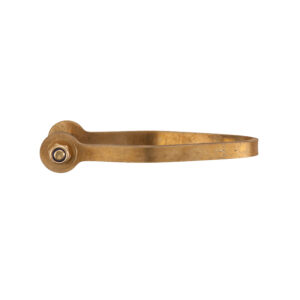
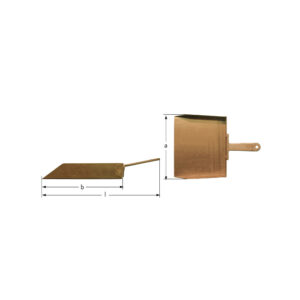
Tools for Construction and Landscaping - Brass refers to a category of hand tools crafted from brass or brass alloy, specifically designed for outdoor and construction environments. These brass tools are part of non-sparking and corrosion-resistant brass hand tools used in construction, landscaping, safety zones, and maintenance. They offer durability and compliance with industrial performance and safety standards relevant to procurement of rugged, high-quality hand tools.
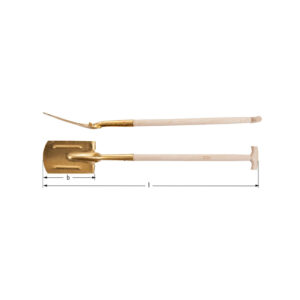
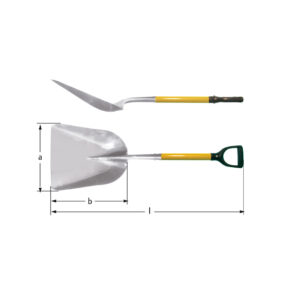
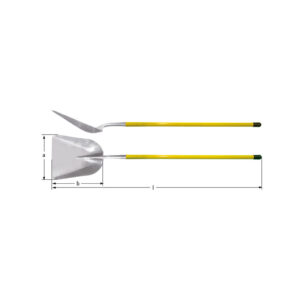
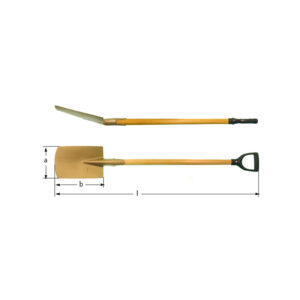
Within this category, visitors will find tools such as edging spades with T-handles, scoops or scoop shovels with both D-handles and straight handles, hand shovels and dustpans, and protective shackles for drop zones. Each of these items is made of brass, including tools for edging turf or soil, moving loose material, cleaning or clearing surfaces, and providing safety and protection for tools or loads in landscaping and construction tasks.
Brass tools in this category are used in applications where non-sparking properties are essential—such as in landscaping operations near fuel storage, chemical works, or explosive atmospheres. Edging spades are used for forming borders or trenches, scoop shovels for bulk soil removal or aggregate handling, dustpans for clearing debris, and shackles used for securing and preventing tool drops in elevated work or safety zones. Common considerations include non-sparking brass tools and landscaping safety equipment.
This category comprises tools made primarily of brass or brass alloys. Brass offers specific technical characteristics: its non-ferrous composition renders it non-magnetic and substantially less likely to generate sparks when striking hard surfaces—an important property in hazardous environments. Corrosion resistance is also a key parameter, especially for outdoor use in soil, moisture, or chemical exposures. Typical dimensions vary by tool type: spades and shovels feature long handles (often exceeding one metre), hand shovels and dustpans are smaller and manageable for one-handed use, and shackles come in standard thread sizes (e.g. M6, M8). Performance parameters include handle strength, bowl capacity, thickness, weight and balance. Compliance may involve standards for safety tools—such as conformity with directives related to explosion protection (e.g. ATEX regulations) and CE marking. Common variations within the category include handle design (straight, D-handle, T-handle), shovel bowl shape (flat, scoop), and accessory type (shackles for drop protection). When assessing suitability, key technical considerations include ambient environment (e.g. flammable atmosphere, wet or corrosive soil), mechanical loads (weight of material), compatibility with existing safety requirements (spark-free tools, certifications), and ergonomic factors (length, grip, tool weight).
MEMIDOS operates as a global B2B platform connecting industrial buyers directly with manufacturers and verified suppliers. By purchasing from manufacturers without intermediaries, procurement professionals receive more efficient sourcing and competitive pricing. Payment is handled securely via escrow, with funds held by MEMIDOS until order conditions, such as shipment, are met—which offers protection and reliability. Buyers gain access to industrial-grade brass tools that meet safety and technical standards, and benefit from increased transparency in international procurement and sourcing.
English
Български (Bulgarian)
Hrvatski (Croatian)
Čeština (Czech)
Dansk (Danish)
Nederlands (Dutch)
Suomi (Finnish)
Français (French)
Deutsch (German)
Ελληνικά (Greek)
Magyar (Hungarian)
Italiano (Italian)
Norsk bokmål (Norwegian Bokmål)
Polski (Polish)
Português (Portuguese (Portugal))
Română (Romanian)
Русский (Russian)
Español (Spanish)
Svenska (Swedish)
Türkçe (Turkish)