
Cart
No products in the cart.
 English
 Български (Bulgarian)
 Hrvatski (Croatian)
 Čeština (Czech)
 Dansk (Danish)
 Nederlands (Dutch)
 Suomi (Finnish)
 Français (French)
 Deutsch (German)
 Ελληνικά (Greek)
 Magyar (Hungarian)
 Italiano (Italian)
 Norsk bokmål (Norwegian Bokmål)
 Polski (Polish)
 Português (Portuguese (Portugal))
 Română (Romanian)
 Русский (Russian)
 Español (Spanish)
 Svenska (Swedish)
 Türkçe (Turkish)
Showing all 3 resultsSorted by popularity
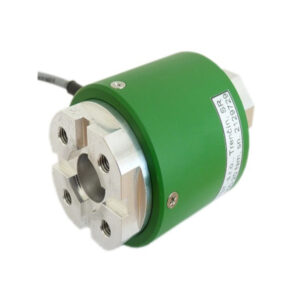
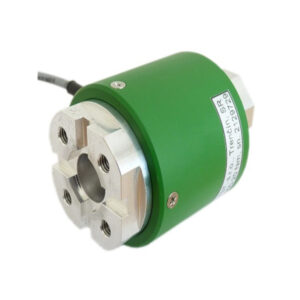
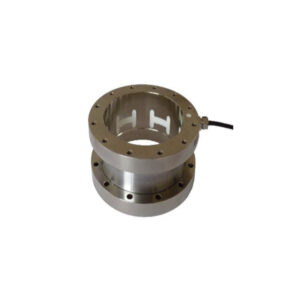
Torque sensors are precision devices used to measure the twisting force, or torque, applied to shafts or equipment. They convert mechanical torque into electrical signals, enabling monitoring and control in industrial systems. Common terms encountered in procurement and specifications include torque transducer, static torque measurement, Nm (Newton-meter), strain gauge, signal output, and sensor calibration.
Within this category you will find torque sensors with different ranges and configurations. Products include the EMS300 torque sensor available in variants with rated capacities of 10, 20, 50, 100, 200, and 500 Newton-meters. Also included is the EMS310 torque sensor, designed for static torque measurement with a range of up to 700 Nm. All products use strain gauge technology, have variations related to output sensitivity, zero balance, and overload limits. They offer options suitable for different measurement scales and mounting requirements.
These torque sensors are employed in applications such as testing the characteristics of gearboxes, verifying maximum torque capacity, and performing control of torque in static setups. Related considerations include signal conditioning, overload protection, and bridge calibration. Industries that commonly require these products include mechanical testing labs, automotive powertrain development, industrial automation, and quality assurance departments where accurate static torque readings are essential.
Torque sensors are devices that sense non-rotating (static) torque applied between two fixed shafts or in a stationary configuration. Primary function is to translate mechanical torque into an electrical output. Key technical characteristics include rated capacity (e.g. 10-700 Nm), overload ratings such as safe and ultimate overload (e.g. 130 % / 150 % of full scale), nominal sensitivity (for example 1.5 mV/V with ±2 %), and zero balance error. Dimensional materials vary: small ranges often employ aluminum bodies; higher torque ranges use stainless steel for body construction. Performance parameters also include non-linearity, hysteresis, and temperature coefficients (effects on zero and output per 10 °C). Sensors are also rated for protection (e.g. IP54) and feature defined cable types and bridges with input-output impedances suited to the working environment. Common variations include sensors with different torque ranges and construction materials, and those designed to suppress axial and radial force components. When selecting a torque sensor, consider the measurement range, overload capacity, environmental conditions (temperature, moisture, ingress protection), output type, sensitivity, construction material, and compatibility with signal conditioning or electronic interface. Standard compliance often involves full scale error tolerances, bridge resistance values, and protection classes such as IP ratings.
MEMIDOS provides access to verified industrial manufacturers and suppliers globally, without intermediaries. That means procurement professionals can establish direct relationships, reducing overhead and enabling clearer pricing. The platform manages funds securely via an escrow mechanism: payment is held until order conditions such as shipment are fulfilled, offering protection for buyers and ensuring reliability for suppliers. Industrial buyers benefit from access to high-quality torque sensors from trusted sources, improved transparency of specifications, and streamlined international sourcing processes.
English
Български (Bulgarian)
Hrvatski (Croatian)
Čeština (Czech)
Dansk (Danish)
Nederlands (Dutch)
Suomi (Finnish)
Français (French)
Deutsch (German)
Ελληνικά (Greek)
Magyar (Hungarian)
Italiano (Italian)
Norsk bokmål (Norwegian Bokmål)
Polski (Polish)
Português (Portuguese (Portugal))
Română (Romanian)
Русский (Russian)
Español (Spanish)
Svenska (Swedish)
Türkçe (Turkish)