
Cart
No products in the cart.
 English
 Български (Bulgarian)
 Hrvatski (Croatian)
 Čeština (Czech)
 Dansk (Danish)
 Nederlands (Dutch)
 Suomi (Finnish)
 Français (French)
 Deutsch (German)
 Ελληνικά (Greek)
 Magyar (Hungarian)
 Italiano (Italian)
 Norsk bokmål (Norwegian Bokmål)
 Polski (Polish)
 Português (Portuguese (Portugal))
 Română (Romanian)
 Русский (Russian)
 Español (Spanish)
 Svenska (Swedish)
 Türkçe (Turkish)
Showing all 8 resultsSorted by popularity
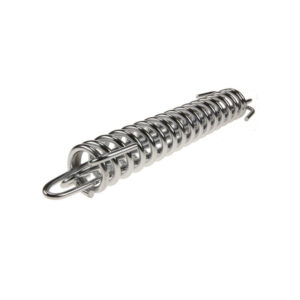
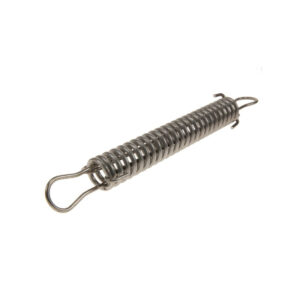
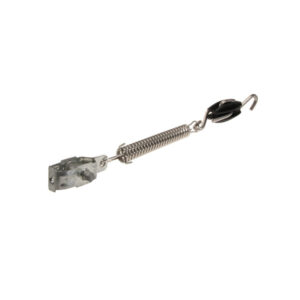
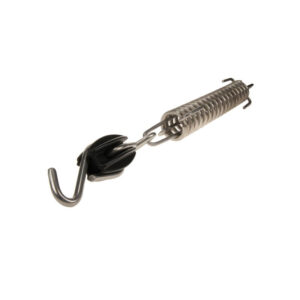
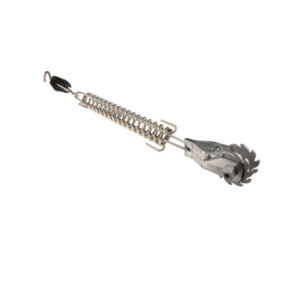
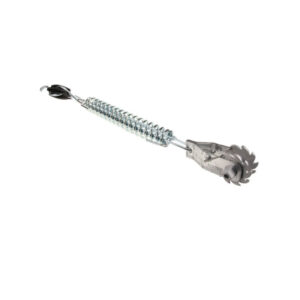
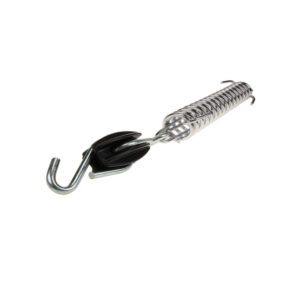
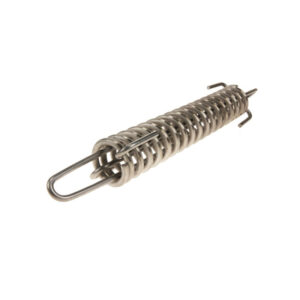
Springs in electric fencing accessories are tension devices designed to maintain wire tension across fencing systems. Used in agriculture and forestry, these springs ensure wires remain taut despite weather and load changes. Key components include straining springs, spring sets, and configurations incorporating tensioners. Industrial buyers often select galvanized or stainless steel springs and spring sets with tensioners or ratchet tensioners for durable, reliable performance.
This category includes straining springs in various sizes — large and small — in stainless steel and galvanized finishes. You’ll also find spring sets, some including ratchet tensioners or egg insulators. Materials offered are stainless steel and galvanized steel. Spring sets vary from plain combinations to kits with built-in tensioners or ratchet mechanisms to permit adjustable tension on electric fence wires. Each type is clearly marked with its material and whether it includes extra components like tensioners or insulators.
These springs and spring sets are used in electric fencing systems to maintain consistent force on wire or rope wire across fields and pastures. In livestock containment, gates and spans between posts rely on straining springs or spring sets with ratchet tensioners to absorb seasonal expansion and contraction. Complementary components include “wire tensioners” and “galvanized fence hardware,” which are often selected together. Professionals use these accessories when installing, repairing, or upgrading fencing to ensure safe, effective containment and clear electrical continuity.
Springs used in electric fencing perform tensioning of wire or rope to maintain mechanical force. Key technical characteristics include material composition (stainless steel or galvanized steel), size (large versus small), and the presence or absence of built-in tensioning mechanisms such as ratchet tensioners or egg insulators. Straining springs function under static load and fluctuating environmental stress. Spring sets combine multiple components — such as small springs plus insulators — and vary in durability and corrosion resistance depending on finish. Standards like CE marking indicate conformity to European safety and material regulations; stainless steel offers higher corrosion resistance, while galvanized steel offers economical strength. Selection depends on load (wire or rope diameter, span length), environmental conditions (humidity, exposure), compatibility with tensioner hardware, and required durability under mechanical strain.
MEMIDOS offers industrial buyers access to a global B2B platform where springs are sourced directly from verified manufacturers and suppliers without intermediaries. This model reduces additional markup and supports more efficient procurement. Buyers benefit from a payment protection system: funds are held in escrow until order conditions, such as shipment, are met. This process ensures protection and payment reliability. The platform simplifies international sourcing by providing clear product specifications, verified materials, and finishes — making technical evaluation more transparent for procurement professionals.
English
Български (Bulgarian)
Hrvatski (Croatian)
Čeština (Czech)
Dansk (Danish)
Nederlands (Dutch)
Suomi (Finnish)
Français (French)
Deutsch (German)
Ελληνικά (Greek)
Magyar (Hungarian)
Italiano (Italian)
Norsk bokmål (Norwegian Bokmål)
Polski (Polish)
Português (Portuguese (Portugal))
Română (Romanian)
Русский (Russian)
Español (Spanish)
Svenska (Swedish)
Türkçe (Turkish)