
Cart
No products in the cart.
 English
 Български (Bulgarian)
 Hrvatski (Croatian)
 Čeština (Czech)
 Dansk (Danish)
 Nederlands (Dutch)
 Suomi (Finnish)
 Français (French)
 Deutsch (German)
 Ελληνικά (Greek)
 Magyar (Hungarian)
 Italiano (Italian)
 Norsk bokmål (Norwegian Bokmål)
 Polski (Polish)
 Português (Portuguese (Portugal))
 Română (Romanian)
 Русский (Russian)
 Español (Spanish)
 Svenska (Swedish)
 Türkçe (Turkish)
Showing all 5 resultsSorted by popularity
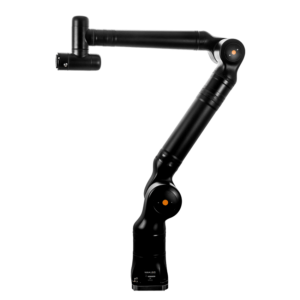
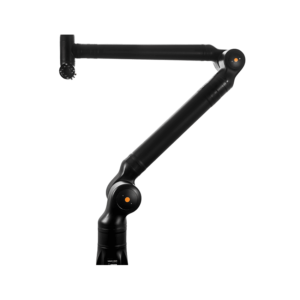
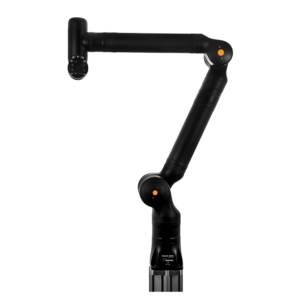
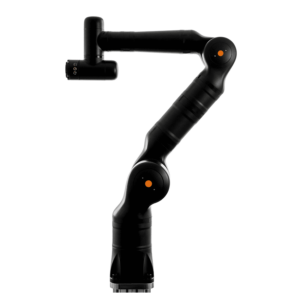
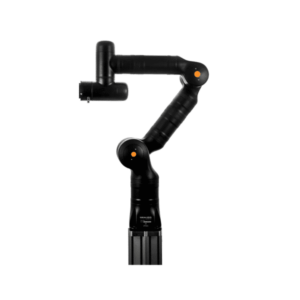
Collaborative robots, also known as cobots, are robots designed to work safely alongside humans in industrial environments. They combine multiple axes—commonly 7 degrees of freedom—with payload capacities and reach dimensions tailored for tasks such as machine tending, pick-and-place, quality inspection, and packaging. These machines offer precision, flexibility, and adaptability in modern automation systems.
This category includes several models of collaborative robots, all featuring 7 axes and varying in reach and payload. Products include robots with reaches of 850 mm up to 1800 mm, and payload capacities ranging from 5 kg to 18 kg. For example, there are models with payloads of 5 kg and reaches of 1200 or 1800 mm, and others able to handle 10 kg at 1400 mm reach or 18 kg at 1000 mm. All variants share common structural and technical foundations like multi-axis arms and modular control platforms.
Collaborative robots in this range serve many downstream applications: machine tending, where they load or unload CNC or other manufacturing machinery; packaging and palletizing in logistics or food processing; pick-and-place operations for electronics or consumer goods; quality inspection and metrology tasks requiring high repeatability. In laboratories and dispensing environments, their precision controls and feedback systems—including force or torque sensitivity—support repeatable operations. They are commonly used in precision robotics and industrial automation applications.
These collaborative robots are articulated manipulators with seven axes—this extra degree of freedom allows for increased maneuverability and the ability to reach around corners or into constrained workspaces. Key technical characteristics include payload, reach, repeatability, joint speed, protection ratings, and environmental tolerances. Payload specifies the maximum load at the tool flange, with values from 5 kg to 18 kg; reach measures the distance from base mounting point to the tool center point. Repeatability is the positional accuracy, often specified in millimeters. Joint speeds can exceed 200 degrees per second. Protection class IP54 is typical for parts exposed to dust or light liquid exposure. Materials such as anodized aluminum are used for structural components to balance stiffness and weight.
Typical use case contexts include enclosure-free collaborative work cells, assembly lines with restricted space, laboratory dispensing operations, and finish work where human oversight is required. Variations among models center on reach vs. payload trade-offs: longer reach often comes with reduced payload. Technical compliance considerations might include CE marking or relevant safety standards for collaborative operation. Selection considerations include operating temperature range, ambient humidity, safety force limits, compatibility with existing control systems, and tool interfaces. End-of-arm tooling and electrical I/O capabilities also factor into integration.
MEMIDOS is a global B2B platform for industrial equipment, enabling procurement professionals worldwide to source collaborative robots directly from verified manufacturers and suppliers. By eliminating intermediaries, buyers benefit from more efficient procurement and competitive pricing. Payments are handled securely via escrow: funds are held by MEMIDOS until order conditions—such as shipment—are met, protecting the buyer’s interests while assuring reliability for the supplier. The platform facilitates international sourcing with improved transparency into technical specifications, supplier credentials, and product compliance.
English
Български (Bulgarian)
Hrvatski (Croatian)
Čeština (Czech)
Dansk (Danish)
Nederlands (Dutch)
Suomi (Finnish)
Français (French)
Deutsch (German)
Ελληνικά (Greek)
Magyar (Hungarian)
Italiano (Italian)
Norsk bokmål (Norwegian Bokmål)
Polski (Polish)
Português (Portuguese (Portugal))
Română (Romanian)
Русский (Russian)
Español (Spanish)
Svenska (Swedish)
Türkçe (Turkish)