
Cart
No products in the cart.
 English
 Български (Bulgarian)
 Hrvatski (Croatian)
 Čeština (Czech)
 Dansk (Danish)
 Nederlands (Dutch)
 Suomi (Finnish)
 Français (French)
 Deutsch (German)
 Ελληνικά (Greek)
 Magyar (Hungarian)
 Italiano (Italian)
 Norsk bokmål (Norwegian Bokmål)
 Polski (Polish)
 Português (Portuguese (Portugal))
 Română (Romanian)
 Русский (Russian)
 Español (Spanish)
 Svenska (Swedish)
 Türkçe (Turkish)
Showing all 9 resultsSorted by popularity
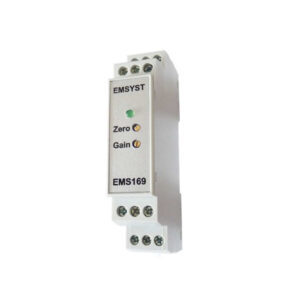
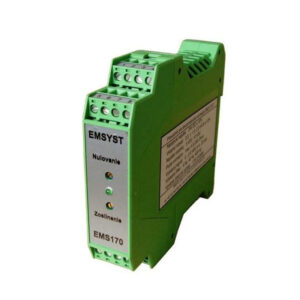
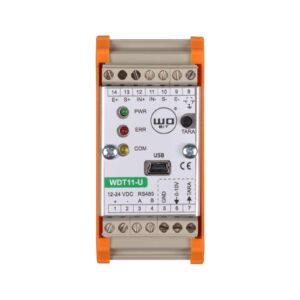
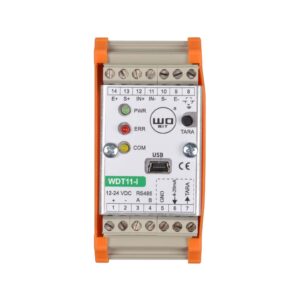
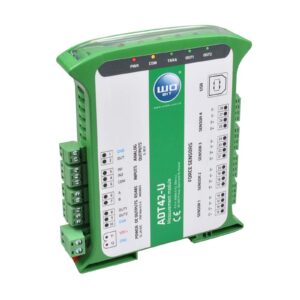
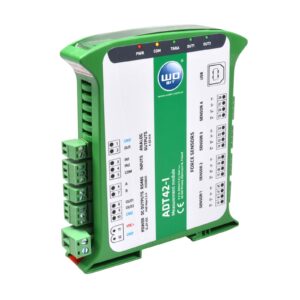
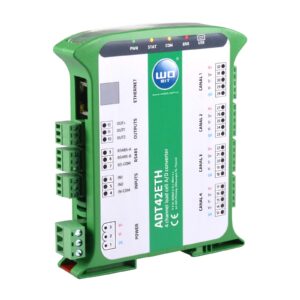
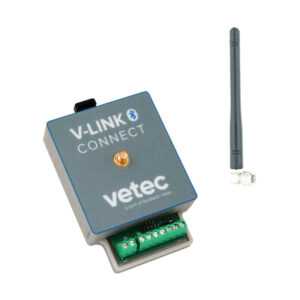
A signal conditioner is an electronic device used in industrial settings to convert, enhance or isolate signals from sensors into standardized output forms. It works with strain gauges, force sensors, or load cells to provide analog (0-10 V, 4-20 mA) or digital (RS485, Ethernet) signals. Key functions include signal filtering, gain adjustment, interface conversion, and output scaling for precise industrial measurement.
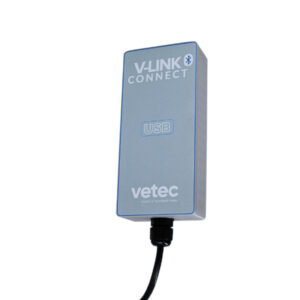
In this category you will find signal conditioners designed for force sensors and strain gauges. Some modules support a single force sensor input, while others handle multiple strain gauge channels—up to four or more. Output types include analog signals such as 0-10 V or 4-20 mA and digital communication via interfaces like RS485 or Ethernet. There are also signal conditioners that include additional functions like tare inputs, signal filtering, threshold outputs, and USB ports for configuration.
Signal conditioners in this category are used in load measurement, force sensing, weighing systems, and tension/compression monitoring. They are commonly applied in industrial automation, process control, test stands, and manufacturing lines where precise force, weight or strain measurement is critical. These use cases include load cell interfaces, strain gauge amplifiers, and weighing electronics, especially where analog‐to‐digital conversion, threshold detection, or multi‐sensor summing functions are needed.
Signal conditioners here interface directly with strain gauges or force sensors. Key technical characteristics include input bridge types (4-wire or 6-wire strain gauge), differential excitation voltages, and the maximum differential voltage (e.g. ±39 mV). Analog output ranges often include 0-10 V or 4-20 mA, with digital outputs using RS485 or Ethernet supporting protocols like MODBUS. Performance parameters include resolution (often 16- to 19-bit or effective divisions), sample rate or frequency (e.g. up to ~120 measurements/second), temperature error coefficients (often ~0.0025 % per °C), and protection ratings such as IP20.
Common variations include single-channel vs multi-channel units, analog vs digital output models, units with built-in functions like tare, signal filtering, threshold outputs, or USB/Ethernet/RS485 interfaces. Standards and certifications often include CE marking for electromagnetic compatibility and safety. Important selection considerations include the operating voltage (12-30 VDC), ambient temperature range, environmental protection (IP rating), compatibility with sensor type, and the required output format and communication protocol for integration into control or data acquisition systems.
MEMIDOS functions as a global B2B platform offering direct access to manufacturers and suppliers without intermediaries. Buyers can source industrial signal conditioners with verified quality while bypassing middle-men, which supports operational cost efficiency. The escrow-based payment model ensures funds are held until shipment conditions are met, safeguarding both buyer and supplier. Through this platform, procurement professionals gain transparent access to industrial electronics like signal conditioners, with secure transactions and simplified international sourcing.
English
Български (Bulgarian)
Hrvatski (Croatian)
Čeština (Czech)
Dansk (Danish)
Nederlands (Dutch)
Suomi (Finnish)
Français (French)
Deutsch (German)
Ελληνικά (Greek)
Magyar (Hungarian)
Italiano (Italian)
Norsk bokmål (Norwegian Bokmål)
Polski (Polish)
Português (Portuguese (Portugal))
Română (Romanian)
Русский (Russian)
Español (Spanish)
Svenska (Swedish)
Türkçe (Turkish)