
Cart
No products in the cart.
 English
 Български (Bulgarian)
 Hrvatski (Croatian)
 Čeština (Czech)
 Dansk (Danish)
 Nederlands (Dutch)
 Suomi (Finnish)
 Français (French)
 Deutsch (German)
 Ελληνικά (Greek)
 Magyar (Hungarian)
 Italiano (Italian)
 Norsk bokmål (Norwegian Bokmål)
 Polski (Polish)
 Português (Portuguese (Portugal))
 Română (Romanian)
 Русский (Russian)
 Español (Spanish)
 Svenska (Swedish)
 Türkçe (Turkish)
Showing all 11 resultsSorted by popularity
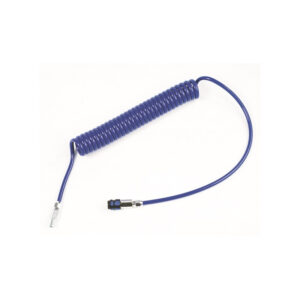
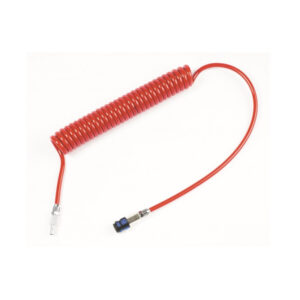
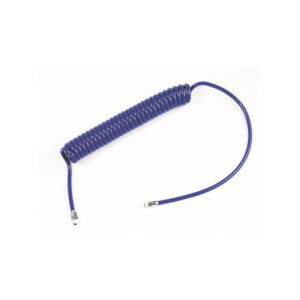
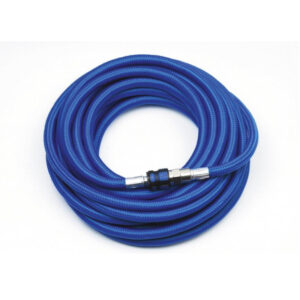
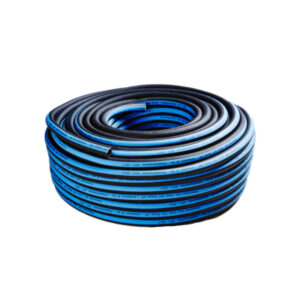
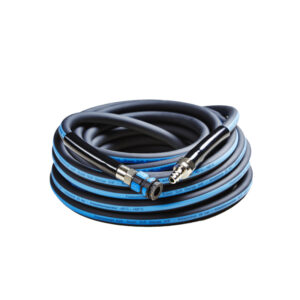
Compressed air hoses are flexible conduits designed to transport pressurised air from compressors to pneumatic tools and systems. Industrial professionals frequently seek hoses made from materials such as polyurethane, nitrile, or reinforced polymer that offer high durability, chemical resistance, and pressure ratings. Common products in this category include compressed air hoses, pneumatic hoses, spiral hoses, extension hoses, and safety couplers.
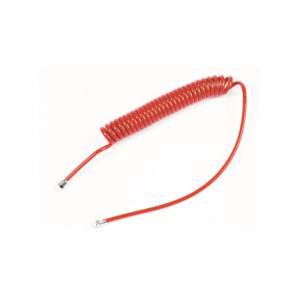
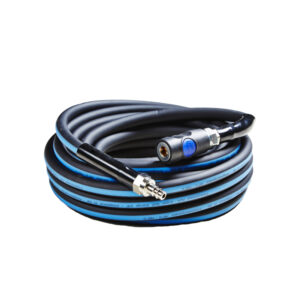
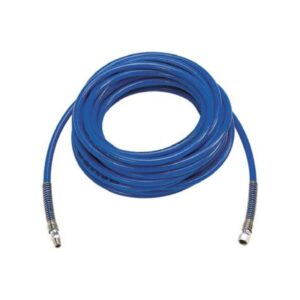
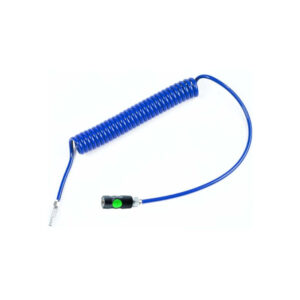
This category contains spiral hoses made of PUR with standard couplers and nipples, available in colours like red or blue and in various working lengths and diameters. You’ll also find SuperSoft hoses—polymer hoses known for flexibility—offering versions with safety couplers or safety nipples. Extension hoses made from reinforced nitrile rubber with textile exteriors and flame-retardant features are included. Standard polyurethane air hoses suitable for workshop use with specified inner and outer diameters are also part of the product range.
These compressed air hoses are used in workshops, manufacturing lines, automotive repair, and industrial assembly where compressed air powers tools and machinery. Spiral hoses serve well for intermittent applications requiring compact storage and repeated flexing, while extension hoses provide reach over larger areas such as production shops or service bays. SuperSoft hoses are suitable where manoeuvrability or operator comfort is important. Air hoses are also applied in environments that require chemical or oil resistance, extreme temperature tolerance, or flame-retardant safety standards.
Compressed air hoses serve the primary function of safely conveying air at elevated pressures from compressors to pneumatic equipment. Key technical characteristics include the hose material—typical materials are polyurethane (PUR), nitrile rubber (NBR), or polymer types—each offering different levels of flexibility, abrasion resistance, and chemical compatibility. Important performance parameters are maximum working pressure, often 10-20 bar, temperature range (for example -20 °C to +80 °C), inner and outer diameter, wall reinforcement, coupling system standards, and colour coding.
Typical variations within this category include spiral hoses (which coil and stretch), extension hoses with couplers and nipples, hoses with safety couplers prevent accidental decoupling, and tanks-length hoses built for continuous feed. Hoses differ by flexibility, pressure rating, connection type (thread size, coupler series like 1625), and external protection including flame-retardant coverings. Applicable standards include CE marking and compatibility with European standard couplers. Selection considerations for specifying hoses include ambient and operating temperature, pressure load, exposure to oils or fuels, route layout (straight runs, bends, coiling), hose diameter to avoid pressure drop, and coupling compatibility with existing pneumatic systems.
MEMIDOS is a global B2B platform supplying industrial equipment where buyers can source compressed air hoses directly from manufacturers and verified suppliers. Procurement is more efficient because there are no middle-men inflating costs. All transactions use a secure escrow-based payment system: funds are held by MEMIDOS until order conditions such as shipment are confirmed, offering protection to buyers and payment reliability to suppliers. The platform simplifies international procurement and brings transparency in sourcing high-quality industrial hoses across borders.
English
Български (Bulgarian)
Hrvatski (Croatian)
Čeština (Czech)
Dansk (Danish)
Nederlands (Dutch)
Suomi (Finnish)
Français (French)
Deutsch (German)
Ελληνικά (Greek)
Magyar (Hungarian)
Italiano (Italian)
Norsk bokmål (Norwegian Bokmål)
Polski (Polish)
Português (Portuguese (Portugal))
Română (Romanian)
Русский (Russian)
Español (Spanish)
Svenska (Swedish)
Türkçe (Turkish)