
Cart
No products in the cart.
 English
 Български (Bulgarian)
 Hrvatski (Croatian)
 Čeština (Czech)
 Dansk (Danish)
 Nederlands (Dutch)
 Suomi (Finnish)
 Français (French)
 Deutsch (German)
 Ελληνικά (Greek)
 Magyar (Hungarian)
 Italiano (Italian)
 Norsk bokmål (Norwegian Bokmål)
 Polski (Polish)
 Português (Portuguese (Portugal))
 Română (Romanian)
 Русский (Russian)
 Español (Spanish)
 Svenska (Swedish)
 Türkçe (Turkish)
Showing all 6 resultsSorted by popularity
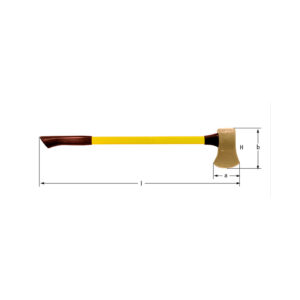
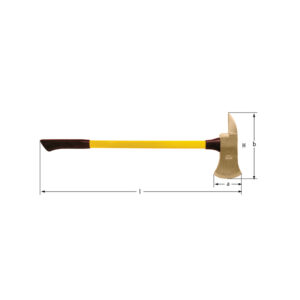
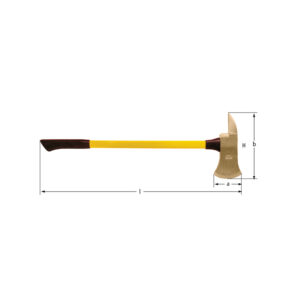
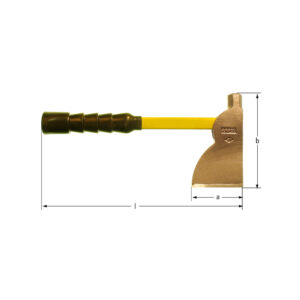
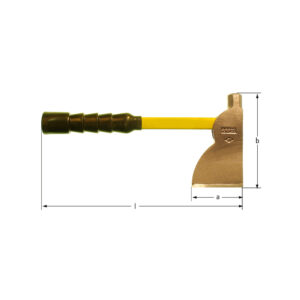
Hatchets - Non-sparking refers to hand tools specifically designed for chopping or splitting tasks where there is a risk of fire or explosion in industrial settings. These tools are made from non-sparking, non-magnetic materials such as aluminium bronze and beryllium copper to prevent ignition. The category targets procurement of safety certified hatchets for hazardous environments and specialized industrial materials handling.
This category includes hatchets made from aluminium bronze and hatchets made from beryllium copper. Variants include flat-head felling axes, firemen’s axes and standard hatchets in both materials. Each hatchet type comes with options such as different handle styles, head weights, and material choices. The material type directly affects both performance and compliance in high-risk work zones.
Non-sparking hatchets are used in industries such as petrochemical, gas production, mining, chemical processing, and oil pipelines where flammable vapors, gases or combustible dust are present. They are essential for maintenance, emergency response, and construction tasks within explosive atmospheres. They are commonly specified to meet ATEX requirements and other explosion-protection standards. These hatchets help reduce ignition risk while enabling chopping, splitting, shaping of wood, insulation or packaging materials safely.
Hatchets in this category are designed to perform cutting or chopping without generating sparks when striking hard surfaces. They are typically constructed using non-ferrous alloys such as aluminium bronze or beryllium copper. Aluminium bronze hatchets tend to be harder and more resistant to wear, while beryllium copper provides greater elasticity and toughness. Head design can vary from flat head to axe-style or fireman’s profile, with weight and balance adapted to specific chopping or splitting tasks. The handles must be compatible with the chosen handle material, secure mounting and grip stability. Standards such as ATEX and BAM are relevant for hatchets used in explosive atmospheres, verifying low permission magnetic permeability and spark resistance under impact. Selection considerations include ambient atmosphere (gas group, vapor or dust), temperature range, durability under repeated impact, corrosion resistance, magnetic permeability, and head-to-handle ratio. Operational tolerances for head alignment, sharpness, and alloy hardness affect safety and cutting efficiency.
MEMIDOS is a global B2B platform connecting industrial buyers with verified manufacturers and suppliers offering non-sparking hatchets. Direct purchasing without intermediaries ensures more efficient procurement and competitive pricing. Payment handling is secure and escrow-based, ensuring funds are held until order conditions such as shipment are met, providing protection for buyers and securing reliability for suppliers. The platform simplifies international sourcing by offering transparent product information, certified non-sparking and non-magnetic materials, and a selection designed to meet industrial safety requirements.
English
Български (Bulgarian)
Hrvatski (Croatian)
Čeština (Czech)
Dansk (Danish)
Nederlands (Dutch)
Suomi (Finnish)
Français (French)
Deutsch (German)
Ελληνικά (Greek)
Magyar (Hungarian)
Italiano (Italian)
Norsk bokmål (Norwegian Bokmål)
Polski (Polish)
Português (Portuguese (Portugal))
Română (Romanian)
Русский (Russian)
Español (Spanish)
Svenska (Swedish)
Türkçe (Turkish)