
Cart
No products in the cart.
 English
 Български (Bulgarian)
 Hrvatski (Croatian)
 Čeština (Czech)
 Dansk (Danish)
 Nederlands (Dutch)
 Suomi (Finnish)
 Français (French)
 Deutsch (German)
 Ελληνικά (Greek)
 Magyar (Hungarian)
 Italiano (Italian)
 Norsk bokmål (Norwegian Bokmål)
 Polski (Polish)
 Português (Portuguese (Portugal))
 Română (Romanian)
 Русский (Russian)
 Español (Spanish)
 Svenska (Swedish)
 Türkçe (Turkish)
Showing 1–16 of 165 resultsSorted by popularity
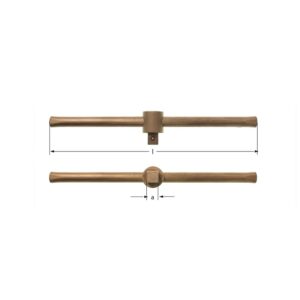
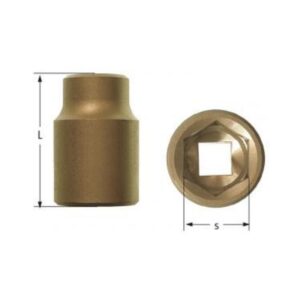
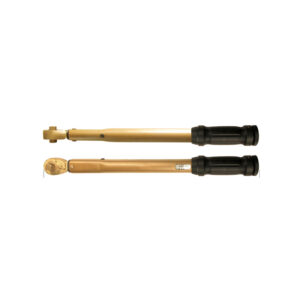
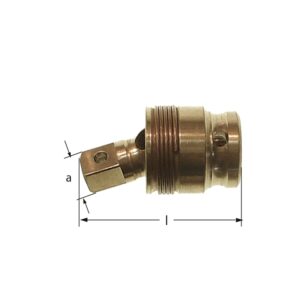
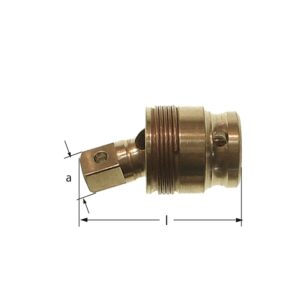
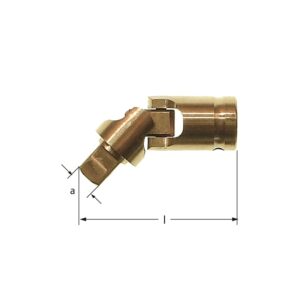
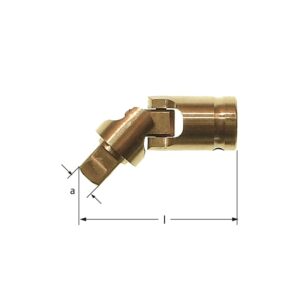
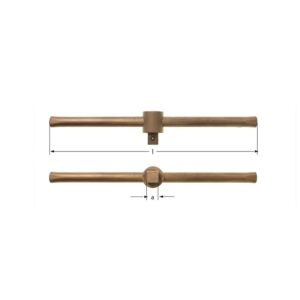
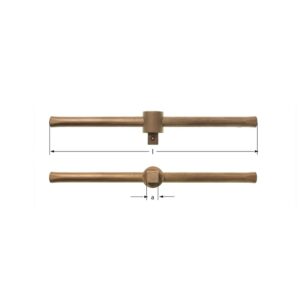
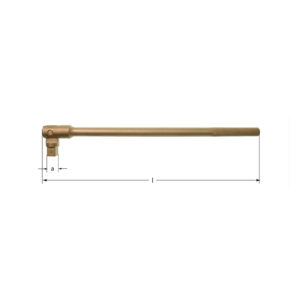
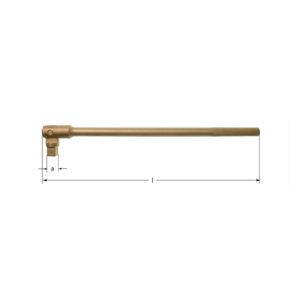
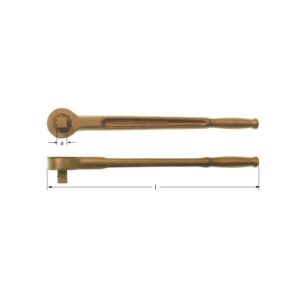
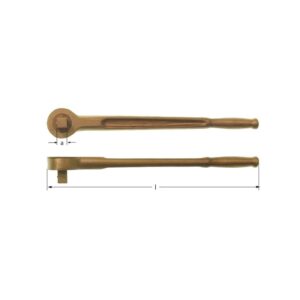
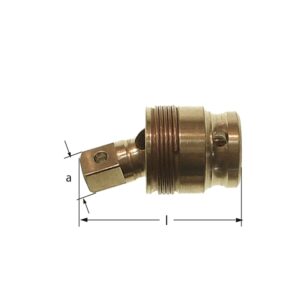
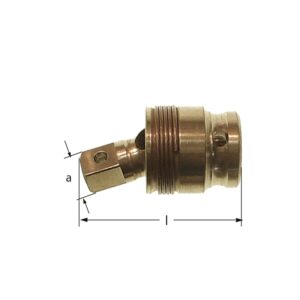
Socket spanner – non-sparking refers to a specialized tool category comprising socket wrenches and related accessories made from non-sparking, non-magnetic alloys. These tools use materials like aluminium bronze and beryllium copper and are designed for industrial environments where ignition risk from sparks must be mitigated. These tools are often described as non-sparking, non-magnetic socket wrenches and explosion-proof hand tools.
This category includes socket spanners produced in both metric and inch sizing made from aluminium bronze or beryllium copper materials. Products listed feature types such as metric socket spanner-heads with standard drive sizes (e.g. 1/2″, 3/4″, 1″), universal joints and sliding T-handles adapted for socket spanner use. Each product variation specifies drive type and material type explicitly as either aluminium bronze or beryllium copper in metric or inch dimensions.
Non-sparking socket spanners are used in industries handling flammable gases, vapours, liquids or dust where standard steel tools could cause ignition. Common settings include chemical processing plants, oil and gas installations, refineries and mining operations. Engineers often require torque transmission tools, fittings and fastener interfaces that are safe under ATEX or hazardous area ratings. They are commonly used alongside other explosion-proof tools and hazardous area hand tools.
Socket spanners in this non-sparking category serve to apply torque to fasteners in environments where sparks or magnetic interference pose a safety risk. The primary function is to tighten or loosen nuts or bolts using sockets mounted on drive tools. The key technical characteristics involve material composition—aluminium bronze and beryllium copper alloys—that confer low spark-generation and non-magnetic properties. Drive sizes range from fractions of an inch to large inch or metric sockets depending on application. Dimensions such as socket size, drive thickness and socket depth affect compatibility. Performance parameters include impact resistance and hardness within material limits. Compliance with standards—such as ATEX zones or EN 80079-38 for non-sparking tools—is relevant where explosion protection certification is required. Variations include socket heads, full socket sets, universal joints, sliding T-handles and hinged socket spanners. Considerations for technical selection include environmental factors (presence of explosive atmospheres), temperature ranges, compatibility with existing drive tools, torque requirements, fit space constraints, corrosion resistance and whether magnetic interference matters for adjacent equipment.
MEMIDOS is a global B2B platform connecting procurement professionals with manufacturers and suppliers of industrial equipment. By purchasing socket spanners without intermediaries, buyers gain access to more efficient sourcing and potentially more competitive pricing. MEMIDOS uses secure escrow-based payment, ensuring buyer protection until order conditions—such as shipment—are met, while providing payment reliability for suppliers. All products featured come from verified suppliers, offering access to high quality non-sparking tools for hazardous environments. The platform streamlines international procurement and enhances transparency in sourcing technical hand tools.
English
Български (Bulgarian)
Hrvatski (Croatian)
Čeština (Czech)
Dansk (Danish)
Nederlands (Dutch)
Suomi (Finnish)
Français (French)
Deutsch (German)
Ελληνικά (Greek)
Magyar (Hungarian)
Italiano (Italian)
Norsk bokmål (Norwegian Bokmål)
Polski (Polish)
Português (Portuguese (Portugal))
Română (Romanian)
Русский (Russian)
Español (Spanish)
Svenska (Swedish)
Türkçe (Turkish)