
Cart
No products in the cart.
 English
 Български (Bulgarian)
 Hrvatski (Croatian)
 Čeština (Czech)
 Dansk (Danish)
 Nederlands (Dutch)
 Suomi (Finnish)
 Français (French)
 Deutsch (German)
 Ελληνικά (Greek)
 Magyar (Hungarian)
 Italiano (Italian)
 Norsk bokmål (Norwegian Bokmål)
 Polski (Polish)
 Português (Portuguese (Portugal))
 Română (Romanian)
 Русский (Russian)
 Español (Spanish)
 Svenska (Swedish)
 Türkçe (Turkish)
Showing all 11 resultsSorted by popularity

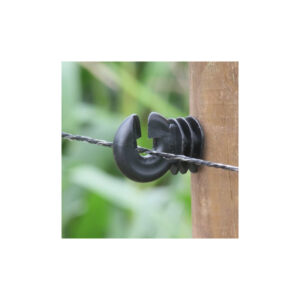
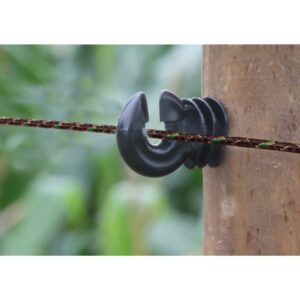
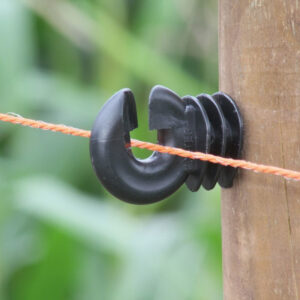
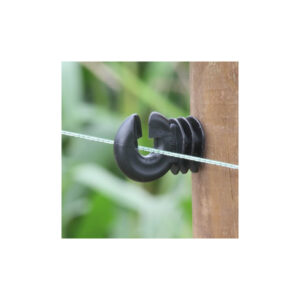
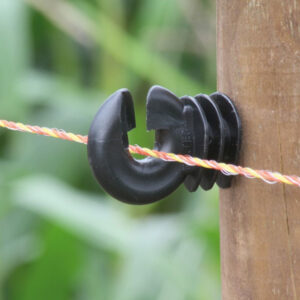
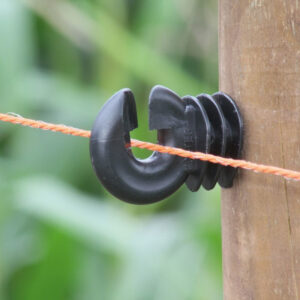
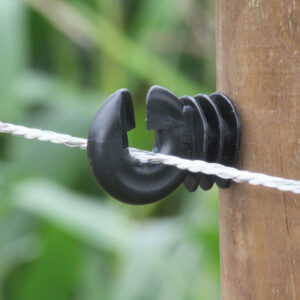
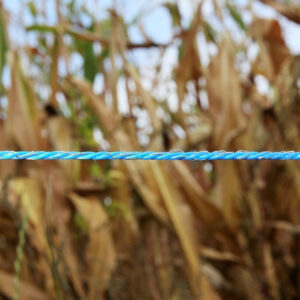
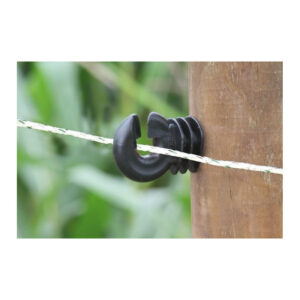
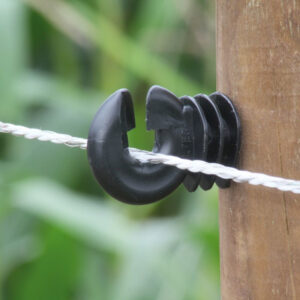
Poly wire is a flexible wire option for electric fencing composed of steel conductors encased in synthetic polymer (polyethylene or polypropylene). It delivers low-resistance conductive paths while being lightweight and weather-resistant. Industrial and agricultural professionals choose poly wire for durable electric fencing and may select variants such as 2 mm polywire or versions with stainless steel conductors.
This category contains poly wire products in various diameters, colors, conductor configurations, and package sizes. You’ll see polywire with thicknesses of about 2 mm, 3 mm, and 3.5 mm. Wire colors include black, orange, white, green, and combinations such as white-&-green or black-&-white. Package lengths range from shorter 100-meter rolls to longer rolls at 250 m, 500 m, and up to 1000 m in some cases. Conductors are often multi-strand stainless steel wires embedded in the polymer outer material.
Poly wire is used primarily in livestock containment, permanent and temporary electric fencing, rotational grazing systems, and boundary delineation. Factors such as electric fence wire resistance and fencing conductor stainless steel are relevant when assessing performance. These products are applied in pasture management, wildlife control, enclosure of sensitive areas, and farm subdivisions. Environments include exposed outdoor settings, wet or damp conditions, and locations requiring visible markers (colors) for safety and ease of maintenance.
Poly wire is designed to combine conductive metal core strength with outer polymer insulation. Key technical characteristics include diameter (nominal wire thickness), breaking strength (tensile load before failure), electrical resistance per meter, number of metal strands (conductors), and material of conductors (typically stainless steel). For example, a 2 mm wire may have 3 stainless steel conductors and a breaking strength around 40-55 kg; a thicker 3.5 mm wire could bear up to about 160 kg. Resistance is inversely related to conductor cross-section: lower resistance per meter results when multiple strands are used.
Variations include wire thicknesses—2 mm for lighter loads or shorter spans; 3-3.5 mm for heavier duties or longer run lengths. Wire color can signal visibility and integration into landscape. Wire resistance and conductor combination affect how evenly voltage is maintained over distance. CE marking is noted for compliance in European markets; conformity to standards governing electrical safety and materials is relevant. Considerations when selecting poly wire include environmental exposure (UV, moisture, temperature), required voltage retention, animal behavior (bite, rubbing), and compatibility with energisers and insulators.
MEMIDOS is a global B2B platform connecting industrial equipment purchasers directly with manufacturers and verified suppliers. Buyers communicate and order poly wire without intermediaries, reducing complexity and avoiding unnecessary markups. Payments are handled via escrow protection: funds are held until shipment and order conditions are met, providing security for both buyers and suppliers. Through MEMIDOS buyers gain access to high-quality poly wire from reliable sources, improving transparency in sourcing and simplifying international procurement processes.
English
Български (Bulgarian)
Hrvatski (Croatian)
Čeština (Czech)
Dansk (Danish)
Nederlands (Dutch)
Suomi (Finnish)
Français (French)
Deutsch (German)
Ελληνικά (Greek)
Magyar (Hungarian)
Italiano (Italian)
Norsk bokmål (Norwegian Bokmål)
Polski (Polish)
Português (Portuguese (Portugal))
Română (Romanian)
Русский (Russian)
Español (Spanish)
Svenska (Swedish)
Türkçe (Turkish)