
Cart
No products in the cart.
 English
 Български (Bulgarian)
 Hrvatski (Croatian)
 Čeština (Czech)
 Dansk (Danish)
 Nederlands (Dutch)
 Suomi (Finnish)
 Français (French)
 Deutsch (German)
 Ελληνικά (Greek)
 Magyar (Hungarian)
 Italiano (Italian)
 Norsk bokmål (Norwegian Bokmål)
 Polski (Polish)
 Português (Portuguese (Portugal))
 Română (Romanian)
 Русский (Russian)
 Español (Spanish)
 Svenska (Swedish)
 Türkçe (Turkish)
Showing all 8 resultsSorted by popularity
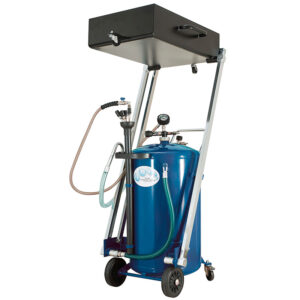
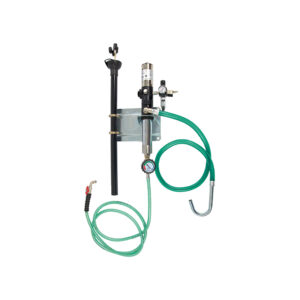
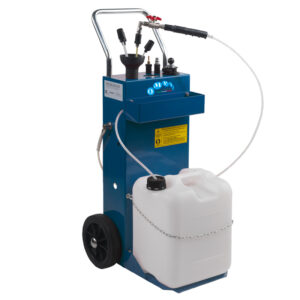
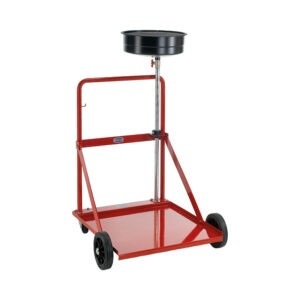
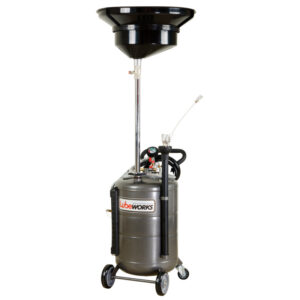
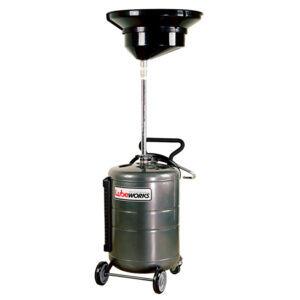
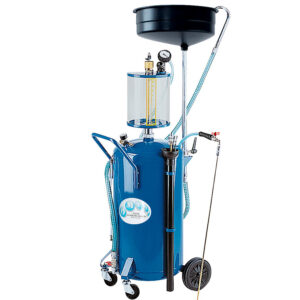
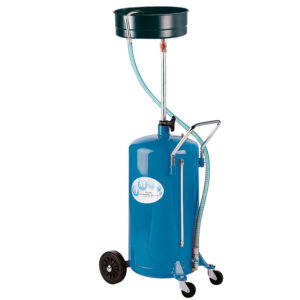
Waste oil handling refers to the equipment and systems used to collect, contain, drain, and manage used oils in automotive repair shops and industrial workshops. It includes tools such as mobile drainer units, oil collectors, suction or pantograph devices designed for efficient oil fluid transfer and containment. Professionals often seek reliable solutions for handling waste oil safely under varying temperature and capacity conditions.
In this category you will find a range of mobile units for waste oil collection and oil draining. Capacities of available equipment include 80 L, 115 L, or 70-100 L. Performance types include pantograph oil drainer units with built-in suction, mobile drainer & suction units, oil collectors with height adjustable bowls and multiple suction probes, and simple mobile oil drainers.
These waste oil handling products are used in automotive repair garages, maintenance workshops, and system service centres. Common use cases include draining engine or gearbox oil, collecting used lubricant from differential units, or servicing equipment where spilled or residual oil must be collected safely. Typical applications include oil collection systems and mobile oil collectors. Regarding industrial operations, these units are deployed where environmental regulation requires containment of hazardous fluid discharge or where efficient fluid removal improves downtime and safety in working environments.
Waste oil handling products are designed for the containment and transfer of waste oil under controlled conditions. Technical characteristics include tank capacity (e.g. 70 L, 80 L, 100 L, 115 L), adjustable bowl height (for example 1 250-1 790 mm), and inclusion of suction probes or hoses. Performance parameters such as vacuum pressure, maximum discharge pressure, and suction speed are critical for selecting appropriate equipment. Materials typically include painted steel collection bowls and robust structural frames, with design attention to anti-splash grids and extended pour funnels.
Common variations differ by method of collection: drainer & suction units use pantograph arms or pumps; oil collectors allow both gravity draining and suction; mobile drainer units without suction may rely on elevated bowls. Certifications such as CE-marking may apply, ensuring compliance with safety and health standards. Selection considerations include operating temperature of the oil, compatibility of hoses and probes with oil viscosity and chemical composition, placement under vehicle, capacity for volume of waste oil generated, and durability under workshop conditions.
MEMIDOS is a global B2B platform connecting industrial equipment purchasers with verified manufacturers and suppliers. Buyers access waste oil handling equipment directly, without intermediaries, allowing procurement that is more efficient and pricing that reflects manufacturer value. Secure payment is handled via escrow: funds are held until order conditions such as shipment are fulfilled, which protects buyers and confirms reliability for suppliers. Through transparent sourcing and direct supplier relationships, procurement professionals can access high-quality industrial equipment with greater confidence and fewer layers of transaction.
English
Български (Bulgarian)
Hrvatski (Croatian)
Čeština (Czech)
Dansk (Danish)
Nederlands (Dutch)
Suomi (Finnish)
Français (French)
Deutsch (German)
Ελληνικά (Greek)
Magyar (Hungarian)
Italiano (Italian)
Norsk bokmål (Norwegian Bokmål)
Polski (Polish)
Português (Portuguese (Portugal))
Română (Romanian)
Русский (Russian)
Español (Spanish)
Svenska (Swedish)
Türkçe (Turkish)