
Cart
No products in the cart.
 English
 Български (Bulgarian)
 Hrvatski (Croatian)
 Čeština (Czech)
 Dansk (Danish)
 Nederlands (Dutch)
 Suomi (Finnish)
 Français (French)
 Deutsch (German)
 Ελληνικά (Greek)
 Magyar (Hungarian)
 Italiano (Italian)
 Norsk bokmål (Norwegian Bokmål)
 Polski (Polish)
 Português (Portuguese (Portugal))
 Română (Romanian)
 Русский (Russian)
 Español (Spanish)
 Svenska (Swedish)
 Türkçe (Turkish)
Showing 1–16 of 50 resultsSorted by popularity
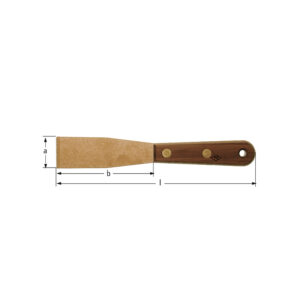
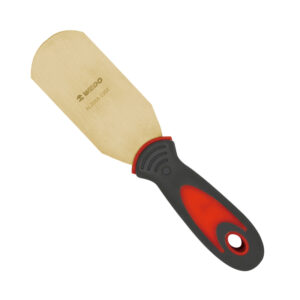
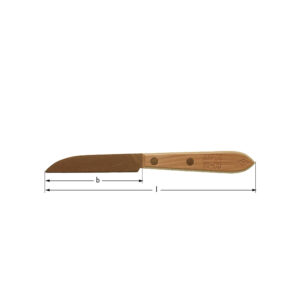
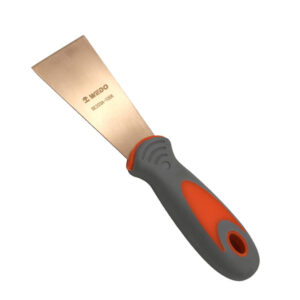
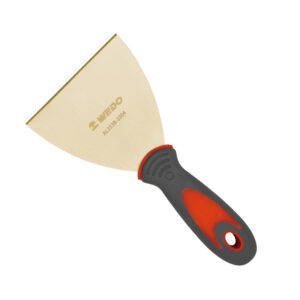
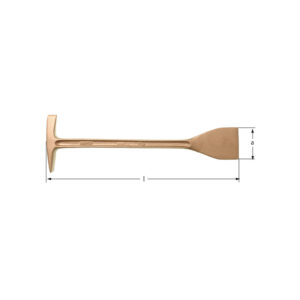
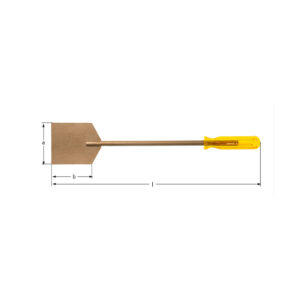
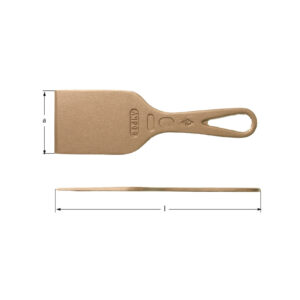
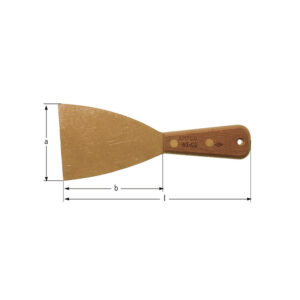
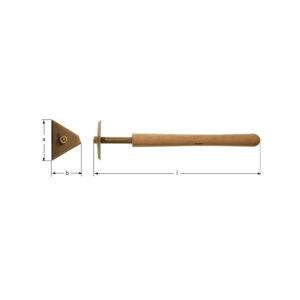
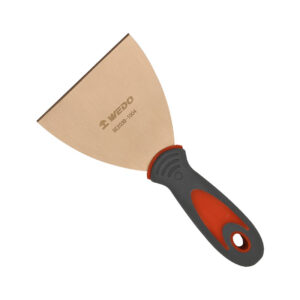
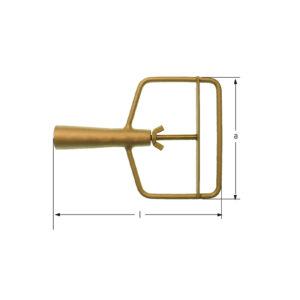
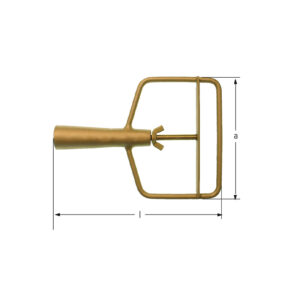
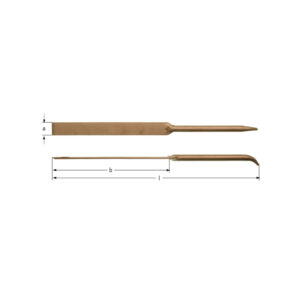
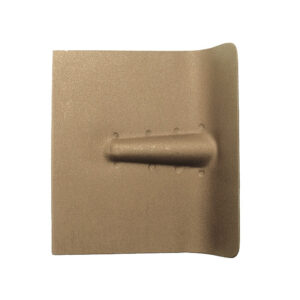
Knives and scrapers non-sparking are hand tools engineered to avoid spark generation during use. Constructed from alloys like nickel copper, aluminium bronze, or nickel-bronze, they offer safety in explosive or flammable environments. Industrial buyers search for non-sparking knives and scrapers to ensure safe cut-in, peel, or scrape operations without risking ignition.
This category features non-sparking knives and scrapers made from materials such as aluminium bronze, beryllium copper, and nickel copper. You will find variations including putty knives, cleaning scrapers or pick scrapers, gasket knives with curved handles, flexible blade knives, floor and spray-booth scrapers, triangular plate scrapers and painter’s scrapers. Some tools come with handles, others without, and styles vary from stiff to flexible blades to suit different surface types and contours.
Non-sparking knives and scrapers are typically used in environments where combustible gases, dust, or vapours are present, such as petrochemical plants, oil and gas refineries, food processing areas, and paint spray booths. These tools are applied for removing gaskets, scraping coatings, cleaning weld spatter, prepping surfaces, or trimming material. They are also described as inert atmosphere tools or explosion-proof hand tools, reflecting needs for tools compatible with safety and compliance in hazardous locations.
Non-sparking knives and scrapers are hand-held tools whose primary function is to cut, scrape, or remove material while avoiding spark production. Materials used include nickel copper, aluminium bronze, and nickel copper alloys, chosen for low friction and non-ferrous properties. Blade dimensions, thickness, and flexibility are key parameters: stiff blades for heavy material removal or rigid surfaces; flexible blades or curved handles for conforming to contours. Tolerance in manufacturing ensures uniform thickness and shape to reduce risk of brittle failure.
Typical use cases involve hazardous atmospheres classified under standards for explosive or flammable risk, such as ATEX or IECEx zones, where spark control is essential. Within the category, variations differ by material composition (e.g. aluminium bronze vs beryllium copper) and by blade design (flat vs curved, stiff vs flexible), each offering different wear resistance and mechanical strength. Selection considerations include compatibility with the substance being scraped (acids, coatings), surface hardness, tool shape, and operating conditions like temperature or residue type. Also relevant are certification and compliance markings indicating suitability for non-sparking usage.
MEMIDOS is a global B2B platform connecting procurement professionals directly with manufacturers and suppliers of industrial tools. Buying non-sparking knives and scrapers here means dealing without intermediaries, which allows for more efficient sourcing and competitive pricing. MEMIDOS secures payment via an escrow-based system so funds are held until order conditions such as shipment are met, protecting buyers while ensuring reliability for suppliers. All products are offered by verified suppliers, giving access to industrial tools with quality you can audit. The platform aims to simplify international procurement and enhance transparency in sourcing non-sparking tools.
English
Български (Bulgarian)
Hrvatski (Croatian)
Čeština (Czech)
Dansk (Danish)
Nederlands (Dutch)
Suomi (Finnish)
Français (French)
Deutsch (German)
Ελληνικά (Greek)
Magyar (Hungarian)
Italiano (Italian)
Norsk bokmål (Norwegian Bokmål)
Polski (Polish)
Português (Portuguese (Portugal))
Română (Romanian)
Русский (Russian)
Español (Spanish)
Svenska (Swedish)
Türkçe (Turkish)