
Cart
No products in the cart.
 English
 Български (Bulgarian)
 Hrvatski (Croatian)
 Čeština (Czech)
 Dansk (Danish)
 Nederlands (Dutch)
 Suomi (Finnish)
 Français (French)
 Deutsch (German)
 Ελληνικά (Greek)
 Magyar (Hungarian)
 Italiano (Italian)
 Norsk bokmål (Norwegian Bokmål)
 Polski (Polish)
 Português (Portuguese (Portugal))
 Română (Romanian)
 Русский (Russian)
 Español (Spanish)
 Svenska (Swedish)
 Türkçe (Turkish)
Showing all 10 resultsSorted by popularity
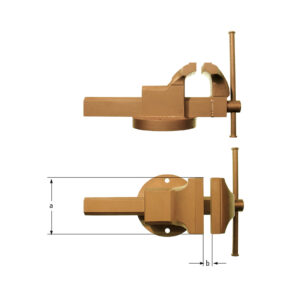
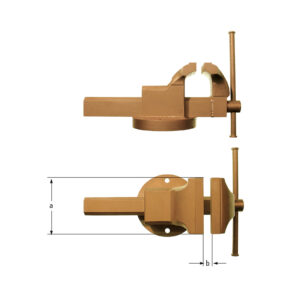
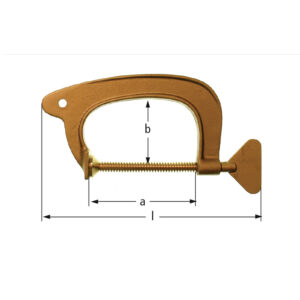
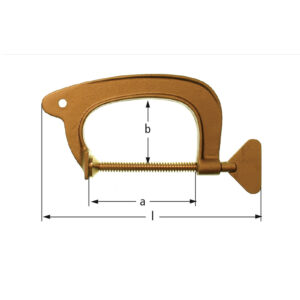



This category includes non-sparking, non-magnetic clamps and vices designed for hazardous environments where sparks and magnetic attraction must be avoided. The range features tools constructed from aluminium bronze and beryllium copper, materials known for low electrical conductivity and non-reactivity under extreme conditions. Ideal for industrial purchase, these tools fulfil safety-critical requirements in sectors like petrochemical, offshore, and explosion-prone manufacturing.
Within this category, you’ll find parallel vices made from beryllium copper and aluminium bronze; grounding clamps in both materials; bars designed for screw clamps; screw clamps with bar; and standard screw clamps without bar attachments. Every product is explicitly categorized as “non-sparking” and each variant is available in both aluminium bronze (“AlBz”) and beryllium copper (“BeCu”). Designs include full-size vices, screw-bar clamp assemblies, and grounding clamp styles.
Non-sparking clamps and vices are applied in environments where explosive gases, combustible dusts, or flammable vapors could be ignited by mechanical sparks. They are used in petrochemical plants, offshore oil and gas operations, chemical processing, and mining settings. Grounding clamps help establish secure electrical bonds to prevent static discharge. Parallel vices and screw clamps secure workpieces in non-sparking machining, maintenance, and assembly tasks. Related product descriptions include “explosion-proof tools”, “spark resistant clamps”, and “intrinsically safe vices”.
These non-sparking clamps and vices are engineered primarily to avoid ignition sources in flammable atmospheres. Materials such as aluminium bronze and beryllium copper are selected for non-ferrous properties, low magnetic permeability, and resistance to spark formation. Critical dimensions include jaw opening, throat depth, and screw-thread pitch, which determine capacity and clamping force. Parallel vices maintain jaw alignment over the full stroke, while screw clamps may include a bar to extend leverage. Grounding clamps are designed to conduct static to earth with minimal resistance. Variations within the category differ in size, jaw shape (flat, serrated), bar-lengths, and load capacity. Certifications or compliance with safety standards relevant to non-sparking hand tools may include ATEX or IECEx directives, or equivalent national standards. Selection should consider environment temperature, corrosive exposure, load to be secured, compatibility with existing work-holding systems, and whether non-magnetic behaviour is required alongside non-sparking performance.
MEMIDOS serves procurement professionals seeking industrial tools from global manufacturers and suppliers without intermediaries. Direct purchasing eliminates middle-men, aiming to improve procurement efficiency and maintain competitive pricing. Transaction security is provided via an escrow-based payment system, holding funds until agreed order conditions—such as confirmed shipment—are met, protecting both buyer and supplier. All non-sparking clamps and vices offered are sourced from verified suppliers, ensuring product traceability. This platform simplifies international procurement and increases transparency in sourcing non-sparking industrial equipment.
English
Български (Bulgarian)
Hrvatski (Croatian)
Čeština (Czech)
Dansk (Danish)
Nederlands (Dutch)
Suomi (Finnish)
Français (French)
Deutsch (German)
Ελληνικά (Greek)
Magyar (Hungarian)
Italiano (Italian)
Norsk bokmål (Norwegian Bokmål)
Polski (Polish)
Português (Portuguese (Portugal))
Română (Romanian)
Русский (Russian)
Español (Spanish)
Svenska (Swedish)
Türkçe (Turkish)