
Cart
No products in the cart.
 English
 Български (Bulgarian)
 Hrvatski (Croatian)
 Čeština (Czech)
 Dansk (Danish)
 Nederlands (Dutch)
 Suomi (Finnish)
 Français (French)
 Deutsch (German)
 Ελληνικά (Greek)
 Magyar (Hungarian)
 Italiano (Italian)
 Norsk bokmål (Norwegian Bokmål)
 Polski (Polish)
 Português (Portuguese (Portugal))
 Română (Romanian)
 Русский (Russian)
 Español (Spanish)
 Svenska (Swedish)
 Türkçe (Turkish)
Showing all 13 resultsSorted by popularity
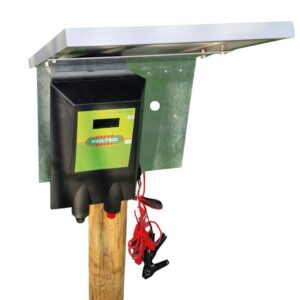
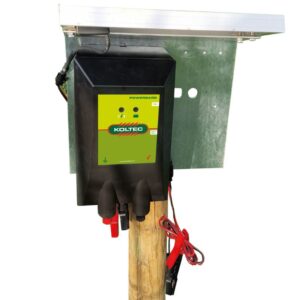
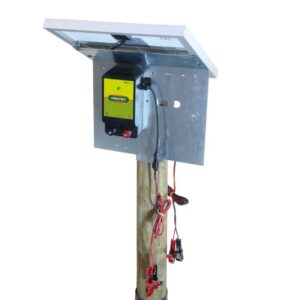
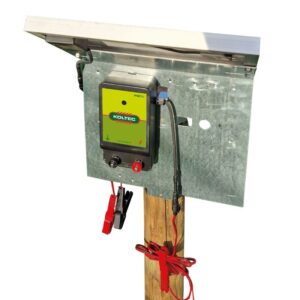
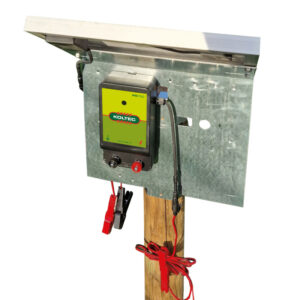
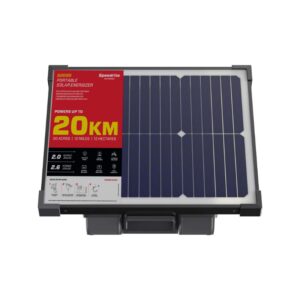
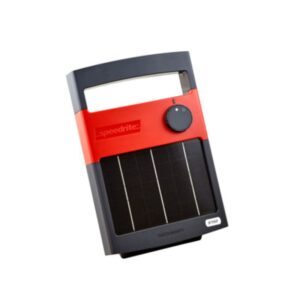
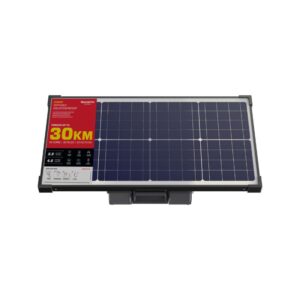
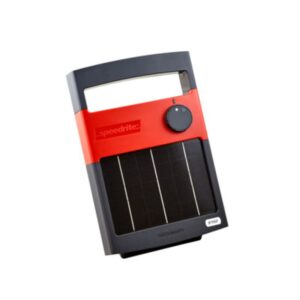
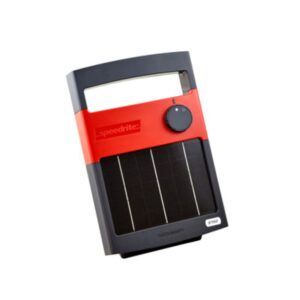
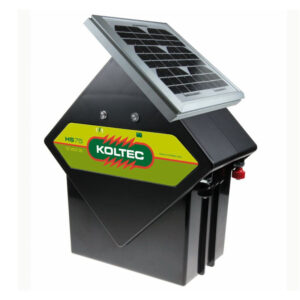
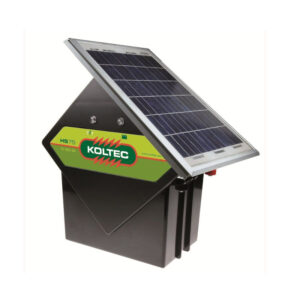
Solar powered electric fence energiser refers to equipment combining an energiser unit with a solar panel to deliver pulses of high-voltage electric current along fencing wires or poly-wire. These systems use solar panels to charge a 12 V battery; the energiser then produces voltage impulses for containing livestock or isolating areas, supplying kilovolt-level peaks and joule-rated energy output. Ideal for agricultural and grazing settings where mains power is unavailable.
The category offers a range of solar-powered electric fence energisers and complete solar sets. These include combination units such as the PG50, PG100, PG200, and Powergard series equipped with solar panels (10 W or 20 W). Also included are standalone solar energiser units like the HS75+ type. Devices from both Koltec and Speedrite appear, covering smaller to medium-scale setups. These product types vary by output power, supplied solar panel wattage, included accessories, and warranty durations.
These solar energisers are used in agriculture, forestry, and livestock management to power electric fencing where electrical infrastructure is remote or intermittent. Common scenarios include grazing paddocks, mobile cattle or sheep fencing, game reserves, boundary fence lines, and temporary enclosures for rotational grazing. They are also applied in wildlife exclusion, perimeter security for farms, or fence electrification around forestry plots. They are also described as high voltage fence energisers and off-grid fence power systems.
Technical specifications centre on impulse energy (in joules), peak voltage, voltage under load (often measured at 500 ohms), and solar panel capacity (typically 10 W or 20 W in these products). For example, sets may deliver impulse energy ranging from about 0.5 J up to over 4 J, with peak voltages from approximately 8,500 V to 10,000 V. Solar units charge a 12-volt battery; systems are designed with battery protectors to prevent deep discharge (e.g. threshold around 10.5 V). Required battery types are 12 V, though some energisers support 12/230 V compatibility via adapters. Key technical features include duty cycle rating (how frequently pulses occur), current consumption (often tens to a few hundred milliamps), and wire length support (ranging from mobile fences under 1 km to permanent fences several km long depending on output). Functional variations include low-watt-age sets paired with smaller solar panels suitable for short fences or mobile use, and higher-energy units combined with larger panels for broader, permanent fencing. Standards such as CE marking are present for some units. Environmental selection considerations include exposure to sunlight (solar irradiance), temperature range, battery type and capacity, wire resistance, and whether vegetation growth or moisture may reduce performance. Compatibility with wire type (metal or poly wire), insulator quality, and earthing conditions are also factors to assess.
As a global B2B platform for industrial products, MEMIDOS connects procurement professionals directly with manufacturers and verified suppliers, eliminating intermediaries. This direct sourcing supports more efficient procurement and helps maintain competitive pricing. Payment handling is secured via an escrow system: funds are held by MEMIDOS until order conditions, such as shipment, are met, protecting buyers while assuring suppliers. For industrial buyers seeking reliable, verifiable solar powered electric fence energisers, MEMIDOS provides access to a broad selection of high quality units from suppliers with established credentials. The platform’s mission is to simplify international procurement and improve sourcing transparency, particularly for technical equipment where specification clarity and compliance are essential.
English
Български (Bulgarian)
Hrvatski (Croatian)
Čeština (Czech)
Dansk (Danish)
Nederlands (Dutch)
Suomi (Finnish)
Français (French)
Deutsch (German)
Ελληνικά (Greek)
Magyar (Hungarian)
Italiano (Italian)
Norsk bokmål (Norwegian Bokmål)
Polski (Polish)
Português (Portuguese (Portugal))
Română (Romanian)
Русский (Russian)
Español (Spanish)
Svenska (Swedish)
Türkçe (Turkish)