
Cart
No products in the cart.
 English
 Български (Bulgarian)
 Hrvatski (Croatian)
 Čeština (Czech)
 Dansk (Danish)
 Nederlands (Dutch)
 Suomi (Finnish)
 Français (French)
 Deutsch (German)
 Ελληνικά (Greek)
 Magyar (Hungarian)
 Italiano (Italian)
 Norsk bokmål (Norwegian Bokmål)
 Polski (Polish)
 Português (Portuguese (Portugal))
 Română (Romanian)
 Русский (Russian)
 Español (Spanish)
 Svenska (Swedish)
 Türkçe (Turkish)
Showing all 4 resultsSorted by popularity
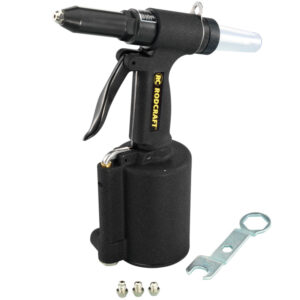
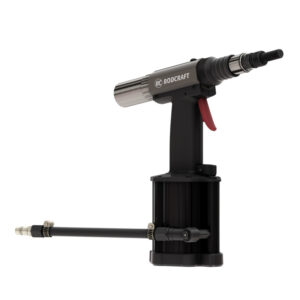
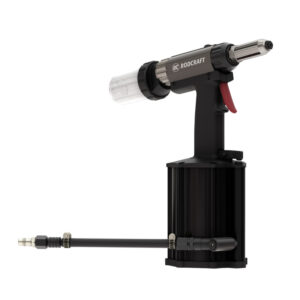
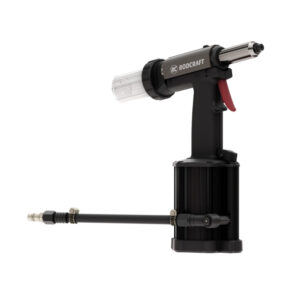
Pneumatic riveting tools are air-powered fastening devices used in industrial assembly and metal fabrication. These tools deliver force via compressed air to set rivets—both blind and solid materials—ensuring durable joints. References to these tools typically describe the tool type, rivet compatibility, and required setting force. Engineers and procurement professionals search for tools with reliable setting force, material compatibility, and precise rivet size ranges when sourcing riveting tools.
The category includes pneumatic rivet guns with varied capabilities. There are rivet guns designed for soft metals like aluminium and copper, accepting rivet sizes between about 2.4 and 5 mm and equipped with collection tanks for mandrel capture. Other products are built for solid material blind rivets such as steel and stainless steel in larger size ranges. Also featured are blind/nut rivet guns capable of setting rivet nuts from small threads up to M12, with high set force. These tools differ in force, rivet type, material compatibility, and accessory features like automatic stroke adjustment.
Air riveting tools are commonly employed in sheet metal assembly, automotive bodywork, HVAC duct installation, and industrial enclosure manufacturing. In aerospace and marine construction, stainless steel blind rivets ensure corrosion resistance. Blind/nut rivet guns facilitate assembly where rear access is obstructed. They are used for metal joining and structural fastening. These tools are also used in maintenance operations on equipment and platforms, where strong, vibration-resistant joints are required.
Pneumatic riveting tools function by converting compressed air into mechanical pulling or setting force. Essential technical characteristics include setting force ratings, typically measured in kilonewtons (kN); rivet diameter or thread size compatibility (for example standard blind rivets of 2.4–5 mm, solid blind rivets of 4.8–6.4 mm, or blind rivet nuts from M3–M12), and materials that the tool supports, such as aluminium, copper, steel, and stainless steel. Performance parameters also encompass air consumption at load, maximum operating pressure (often around 6.3 bar), hose diameter requirements, and stroke length.
Variations within this category include soft metal rivet guns—optimized for aluminium or copper—and solid material blind rivet tools—designed for tougher materials like steel. Blind/nut rivet setters are another variation, which set internally threaded inserts without requiring rear access to the workpiece. Functionally, they differ in force, range, and mechanism (e.g. automatic stroke adjustment or vacuum/mandrel collection). Industrial standards may cover air inlet thread sizes, safety certifications for pneumatic equipment, and material grade for rivets (e.g. stainless steel specifications). Selection considerations include environment (corrosive, outdoor), load requirements (static vs. dynamic), material thickness, rivet type, and compatibility with existing air supply infrastructure.
MEMIDOS is a global B2B platform designed for industrial buyers and procurement teams. It enables direct purchasing from manufacturers and verified suppliers without intermediaries, which tends to reduce procurement chain complexity and improve cost transparency. Payments are secured through escrow-based handling: funds are held until agreed conditions—such as confirmed shipment—are satisfied, protecting buyers while ensuring reliability for suppliers. This structure supports access to high-quality industrial riveting tools from reliable sources and simplifies international procurement with greater sourcing transparency.
English
Български (Bulgarian)
Hrvatski (Croatian)
Čeština (Czech)
Dansk (Danish)
Nederlands (Dutch)
Suomi (Finnish)
Français (French)
Deutsch (German)
Ελληνικά (Greek)
Magyar (Hungarian)
Italiano (Italian)
Norsk bokmål (Norwegian Bokmål)
Polski (Polish)
Português (Portuguese (Portugal))
Română (Romanian)
Русский (Russian)
Español (Spanish)
Svenska (Swedish)
Türkçe (Turkish)