
Cart
No products in the cart.
 English
 Български (Bulgarian)
 Hrvatski (Croatian)
 Čeština (Czech)
 Dansk (Danish)
 Nederlands (Dutch)
 Suomi (Finnish)
 Français (French)
 Deutsch (German)
 Ελληνικά (Greek)
 Magyar (Hungarian)
 Italiano (Italian)
 Norsk bokmål (Norwegian Bokmål)
 Polski (Polish)
 Português (Portuguese (Portugal))
 Română (Romanian)
 Русский (Russian)
 Español (Spanish)
 Svenska (Swedish)
 Türkçe (Turkish)
Showing all 11 resultsSorted by popularity
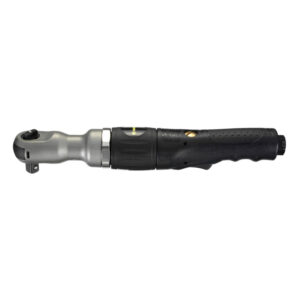
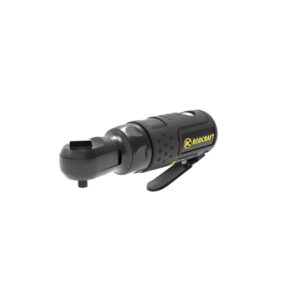
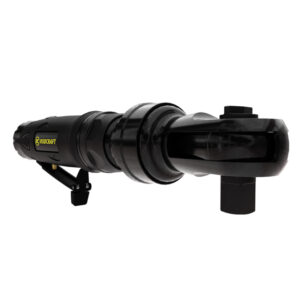
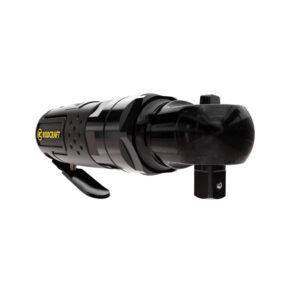
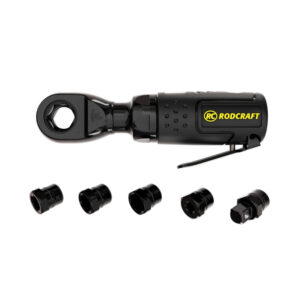
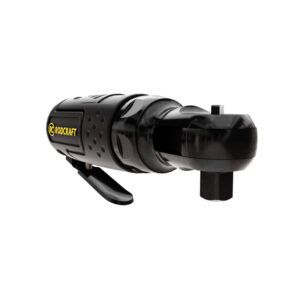
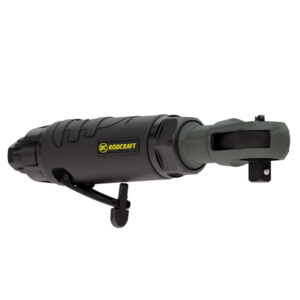
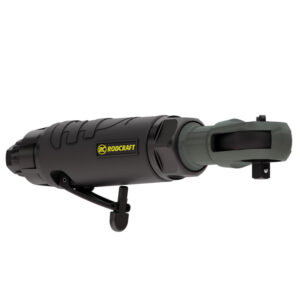
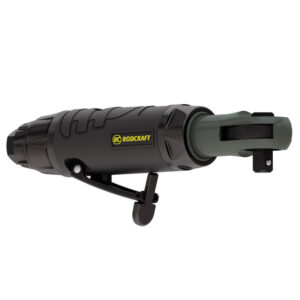
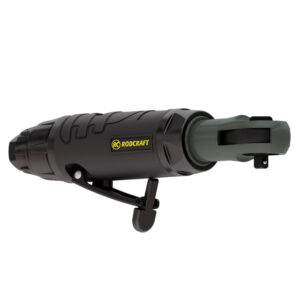
Ratchets (Air / Pneumatic) refer to powered hand tools driven by compressed air designed to deliver torque through a ratcheting mechanism. Variants include air ratchet wrenches, pneumatic mini ratchets, impact ratchets, flexible-head models, and square drive configurations. These tools are engineered for fastening, loosening, or tightening bolts, nuts, and fasteners in mechanical assemblies, vehicle maintenance, manufacturing, and similar industrial settings.
This category includes air-powered ratchet wrenches with square drives in sizes such as 1/2-inch, 3/8-inch, and 1/4-inch. Also featured are flexible-head ratchet wrenches that allow access in constrained spaces. You will find mini ratchet wrenches and mini impact ratchets, the latter combining impact mechanisms with ratcheting action. There is also a multi-function ratchet with interchangeable sockets, enabling one tool to cover several fastener types.
These air/pneumatic ratchets are used in automotive workshops for engine or chassis assembly and service, where torque control and access in tight spaces are essential. In machine maintenance, they are deployed for disassembling and reassembling equipment with torque-sensitive components. Manufacturing and assembly lines benefit from flexible-head or mini versions for efficiency in confined areas. They are also relevant to pneumatic torque wrench applications and routine maintenance of air ratchet tools.
Air ratchets convert compressed air energy into rotational force via internal mechanisms such as planetary gears or impact mechanisms. Key technical parameters include square drive size (e.g., 1/2-inch, 3/8-inch, 1/4-inch), maximum torque (ranging from around 33 Nm to 250 Nm), free speed (RPM), air inlet thread size, and minimum hose diameter requirement. Materials typically include aluminium and composite housings, with durable internal gearing and closed or ball-bearing drives for reliability. Variations include standard ratchet wrenches, flexible-head variants for reach and angle adjustment, mini ratchets for compactness, impact ratchets for higher torque peaks, and multi-function ratchets with interchangeable adapters or bit holders. Compliance with standards such as CE marking is common, and fire safety, noise levels, and working pressure regulations may apply. Selection must account for environmental conditions (such as cleanliness and moisture), required torque and speed, hose compatibility, drive size, and durability under expected loads and duty cycles.
MEMIDOS is a global B2B platform supplying industrial tools and parts from verified manufacturers and suppliers. Buyers can purchase directly from producers without intermediaries, enabling more efficient procurement and more competitive pricing. Transactions are secured via an escrow-based system: funds are held by MEMIDOS until shipment or agreed conditions are fulfilled, protecting buyers while maintaining reliability for suppliers. Users gain access to high-quality industrial ratchets and pneumatic tools with transparent sourcing and simplified international procurement.
English
Български (Bulgarian)
Hrvatski (Croatian)
Čeština (Czech)
Dansk (Danish)
Nederlands (Dutch)
Suomi (Finnish)
Français (French)
Deutsch (German)
Ελληνικά (Greek)
Magyar (Hungarian)
Italiano (Italian)
Norsk bokmål (Norwegian Bokmål)
Polski (Polish)
Português (Portuguese (Portugal))
Română (Romanian)
Русский (Russian)
Español (Spanish)
Svenska (Swedish)
Türkçe (Turkish)