
Cart
No products in the cart.
 English
 Български (Bulgarian)
 Hrvatski (Croatian)
 Čeština (Czech)
 Dansk (Danish)
 Nederlands (Dutch)
 Suomi (Finnish)
 Français (French)
 Deutsch (German)
 Ελληνικά (Greek)
 Magyar (Hungarian)
 Italiano (Italian)
 Norsk bokmål (Norwegian Bokmål)
 Polski (Polish)
 Português (Portuguese (Portugal))
 Română (Romanian)
 Русский (Russian)
 Español (Spanish)
 Svenska (Swedish)
 Türkçe (Turkish)
Showing all 6 resultsSorted by popularity
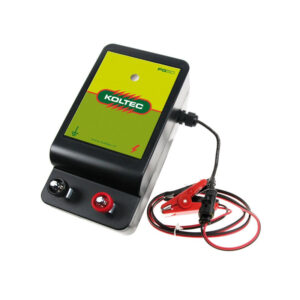
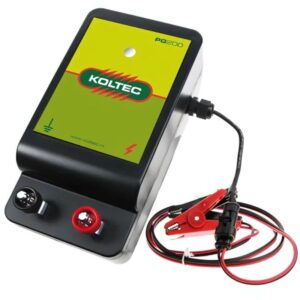
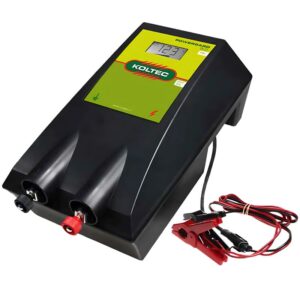
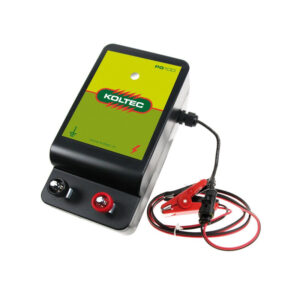
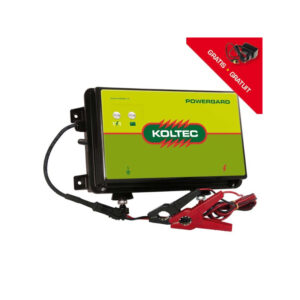
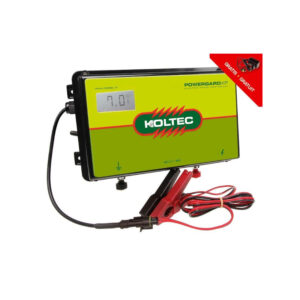
An electric fence energiser for external battery is a device that delivers high-voltage pulses to electric fencing systems using an external 12-volt battery as its primary power source. These battery-operated energisers are designed for industrial, agricultural, or forestry settings where mains power is unavailable or unreliable. They are commonly procured as battery powered energisers, high voltage fence energiser, and durable external battery units.
This category features a selection of battery-powered electric fence energisers, all from a single manufacturer. Available models include the PG50, PG100, PG200 units as well as several in the Powergard series. Each energiser is designed to operate from a 12V external battery and many also offer compatibility for solar panels or mains adapters. These units vary in pulse and charging energy, top voltage outputs, suitability for fence lengths, and indicators for battery status. Warranty periods and weather-proof casing are also consistent features.
External battery electric fence energisers are applied in environments such as remote pastures, rotational grazing systems, livestock farms, and wildlife containment. They are also suitable for mobile or temporary fencing setups where mains connection is impractical. Common use cases include livestock containment, rotational grazing, and mobile fencing. The ability to handle vegetation growth and maintain adequate voltage in heavy load conditions makes them useful for both small herds and larger perimeter fencing in rural, forestry, and conservation sectors.
These energisers are designed to store and deliver energy as electrical pulses through fence wires, using an external 12-volt battery. Their primary function is to generate short, high-voltage pulses that deter animals from crossing boundaries. Key technical characteristics include top voltage (often between 8,000 and 10,000 volts), impulse energy (in the range of 0.5-5 joules), and charging energy slightly above impulse energy to ensure reliable output. Power consumption is measured in milliamps, critical for battery sizing and estimating runtime. Variations among models include presence or absence of energy saver modes, automatic voltage boost under load (e.g. when wire voltage drops due to vegetation or contact), battery protection features to prevent deep discharge, and status indicators like lights or displays. Industrial considerations include compatibility with solar charging, CE marking or equivalent compliance, environmental protection of housing, and operation in varied operating conditions (wet, hot, dusty). Selection must consider required fence length, terrain, vegetation load, and battery capacity to ensure adequate performance under expected load conditions.
MEMIDOS operates as a global B2B platform supplying industrial products. Buyers can purchase directly from verified manufacturers and suppliers, avoiding middle-men in procurement. This structure helps secure reliable pricing and efficient sourcing. Payment is handled via secure escrow: funds are held until agreed order conditions—such as confirmed shipment—are fulfilled, ensuring buyer protection while giving suppliers payment certainty. Industrial buyers benefit from access to high-quality technical equipment, international procurement simplification, and transparency throughout sourcing.
English
Български (Bulgarian)
Hrvatski (Croatian)
Čeština (Czech)
Dansk (Danish)
Nederlands (Dutch)
Suomi (Finnish)
Français (French)
Deutsch (German)
Ελληνικά (Greek)
Magyar (Hungarian)
Italiano (Italian)
Norsk bokmål (Norwegian Bokmål)
Polski (Polish)
Português (Portuguese (Portugal))
Română (Romanian)
Русский (Russian)
Español (Spanish)
Svenska (Swedish)
Türkçe (Turkish)