
Cart
No products in the cart.
 English
 Български (Bulgarian)
 Hrvatski (Croatian)
 Čeština (Czech)
 Dansk (Danish)
 Nederlands (Dutch)
 Suomi (Finnish)
 Français (French)
 Deutsch (German)
 Ελληνικά (Greek)
 Magyar (Hungarian)
 Italiano (Italian)
 Norsk bokmål (Norwegian Bokmål)
 Polski (Polish)
 Português (Portuguese (Portugal))
 Română (Romanian)
 Русский (Russian)
 Español (Spanish)
 Svenska (Swedish)
 Türkçe (Turkish)
Showing 17–17 of 17 resultsSorted by popularity
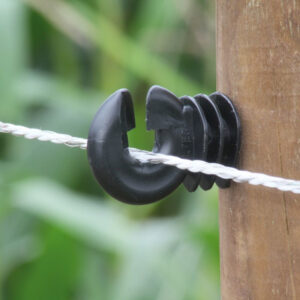
Wire for electrical fence refers to conductive and non‐conductive wires designed specifically for electrified perimeter systems used in agriculture and livestock management. It includes metal conductors, aluminium strands, and poly wire variants. These wires serve in systems where voltage, tensile strength, and insulation are engineered to contain, protect, or deter animals.
In this category you will discover poly wire, metal wire, and aluminium wire versions. Poly wire is typically synthetic and flexible. Metal wire refers to steel or other metallic conductors designed for rugged strength. Aluminium wire offers a lightweight conductive alternative. These product types are offered in various diameters such as 1.6 mm, 2 mm, 2.5 mm, and display options by length and configuration tailored for electrical fence systems.
These wires are used in livestock containment, pasture fencing, perimeter deterrents, and rotational grazing setups. Poly wire is useful in temporary or adjustable electric fence installations or mobile grazing units. Metal wire and aluminium wire are suited to longer term, fixed fencing where durability and consistent conductivity are required. Common descriptions include “electric fence wire conductor” and “livestock electric fencing materials.”
Wires for electrical fence are engineered to carry pulsed high‐voltage electrical current safely and reliably. Key technical characteristics include material type—steel, aluminium, or synthetic poly fibers with conductive elements—diameter or gauge, conductor cross‐section, tensile strength, resistance per meter, and corrosion resistance. For instance, metal and aluminium wires have low electrical resistance and high conductivity, whereas poly wire integrates fine metal strands in a non‐metal matrix offering visibility and flexibility. Dimensional variations (e.g. 1.6 mm vs 2.5 mm) affect current carrying capacity and mechanical strength. Performance parameters include voltage drop over long runs, ability to withstand environmental exposure (rain, sun, moisture), and requisite insulation. Industry standards may cover material compliance, electrical safety regulations, and corrosion or galvanization treatments. Selection considerations include conductor material relative to expected tension load, span length between fence posts, environmental exposure, compatibility with energiser output and ground system, and whether the application demands permanent or portable fencing.
MEMIDOS operates as a global B2B platform for industrial products connecting industrial buyers directly with verified manufacturers and suppliers. By removing intermediaries, procurement is more efficient and cost structures are more transparent. Payment is handled through a secure escrow system which holds funds until order conditions—such as shipment—are met, offering protection for buyers and assurance for suppliers. Buyers gain access to high‐quality industrial fencing wires from reputable suppliers worldwide. The platform simplifies international sourcing by improving visibility over product specifications, certifications, and delivery terms.
English
Български (Bulgarian)
Hrvatski (Croatian)
Čeština (Czech)
Dansk (Danish)
Nederlands (Dutch)
Suomi (Finnish)
Français (French)
Deutsch (German)
Ελληνικά (Greek)
Magyar (Hungarian)
Italiano (Italian)
Norsk bokmål (Norwegian Bokmål)
Polski (Polish)
Português (Portuguese (Portugal))
Română (Romanian)
Русский (Russian)
Español (Spanish)
Svenska (Swedish)
Türkçe (Turkish)