
Cart
No products in the cart.
 English
 Български (Bulgarian)
 Hrvatski (Croatian)
 Čeština (Czech)
 Dansk (Danish)
 Nederlands (Dutch)
 Suomi (Finnish)
 Français (French)
 Deutsch (German)
 Ελληνικά (Greek)
 Magyar (Hungarian)
 Italiano (Italian)
 Norsk bokmål (Norwegian Bokmål)
 Polski (Polish)
 Português (Portuguese (Portugal))
 Română (Romanian)
 Русский (Russian)
 Español (Spanish)
 Svenska (Swedish)
 Türkçe (Turkish)
Showing all 10 resultsSorted by popularity
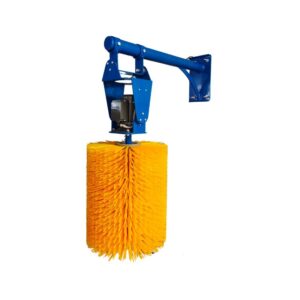
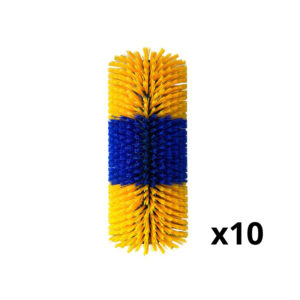
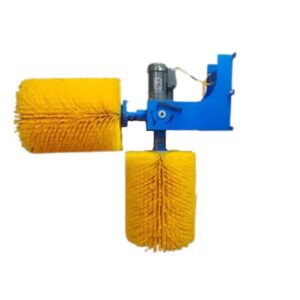
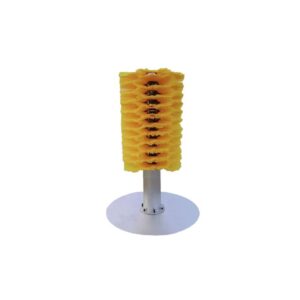
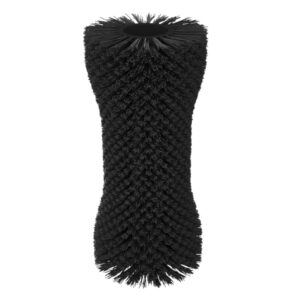
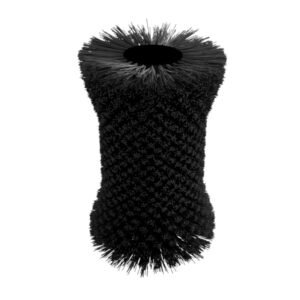
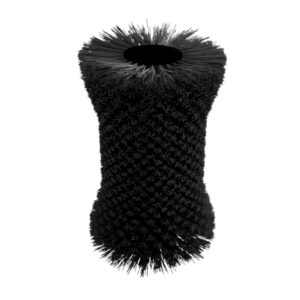
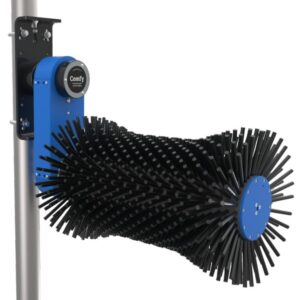
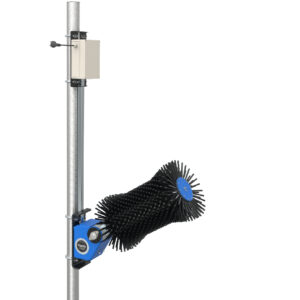
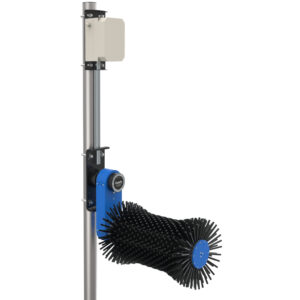
Animal brushes are grooming and hygiene tools designed for livestock, including cattle and pigs, to maintain skin health, remove dirt and parasites, and improve animal welfare in agricultural environments. They include rotating and stationary brushes for cattle, rotating brushes for pigs, and spare brush accessories used in high-quality animal grooming equipment.
This category includes rotating cow brushes—brushes powered to rotate either in twin units or via a motorized drive—and stationary cow brushes, which are fixed in place and offer basic grooming without moving parts. There are also rotating brushes for pigs, designed to operate with motion-sensitive activation or continuous rotation for pig comfort. In addition, spare brush elements for cow and pig brushes are available, allowing replacement of the brush portion without purchasing the full unit. Brush sizes vary from smaller wall-mounted units to large vertical or double‐brush panels.
Animal brushes are used in dairy and beef farming operations where livestock welfare and hygiene are priorities. Rotating cow brushes can reduce skin irritation and encourage natural grooming behaviour, often used in free‐stall barns or on pasture walkways. Stationary cow brushes are fitted in handling areas or feeding zones to allow cattle grooming without moving parts. Rotating pig brushes are deployed in pig pens to allow pigs to scratch themselves, reducing stress and aggression. Spare brush heads support ongoing maintenance and hygiene. These products are components of livestock grooming equipment and farm hygiene toolsets.
Animal brushes perform the primary function of grooming and skin health maintenance in livestock operations. Key technical characteristics include brush diameter, bristle type and density, motion type (rotating versus stationary), power supply (voltage and drive mechanism), size dimensions, and mounting style (wall, post, vertical panels). Rotating units require motors (e.g. 24 V systems) that can start upon contact or movement, often with oscillating or bidirectional rotation. Stationary brushes, by contrast, have no drive mechanism and rely on animals pushing against the bristles. Brush materials such as nylon are common for durability, hygiene and ease of cleaning. Functional variations include single or dual brush heads, vertical panels versus horizontally accessible brushes, and units suitable for pigs versus cattle. Standards relevant include electrical safety (voltage compliance), mechanical durability, moisture and heat resistance for barn conditions, and hygienic design to prevent microbial growth. Selection considerations involve the livestock species, barn environment (humidity, temperature, exposure), animal density, power availability, and ease of maintenance including spare parts like brush elements.
MEMIDOS serves industrial procurement professionals as a global B2B platform offering direct access to manufacturers and suppliers of livestock grooming tools. Without intermediaries, buyers benefit from more efficient procurement processes and competitive pricing. Payments are handled securely via escrow, where funds are held until order conditions such as shipment are confirmed, protecting both buyer and supplier. Products come from verified suppliers, giving access to high‐quality brushes and spare parts. The transparent sourcing and verified supply chains simplify international procurement and support operational reliability.
English
Български (Bulgarian)
Hrvatski (Croatian)
Čeština (Czech)
Dansk (Danish)
Nederlands (Dutch)
Suomi (Finnish)
Français (French)
Deutsch (German)
Ελληνικά (Greek)
Magyar (Hungarian)
Italiano (Italian)
Norsk bokmål (Norwegian Bokmål)
Polski (Polish)
Português (Portuguese (Portugal))
Română (Romanian)
Русский (Russian)
Español (Spanish)
Svenska (Swedish)
Türkçe (Turkish)