
Cart
No products in the cart.
 English
 Български (Bulgarian)
 Hrvatski (Croatian)
 Čeština (Czech)
 Dansk (Danish)
 Nederlands (Dutch)
 Suomi (Finnish)
 Français (French)
 Deutsch (German)
 Ελληνικά (Greek)
 Magyar (Hungarian)
 Italiano (Italian)
 Norsk bokmål (Norwegian Bokmål)
 Polski (Polish)
 Português (Portuguese (Portugal))
 Română (Romanian)
 Русский (Russian)
 Español (Spanish)
 Svenska (Swedish)
 Türkçe (Turkish)
Showing 1–16 of 17 resultsSorted by popularity
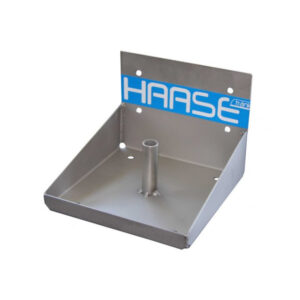
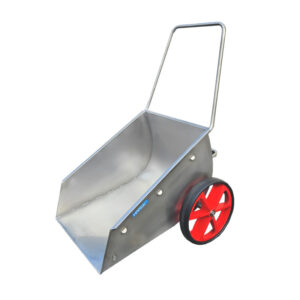
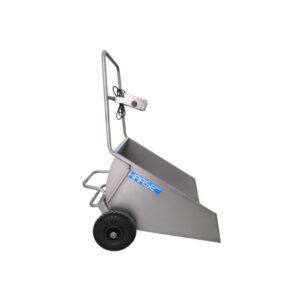
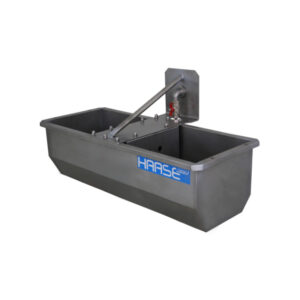
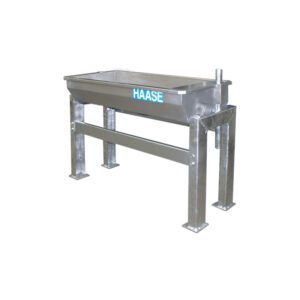
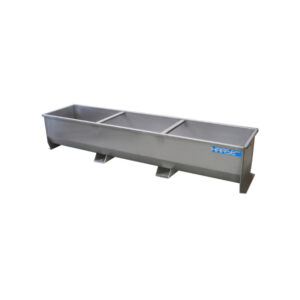
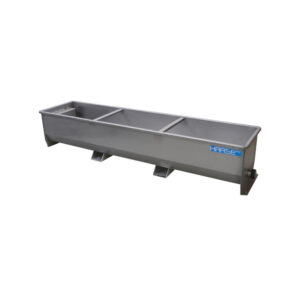
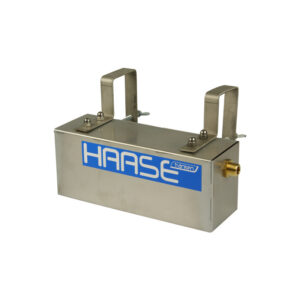
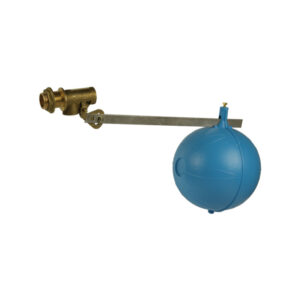
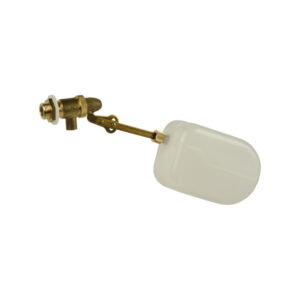
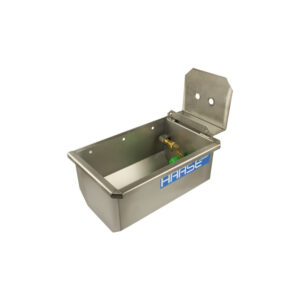
Cattle refers to livestock equipment specifically designed for use with mature bovines and calves. This category includes feeding systems, watering installations, and support accessories tailored to cattle welfare, hygiene, and productivity. It addresses the needs of ranchers, farm managers, animal husbandry engineers, and procurement specialists seeking durable cattle feeding equipment, drinking equipment, and calf handling solutions.
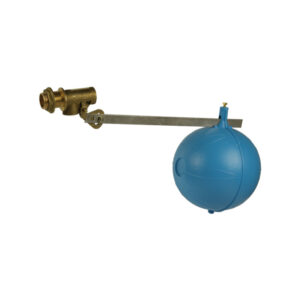
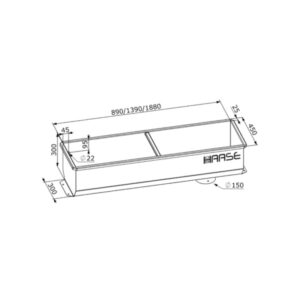
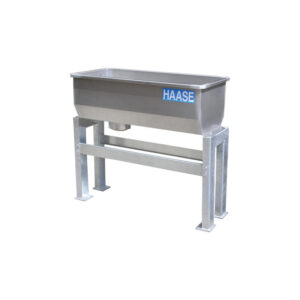
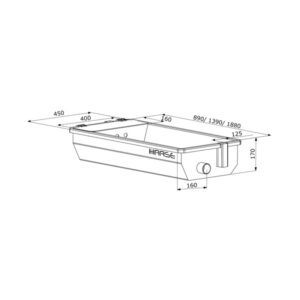
Within this cattle category you will find cattle feeding equipment such as feed troughs in stainless steel with capacities ranging to several hundred liters. Drinking equipment includes wall-mounted and floor-mounted drinking troughs with float valves, hinged covers, drain outlets, and portable water tanks suited for pastures. Calves are addressed through equipment including calf trolleys and feeding/handling tools specific to young bovines.
These products are applied in cattle operations including dairy farms, beef cattle ranches, feedlots, and pasture systems. Feeding equipment supports rations distribution indoors or outdoors and integrates into feed bunk layouts. Drinking troughs and water tanks ensure continuous supply of clean water, critical for hydration systems, animal health, and milk production. Calf handling devices aid in mobility and health monitoring during early growth stages. The category also covers livestock water systems and bovine feed trough solutions.
Cattle feeding and drinking infrastructure must meet specific technical requirements. Materials are predominantly stainless steel for corrosion resistance and hygiene. Key dimensions include trough capacities (e.g. 16-260 liters), mounting types (wall-mounted, floor-mounted, pasture-type, trolley-based), valve inlet size (e.g. R ½″, ¾″), and drain outlet diameters (1¼″, 2″). Performance parameters include water flow rate, ease of cleaning (drain outlets, hinged covers), structural rigidity (cross-bars, reinforced side panels), and suitability for pasture transport (forklift slots, portability).
Common variations include fixed troughs versus tipping troughs, indoor versus outdoor/pasture models, and drinkers integrated into water tanks. When selecting components, environmental conditions (temperature, exposure), load (herd size, animal size), compatibility (existing water lines, mounting structures), and operating conditions (cleaning cycles, freezing risk) are relevant. Compliance with food-grade material standards and CE marking or equivalent safety regulations is often required for water and feed contact surfaces.
MEMIDOS is a global B2B platform for industrial products, enabling procurement professionals to connect directly with manufacturers and suppliers. Without intermediaries, buyers benefit from streamlined sourcing and competitive pricing. Payment is handled securely via escrow, so funds are held by MEMIDOS until order conditions such as shipment are met, which protects both buyer interests and supplier reliability. All products come from verified industrial-grade suppliers, simplifying international procurement and enhancing transparency in sourcing cattle feeding, drinking, and calf handling equipment.
English
Български (Bulgarian)
Hrvatski (Croatian)
Čeština (Czech)
Dansk (Danish)
Nederlands (Dutch)
Suomi (Finnish)
Français (French)
Deutsch (German)
Ελληνικά (Greek)
Magyar (Hungarian)
Italiano (Italian)
Norsk bokmål (Norwegian Bokmål)
Polski (Polish)
Português (Portuguese (Portugal))
Română (Romanian)
Русский (Russian)
Español (Spanish)
Svenska (Swedish)
Türkçe (Turkish)