
Cart
No products in the cart.
 English
 Български (Bulgarian)
 Hrvatski (Croatian)
 Čeština (Czech)
 Dansk (Danish)
 Nederlands (Dutch)
 Suomi (Finnish)
 Français (French)
 Deutsch (German)
 Ελληνικά (Greek)
 Magyar (Hungarian)
 Italiano (Italian)
 Norsk bokmål (Norwegian Bokmål)
 Polski (Polish)
 Português (Portuguese (Portugal))
 Română (Romanian)
 Русский (Russian)
 Español (Spanish)
 Svenska (Swedish)
 Türkçe (Turkish)
Showing 33–34 of 34 resultsSorted by popularity
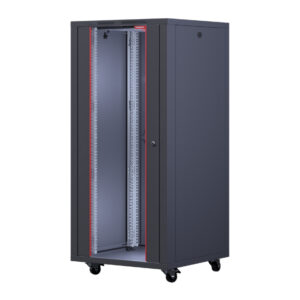
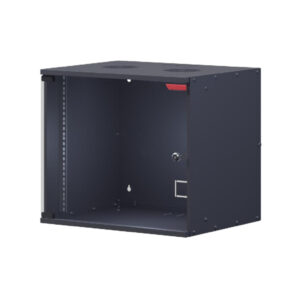
Server rack cabinets ‒ indoor are enclosed, fixed or wall-mount enclosures designed to house IT equipment such as network switches, servers, patch panels and other rack-mountable hardware. These indoor server rack cabinets typically conform to 19-inch mounting standards and offer features like lockable glass doors or steel panels, ventilation, cable entry points, and modular heights to suit data centre and telecommunication room requirements.
Within this category you’ll see several product types fitting a variety of needs. There are free-standing network rack cabinets available in varied widths and depths, often with up to 42U capacity. You’ll also find wall-mounted or wall-installation cabinets of smaller U-heights, designed for limited space environments. Some units are provided assembled; others are unassembled for batch purchases. Styles include slim wall cabinets, larger floor cabinets, and heavy-duty cabinets that combine glass fronts with steel enclosures for strength and accessibility.
These indoor server rack cabinets are used in data centres, server rooms, telecom closets and network hubs, where stable environment and controlled access are essential. They support equipment like routers, switches and patch panels in enterprise networking or telecommunication applications. Professionals consider network rack cabinet dimensions and equipment mounting profiles when planning installations. Use cases also include power management systems and structured cabling installations, where reliable cable entry, ventilation and load-bearing capacity are critical.
Server rack cabinets ‒ indoor are rigid frameworks designed to hold 19-inch rack-mount hardware. Key technical characteristics include nominal width and depth (for example 600×800 mm, 600×1000 mm, 800×1000 mm, or compact sizes like 553×450 mm for wall-mount), U-height ratings (commonly 7U up to 42U), and load capacity (ranging from tens to over a thousand kilograms in free-standing units). Materials used are sheet steel for side and rear panels, often DKP sheet, with tempered safety glass fronts. Standard features include adjustable front 19-inch mounting profiles marked in “U” units, cable entry panels top, bottom or rear, ventilation provisions (fan mounting points), lockable doors and removable covers for service access.
Variations among cabinets include wall-mount slim racks, free-standing floor cabinets, and variants in assembly status (assembled or unassembled). Functional differences arise in depth, width, number of doors/sides opening, and whether glass or solid doors are used. Standards compliance is relevant: EN 61587-1 for mechanical safety, CE marking, and RoHS for hazardous substances are applicable. Selection considerations include environmental conditions (ambient temperature, dust, airflow), equipment depth and weight, compatibility with existing rack-mount gear, and access requirements for cable management and ventilation.
MEMIDOS is a global B2B industrial marketplace enabling direct purchasing from manufacturers and verified suppliers, removing intermediaries in the procurement process. Buyers benefit from efficient sourcing and competitive pricing thanks to transparent product offerings. Secure, escrow-based payment ensures that funds are held until order conditions, such as shipment, are met, protecting both buyer and supplier. MEMIDOS simplifies international procurement by providing product specifications, standards compliance data, and reliable supplier verification, all in one platform designed for industrial buyers and procurement professionals.
English
Български (Bulgarian)
Hrvatski (Croatian)
Čeština (Czech)
Dansk (Danish)
Nederlands (Dutch)
Suomi (Finnish)
Français (French)
Deutsch (German)
Ελληνικά (Greek)
Magyar (Hungarian)
Italiano (Italian)
Norsk bokmål (Norwegian Bokmål)
Polski (Polish)
Português (Portuguese (Portugal))
Română (Romanian)
Русский (Russian)
Español (Spanish)
Svenska (Swedish)
Türkçe (Turkish)