
Cart
No products in the cart.
 English
 Български (Bulgarian)
 Hrvatski (Croatian)
 Čeština (Czech)
 Dansk (Danish)
 Nederlands (Dutch)
 Suomi (Finnish)
 Français (French)
 Deutsch (German)
 Ελληνικά (Greek)
 Magyar (Hungarian)
 Italiano (Italian)
 Norsk bokmål (Norwegian Bokmål)
 Polski (Polish)
 Português (Portuguese (Portugal))
 Română (Romanian)
 Русский (Russian)
 Español (Spanish)
 Svenska (Swedish)
 Türkçe (Turkish)
Showing 33–37 of 37 resultsSorted by popularity
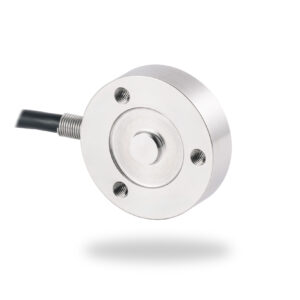
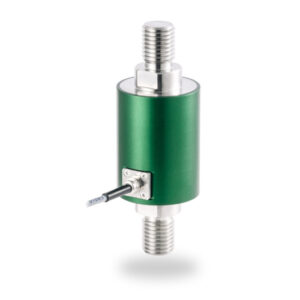
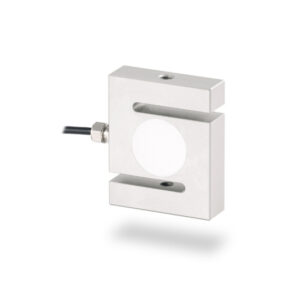
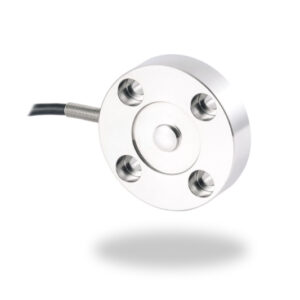
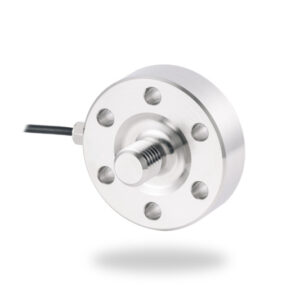
Weighing and force sensors are precision instruments used to measure applied force or load in industrial settings. These sensors convert mechanical input—compression, tension, or bending—into electrical output signals via technologies such as strain gauges. Designed for high accuracy and reliability, they are essential in load control, material testing, industrial weighing, manufacturing, and process automation.
The category includes multiple types of load cells and force sensors. It features S-Beam load cells capable of measuring tension and compression. Membrane force sensors are offered both in basic versions and with built-in signal conditioners providing voltage or current outputs. Output calibrations vary according to rated capacities. Force directions supported include tension, compression, or both. Capacities span from lower ranges (hundreds of newtons) up to very high loads in the hundreds of kilonewtons.
These sensors are used where precise measurement of force or weight is required. Common applications include material testing machines, manufacturing process control, structural testing, and assembly line automation. In applications requiring signal integration, output types such as voltage or current enable compatibility with data acquisition systems or PLCs. Typical considerations include load cell calibration and the characteristics of force output (voltage or current). Environmental conditions like load direction, signal format, and force range are critical in selecting appropriate sensors.
These devices are designed to detect mechanical loads and convert them into electrical signals. Key technical characteristics include rated capacity (Fn), force direction (tension, compression, or both), signal output type (voltage or current), and protection rating (for example IP54). Materials vary: smaller units may use aluminium; higher capacity sensors often employ stainless steel for strength and corrosion resistance. Variations within the category include membrane type sensors, S-Beam load cells, and sensors with integrated signal conditioners. Output types differ: some deliver voltage in ranges like 0.5-4.5 V or 2-10 V; others deliver standardized current such as 4-20 mA. Force ranges can start at 100 N and scale up into the hundreds of kilonewtons. Standards and compliance markers such as CE marking are relevant. Selection factors include the maximum load expected, the direction of loading, required accuracy and resolution, signal format compatible with the control system, and environmental protection for humidity, temperature, and mechanical stress.
MEMIDOS is a global B2B platform providing direct access to manufacturers and suppliers of industrial weighing and force sensors without intermediary layers. Buyers benefit from more efficient procurement and competitive pricing due to the elimination of middlemen. All payments are secured through an escrow-based system, meaning funds are held until order conditions—such as shipment—are satisfied, offering protection and payment reliability. Only products from verified suppliers are listed, ensuring quality industrial components. The platform simplifies international procurement and delivers transparency in sourcing, enabling procurement professionals to integrate sensors into systems with confidence.
English
Български (Bulgarian)
Hrvatski (Croatian)
Čeština (Czech)
Dansk (Danish)
Nederlands (Dutch)
Suomi (Finnish)
Français (French)
Deutsch (German)
Ελληνικά (Greek)
Magyar (Hungarian)
Italiano (Italian)
Norsk bokmål (Norwegian Bokmål)
Polski (Polish)
Português (Portuguese (Portugal))
Română (Romanian)
Русский (Russian)
Español (Spanish)
Svenska (Swedish)
Türkçe (Turkish)