
Cart
No products in the cart.
 English
 Български (Bulgarian)
 Hrvatski (Croatian)
 Čeština (Czech)
 Dansk (Danish)
 Nederlands (Dutch)
 Suomi (Finnish)
 Français (French)
 Deutsch (German)
 Ελληνικά (Greek)
 Magyar (Hungarian)
 Italiano (Italian)
 Norsk bokmål (Norwegian Bokmål)
 Polski (Polish)
 Português (Portuguese (Portugal))
 Română (Romanian)
 Русский (Russian)
 Español (Spanish)
 Svenska (Swedish)
 Türkçe (Turkish)
Showing 33–35 of 35 resultsSorted by popularity
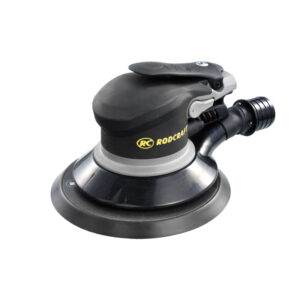
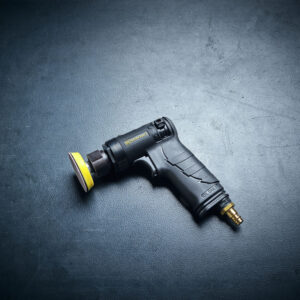
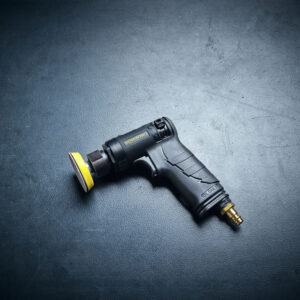
Grinders (Air / Pneumatic) refers to industrial tools powered by compressed air used for material removal, surface preparation, and finishing tasks. These air-driven grinding solutions include angle grinders, die grinders, orbital sanders, cut-off tools, belt sanders, and straight grinders. These tools are engineered for durability, precision, and high performance in demanding industrial environments.
This category contains various types of air grinders, such as pneumatic angle grinders offering disc sizes ranging from 100 mm to 178 mm with speeds up to approximately 12,000 RPM. It also includes mini air (angle) die grinders with small collet chucks, high-speed straight grinders, orbital sanders for pad‐based finishing, cut-off tools with blades or discs for severing metals, and belt sanders designed for continuous abrasive work.
Industrial professionals often deploy air grinders in metal fabrication and machining shops to remove welds or smooth castings. In construction and structural maintenance, angle grinders and cut-off tools cut through steel and abrasive materials. Automotive body shops use die grinders and orbital sanders for detailing, paint prep, and smoothing surfaces. Common tasks include surface grinding, precision finishing, weld seam preparation, fast material removal, and high-speed polishing.
Pneumatic grinders use compressed air (typically at pressures around 6.3 bar) to drive a motor that rotates or vibrates an abrasive medium. Key characteristics include disc or pad diameter, collet size, free or loaded speed (RPM), power rating (measured in watts), air consumption (litres per second), spindle thread type, protective guards, and tool weight. For example, angle grinders differ from die grinders in blade size and speed: angle grinders handle large discs at moderate RPMs for heavy removal; die grinders use small collets at very high RPMs for precision.
Materials of tool housings usually combine aluminium or durable metals with composite or rubber-coated grips to reduce vibration and improve ergonomics. Variations include straight grinders (inline bodies), angle types, orbital sanders, belt sanders, and cut-off tools. Standards such as CE marking appear, and compliance with safety standards for guards, balanced rotors, and exhaust designs matter. When selecting a pneumatic grinder, one must check airflow supply, hose diameter, operating pressure, tool compatibility with abrasives or discs, safety guards, and expected duty cycle under load. Environmental factors—ambient temperature, lubrication, noise—also affect performance and lifespan.
MEMIDOS is a global B2B platform specialised in industrial equipment, offering direct access to manufacturers and suppliers without intermediaries. Buyers benefit from procurement efficiency and competitive pricing by avoiding middle-men. The platform uses secure, escrow-based payment handling: funds remain held until order conditions such as shipment are verified, giving protection to both buyer and supplier. Verified suppliers assure product quality, and sourcing through MEMIDOS simplifies international procurement with greater transparency in specifications and origin.
English
Български (Bulgarian)
Hrvatski (Croatian)
Čeština (Czech)
Dansk (Danish)
Nederlands (Dutch)
Suomi (Finnish)
Français (French)
Deutsch (German)
Ελληνικά (Greek)
Magyar (Hungarian)
Italiano (Italian)
Norsk bokmål (Norwegian Bokmål)
Polski (Polish)
Português (Portuguese (Portugal))
Română (Romanian)
Русский (Russian)
Español (Spanish)
Svenska (Swedish)
Türkçe (Turkish)