
Cart
No products in the cart.
 English
 Български (Bulgarian)
 Hrvatski (Croatian)
 Čeština (Czech)
 Dansk (Danish)
 Nederlands (Dutch)
 Suomi (Finnish)
 Français (French)
 Deutsch (German)
 Ελληνικά (Greek)
 Magyar (Hungarian)
 Italiano (Italian)
 Norsk bokmål (Norwegian Bokmål)
 Polski (Polish)
 Português (Portuguese (Portugal))
 Română (Romanian)
 Русский (Russian)
 Español (Spanish)
 Svenska (Swedish)
 Türkçe (Turkish)
Showing 17–18 of 18 resultsSorted by popularity
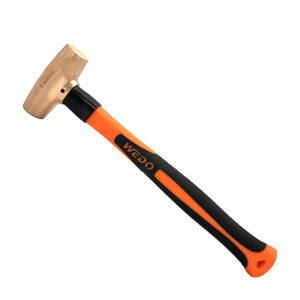
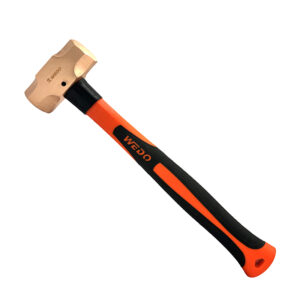
Copper hand tools are non-ferrous tools made from pure copper or copper alloys, designed to perform manual operations without causing sparks or damaging delicate surfaces. These tools include copper hammers and oil handling tools, commonly used in environments where static buildup, electrical continuity, or surface safety are critical. They provide a safe, durable option for industries that require non-sparking, non-magnetic, or chemically neutral equipment.
Within this category are two primary types of copper tools: hammers that feature copper striking faces for impact work, and oil handling tools used for managing, dispensing or guiding oils and fluids. The range of copper hammers includes variations such as flat faced, double face, ball pein, mallet, scaling, drum type, and sledge forms. The oil handling tools include components like copper funnels and buckets explicitly tailored to oil transfer or containment.
Copper hand tools are essential in environments such as petrochemical plants, mining operations, food processing, and electrical maintenance where spark risk must be minimized. Copper hammers are used for tasks including shaping, straightening, or dislodging parts without damaging surfaces or creating sparks. Oil handling tools are employed to pour, funnel or contain oil and lubricants in sensitive machinery zones. Common related items are non-sparking tools and fluid transfer equipment.
Copper hand tools serve primarily to reduce risk of ignition, prevent damage to sensitive components, and avoid magnetic interference in industrial settings. Key technical characteristics include material composition—typically pure copper or copper alloys with high conductivity and ductility—and tool geometry such as face shape (flat, ball pein, drum) or mallet style. The weight and dimensions correspond to intended strike force or fluid capacity. For oil handling tools, features include mouth design of funnels and volume of buckets for managing oil flow and retention.
These tools are functionally variant: copper hammers differ in impact face design and handle type (wooden or fiberglass) which affect stiffness, rebound, and operator control. Oil handling tools vary in form and capacity to adapt to containment and transfer tasks. Compliance considerations may involve meeting non-sparking or safety standards in hazardous locations where flammable vapors are present. Tolerances are relevant for fit of hammer faces and for leak-proof sealing in oil tools. Selection factors include exposure to corrosive fluids, ambient temperature, required impact force, and compatibility with existing tooling environment.
MEMIDOS is a global B2B platform connecting industrial purchasers with manufacturers and verified suppliers directly, eliminating intermediaries. This structure enables greater transparency and efficiency in procurement operations and tends to yield more competitive pricing. Payment is managed securely through escrow: buyer funds are held until agreed order conditions—such as shipment—are met, thereby protecting the buyer’s interests while ensuring reliability for the supplier. Industrial buyers gain access to high-quality copper hand tools from trusted sources worldwide, simplifying international sourcing and fostering confidence in every transaction.
English
Български (Bulgarian)
Hrvatski (Croatian)
Čeština (Czech)
Dansk (Danish)
Nederlands (Dutch)
Suomi (Finnish)
Français (French)
Deutsch (German)
Ελληνικά (Greek)
Magyar (Hungarian)
Italiano (Italian)
Norsk bokmål (Norwegian Bokmål)
Polski (Polish)
Português (Portuguese (Portugal))
Română (Romanian)
Русский (Russian)
Español (Spanish)
Svenska (Swedish)
Türkçe (Turkish)