
Cart
No products in the cart.
 English
 Български (Bulgarian)
 Hrvatski (Croatian)
 Čeština (Czech)
 Dansk (Danish)
 Nederlands (Dutch)
 Suomi (Finnish)
 Français (French)
 Deutsch (German)
 Ελληνικά (Greek)
 Magyar (Hungarian)
 Italiano (Italian)
 Norsk bokmål (Norwegian Bokmål)
 Polski (Polish)
 Português (Portuguese (Portugal))
 Română (Romanian)
 Русский (Russian)
 Español (Spanish)
 Svenska (Swedish)
 Türkçe (Turkish)
Showing 1–16 of 33 resultsSorted by popularity
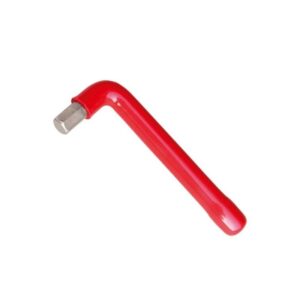
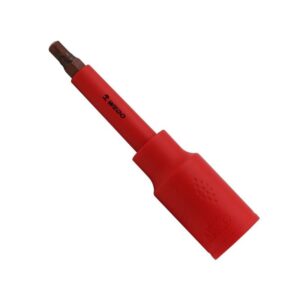
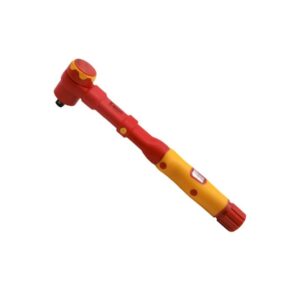
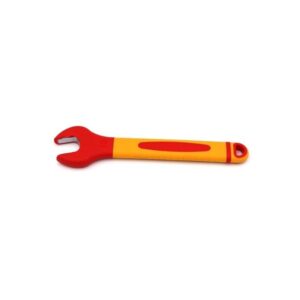
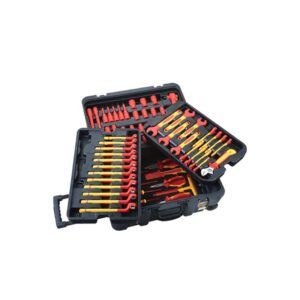
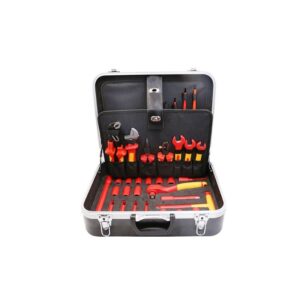
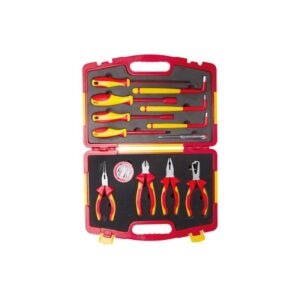
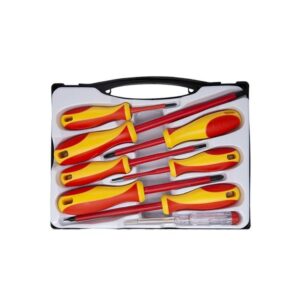
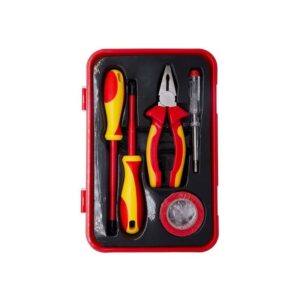
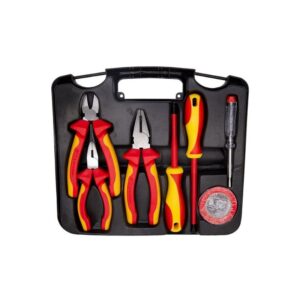
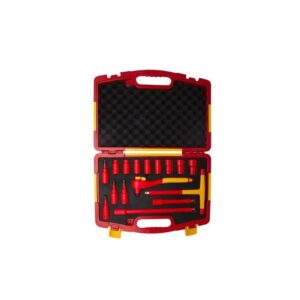
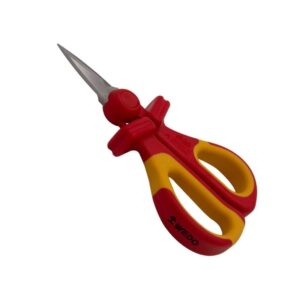
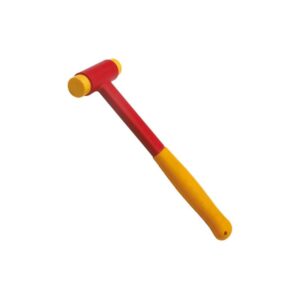
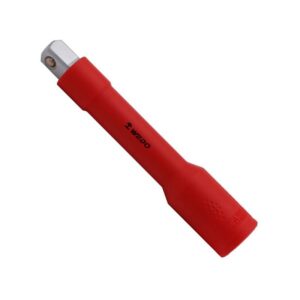
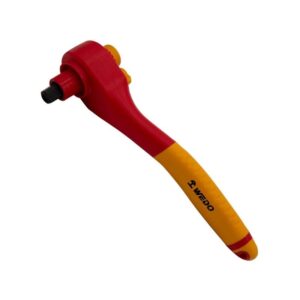
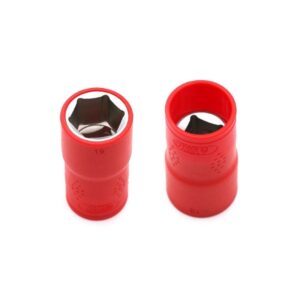
Insulated hand tools are manually operated tools designed to provide electrical insulation for the user’s safety when working with live circuits. These tools—such as insulated pliers, screwdrivers, wrenches, and scissor-type cutting tools—are rated for protection up to 1000V and comply with the IEC 60900 standard and VDE certification. They are essential for professional work in electrical installation, maintenance, repair, and related industrial tasks.
This category includes insulated pliers—such as diagonal cutting pliers for shearing wire, long nose (pointed) pliers for precision work, combination (linesman) pliers for gripping, cutting and bending, waterpump or slip joint pliers for adjusting or holding large fittings, and wire-stripping pliers to remove insulation cleanly. Insulated wrenches like single open-end wrenches and ratchet wrenches offer torque control while maintaining safety. Insulated screwdrivers include slotted (flat head) and socket screwdrivers designed for conductive fasteners. Also available are insulated scissors for cutting non-metallic materials safely.
Insulated hand tools are used by electricians, maintenance crews, technical service teams, and industrial contractors working on electrical panels, switchgear, overhead lines, instrumentation, or any live electrical components. Related terms for this audience include “electrician safety tools” and “high-voltage hand tools”. These tools support tasks such as wiring, circuit maintenance, equipment assembly, machine repair, and safety compliance in industrial plants or construction sites.
Insulated hand tools serve the primary function of protecting users from electric shock by isolating conductive parts from the operator’s grip. Major technical characteristics include insulation rating (typically up to 1000V AC), compliance with standards such as IEC 60900 and VDE certification, and material selection—commonly chrome-vanadium (Cr-V) steel for its strength and wear resistance. Cutter and plier jaws may have hardness ratings in a range (e.g. HRC 58-63), which affects cutting performance and durability.
Typical variations within the category differ by tool type and function. For example, diagonal cutting pliers are designed for clean wire cuts, long nose pliers reach into tight areas, combination pliers combine grip, cut, and twist functions, while waterpump pliers allow adjustable gripping of pipes or bolts. Wrenches differ in jaw style (open end vs ratchet) and head geometry. Screwdrivers vary in tip style (slotted, socket) and shaft length. Scissors offer shearing without damaging surrounding components.
Applicable standards: IEC 60900 for live-working tools, VDE for German safety certification, sometimes GS or ISO marks as additional verification. Important selection considerations include the working environment (humidity, presence of oil or chemicals), voltage exposure, insulation integrity, tool size and fit for fasteners, ergonomic handle design for operator fatigue, and whether tools are certified and tested (e.g. proof-tested at 10,000V AC before delivery).
MEMIDOS operates as a global B2B platform for industrial products, connecting buyers with manufacturers and verified suppliers directly. By removing middlemen, MEMIDOS ensures more efficient procurement and competitive pricing for industrial buyers. The platform handles payments through a secure escrow system, holding funds until order conditions—such as item shipment—are met, ensuring protection for buyers and reliability for suppliers. Industrial buyers gain access to high-quality tools certified to industry-accepted safety standards, simplifying international sourcing and enhancing transparency in the procurement process.
English
Български (Bulgarian)
Hrvatski (Croatian)
Čeština (Czech)
Dansk (Danish)
Nederlands (Dutch)
Suomi (Finnish)
Français (French)
Deutsch (German)
Ελληνικά (Greek)
Magyar (Hungarian)
Italiano (Italian)
Norsk bokmål (Norwegian Bokmål)
Polski (Polish)
Português (Portuguese (Portugal))
Română (Romanian)
Русский (Russian)
Español (Spanish)
Svenska (Swedish)
Türkçe (Turkish)