
Cart
No products in the cart.
 English
 Български (Bulgarian)
 Hrvatski (Croatian)
 Čeština (Czech)
 Dansk (Danish)
 Nederlands (Dutch)
 Suomi (Finnish)
 Français (French)
 Deutsch (German)
 Ελληνικά (Greek)
 Magyar (Hungarian)
 Italiano (Italian)
 Norsk bokmål (Norwegian Bokmål)
 Polski (Polish)
 Português (Portuguese (Portugal))
 Română (Romanian)
 Русский (Russian)
 Español (Spanish)
 Svenska (Swedish)
 Türkçe (Turkish)
Showing 49–57 of 57 resultsSorted by popularity
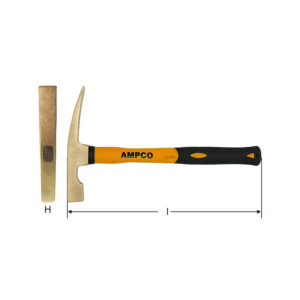
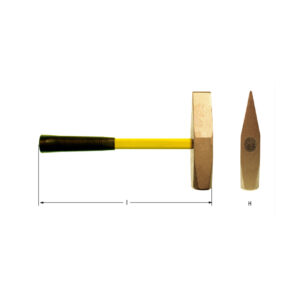
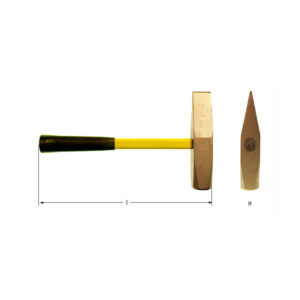
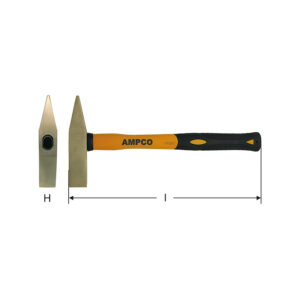
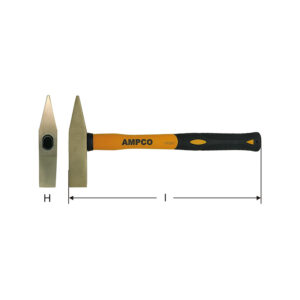
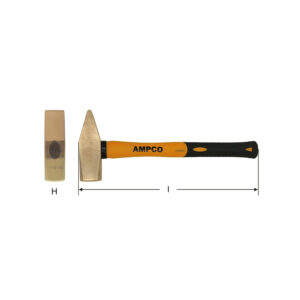
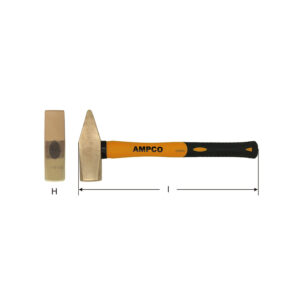
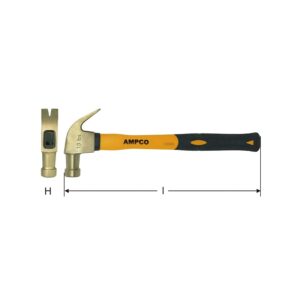
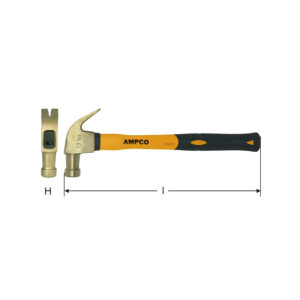
Hammers - Non-sparking refers to hand tools engineered specifically to reduce the risk of sparks when striking or hammering in hazardous environments. These non-spark hammers are made from materials such as aluminium bronze and beryllium copper that avoid generating ignition sources. Industrial professionals often require non-sparking tools for safety-critical operations in regions with flammable gases, vapours, dust, or where non-magnetic qualities are required.
In this category you will find hammers in non-sparking versions constructed from aluminium bronze and beryllium copper. Options include sledgehammers (including German type), ball peen hammers, sealing hammers, nylon head hammers, bench or locksmith hammers, and specialist variants with plastic heads. Material variations allow selection of aluminium bronze or beryllium copper to match workplace chemical compatibility and safety requirements.
Non-sparking hammers are used in oil & gas facilities, chemical processing plants, mining operations, and any environment where sparks could cause fire or explosion. They also serve in work requiring non-magnetic tools, such as near sensitive electronic equipment, MRI suites, or in aerospace applications. These tools are also described as non-magnetic hammers, spark-resistant striking tools, or intrinsically safe hand tools.
Non-sparking hammers are tools designed to deliver impact without causing sparks, using materials such as aluminium bronze or beryllium copper. These alloys have higher toughness and lower risk of ignition on impact compared to steel. Key technical characteristics include head weight, balance, hardness ratings, and resilience under cold or humid conditions. Typical heads may be forged, cast, or machined, with finishes that resist corrosion.
Variations within the category include sledgehammers (large, long handle, high-energy impacts), ball peen hammers (rounded pein for shaping or riveting), sealing hammers (flat faces, often for gasket or seal fitting), nylon head or plastic insert hammers (for delicate surfaces), and locksmith or bench hammer-scale tools. These differ by head shape, face material, handle length, and material composition.
Applicable standards may include national or international safety codes that address tool materials, ASTM or DIN classifications for bronze or copper alloys, and certifications for use in hazardous zones (such as ATEX compliance for explosive atmospheres). Selection considerations include: the environment (presence of flammable materials, explosion risk, humidity), magnetic sensitivity, weight and size for usability, durability under repeated impact, and compatibility of material with substances in contact.
MEMIDOS provides a global B2B platform connecting industrial buyers with verified manufacturers and suppliers of non-sparking hammers. Procurement is direct, with no intermediaries, enabling efficient sourcing and competitive pricing. Payment is handled securely using an escrow system: funds are held until shipment or other agreed conditions are met, safeguarding buyer interests while ensuring supplier reliability. Buyers gain access to high quality industrial tools with transparent sourcing and global reach for specialized, safety-critical applications.
English
Български (Bulgarian)
Hrvatski (Croatian)
Čeština (Czech)
Dansk (Danish)
Nederlands (Dutch)
Suomi (Finnish)
Français (French)
Deutsch (German)
Ελληνικά (Greek)
Magyar (Hungarian)
Italiano (Italian)
Norsk bokmål (Norwegian Bokmål)
Polski (Polish)
Português (Portuguese (Portugal))
Română (Romanian)
Русский (Russian)
Español (Spanish)
Svenska (Swedish)
Türkçe (Turkish)