
Cart
No products in the cart.
 English
 Български (Bulgarian)
 Hrvatski (Croatian)
 Čeština (Czech)
 Dansk (Danish)
 Nederlands (Dutch)
 Suomi (Finnish)
 Français (French)
 Deutsch (German)
 Ελληνικά (Greek)
 Magyar (Hungarian)
 Italiano (Italian)
 Norsk bokmål (Norwegian Bokmål)
 Polski (Polish)
 Português (Portuguese (Portugal))
 Română (Romanian)
 Русский (Russian)
 Español (Spanish)
 Svenska (Swedish)
 Türkçe (Turkish)
Showing 33–36 of 36 resultsSorted by popularity
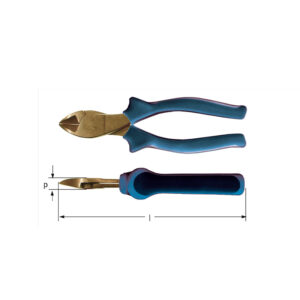
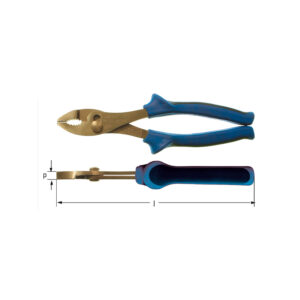
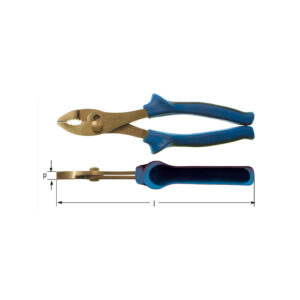
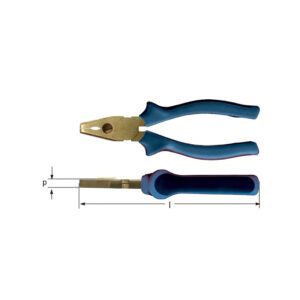
Pliers - Non-sparking are hand tools engineered for use in environments where a single spark could ignite flammable gases, vapors, or dust. These tools are made from non-sparking, non-magnetic alloys such as Beryllium Copper and Aluminum Bronze. They are designed to perform basic gripping, cutting, and twisting functions safely. Industrial procurement teams often search for non-sparking pliers, explosion-proof tools, safety rated hand tools.
This category includes pliers fabricated in non-sparking materials, specifically Aluminum Bronze and Beryllium Copper. Types include long nose pliers (also called telephone or snipe nose), round nose pliers, diagonal cutting pliers (side cutters), combination or universal pliers, water pump (polygrip) pliers, and pipe wrench (British style) pliers. Some are adjustable or multi-functional in shape. Tools are available in various lengths, typically ranging from small precision sizes (around 6–10 inch) up to large sizes (pipe wrench variants up to several hundred millimeters in opening or adjustment span).
Non-sparking pliers serve critical roles in industries like oil & gas, chemical processing, mining, and petrochemical facilities where ignition risk must be minimized. They are suited for tasks such as cutting wires, gripping pipe fittings, adjusting valves, and performing maintenance in explosive atmospheres. Related tools include explosion mitigation tools and ATEX-rated hand tools. They are frequently used in confined spaces, near flammable fluids or dust, and around sensitive magnetic equipment.
Pliers in this category are manufactured from non ferrous alloys, primarily Beryllium Copper (BeCu) and Aluminum Bronze (AlBz). These materials exhibit low magnetic permeability, non-sparking behavior, and typically pass stringent safety standards such as ATEX (European Directive 1999/92) and EN 80079-38 for materials used in explosive atmospheres. For instance, pliers described here are BAM ATEX certificated. Hardness values differ by material: Aluminum Bronze pliers often around HRC 20-30, while Beryllium Copper versions tend toward HRC 30-40. Sizes vary from precision lengths (6-inch or 150-mm) to larger sizes for pipe wrenches with adjustable grip spans up to 600 mm. Variations among the tools include nose shape (long, round, snipe), cutting capacity (diagonal cutting version), and shape for gripping. Material selection influences mechanical strength, corrosion resistance, and spark resistance. Key considerations include the operating temperature, ambient hazard classification (gas, vapor, dust), magnetic sensitivity, and required toughness or hardness to withstand impact or torque without fracture.
MEMIDOS is a global B2B platform connecting industrial buyers directly with verified manufacturers and suppliers of specialist tools. By removing intermediaries, MEMIDOS enables more efficient procurement through direct sourcing and offers competitive pricing structures. Payment is handled securely via an escrow system, with funds held until order conditions—such as shipment—are fulfilled. Buyers gain access to industrial‐grade pliers from certified suppliers ensuring quality and compliance. MEMIDOS simplifies international sourcing, improving transparency of specification, origin, and material certification for tools designed for hazardous or controlled environments.
English
Български (Bulgarian)
Hrvatski (Croatian)
Čeština (Czech)
Dansk (Danish)
Nederlands (Dutch)
Suomi (Finnish)
Français (French)
Deutsch (German)
Ελληνικά (Greek)
Magyar (Hungarian)
Italiano (Italian)
Norsk bokmål (Norwegian Bokmål)
Polski (Polish)
Português (Portuguese (Portugal))
Română (Romanian)
Русский (Russian)
Español (Spanish)
Svenska (Swedish)
Türkçe (Turkish)