
Cart
No products in the cart.
 English
 Български (Bulgarian)
 Hrvatski (Croatian)
 Čeština (Czech)
 Dansk (Danish)
 Nederlands (Dutch)
 Suomi (Finnish)
 Français (French)
 Deutsch (German)
 Ελληνικά (Greek)
 Magyar (Hungarian)
 Italiano (Italian)
 Norsk bokmål (Norwegian Bokmål)
 Polski (Polish)
 Português (Portuguese (Portugal))
 Română (Romanian)
 Русский (Russian)
 Español (Spanish)
 Svenska (Swedish)
 Türkçe (Turkish)
Showing 17–23 of 23 resultsSorted by popularity
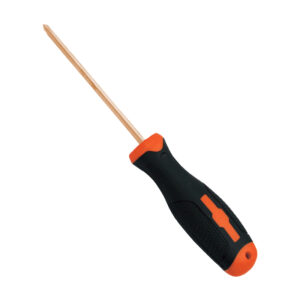
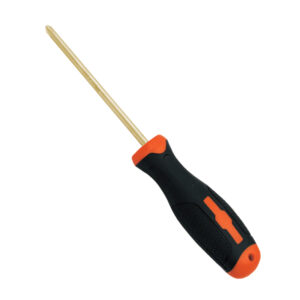
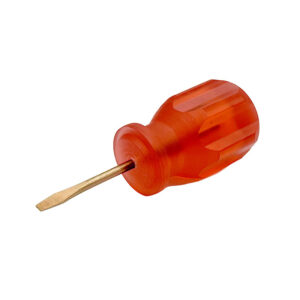
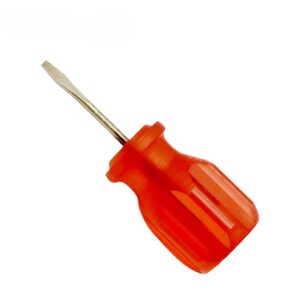
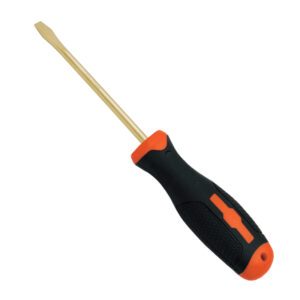
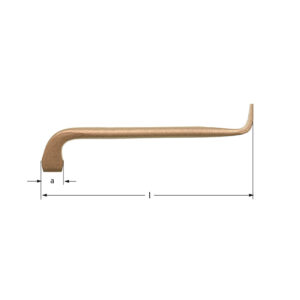
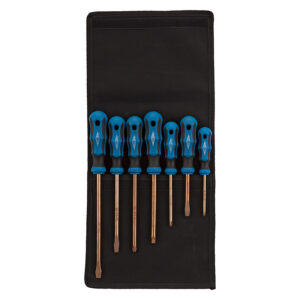
The category “Screwdrivers - Non-sparking” features tools specifically designed to prevent ignition in volatile or explosive environments. These screwdrivers are non-magnetic and non-sparking, made from materials like beryllium copper (BeCu) and aluminium bronze. Industrial professionals seeking safety-certified screwdrivers for hazardous atmospheres, petrochemical plants, or mining operations will find this range essential.
Within this screwdrivers section you’ll find non-sparking screwdrivers constructed from aluminium bronze and beryllium copper. Variants include Torx types, cross-head (Phillips / star) and pozidriv, slotted or flat head styles, stubby or short shaft versions, socket screwdrivers for both inch-based and metric fasteners, and nut driver (socket) styles. Each product appears in several variants for material, head type, size, and drive system.
Non-sparking screwdrivers are used in settings where sparks could cause fire or explosion, such as chemical processing, oil and gas extraction, confined flammable gas atmospheres, or powder handling. They are often described as hazardous-area tools or explosion-proof screwdrivers. These tools are suitable for performing maintenance, assembly or tightening of fasteners in intrinsically safe zones, refining facilities, offshore rigs, or grain silos.
These screwdrivers are defined by their ability to avoid generating sparks when contacting conductive surfaces or metal debris. Key technical characteristics include the material composition—primarily beryllium copper (BeCu) and aluminium bronze (AlBz)—both non-ferrous alloys that do not produce sparks and have negligible magnetic permeability. Sizes vary across tip types (slotted, Torx, Phillips, Pozidriv), drive styles (socket vs. standard shaft), shaft lengths (including stubby), and measurement systems (metric and inch). Mechanical tolerances for fit and tip accuracy are critical to avoid damage to fasteners. Standards related to non-sparking tools in hazardous environments may include compliance with safety or explosion-proof regulations, such as those governing zones with flammable gases or dust; ratings for material conductivity, hardness, and corrosion resistance are often relevant. Selection considerations encompass ambient environment (temperature, humidity, corrosive exposure), compatibility with fasteners and torque tools, insurance of safety certification, and required shaft length or tip type to access confined spaces. Functional variations between materials include weight, strength, corrosion resistance and cost, while differences in tip geometry (e.g. Torx vs Phillips) affect torque transmission and slip resistance.
MEMIDOS operates as a global B2B platform for industrial equipment, enabling direct purchasing from verified manufacturers and suppliers without intermediaries. This structure eliminates middle men, creating more efficient procurement and competitive pricing. Transactions use escrow-based handling, where payment is held until specified order conditions—such as shipment—are met, protecting buyers while assuring suppliers of reliability. Procurement professionals gain access to a curated range of high-quality non-sparking screwdrivers made from aluminium bronze and beryllium copper, simplifying international sourcing with transparency in specifications and material certification.
English
Български (Bulgarian)
Hrvatski (Croatian)
Čeština (Czech)
Dansk (Danish)
Nederlands (Dutch)
Suomi (Finnish)
Français (French)
Deutsch (German)
Ελληνικά (Greek)
Magyar (Hungarian)
Italiano (Italian)
Norsk bokmål (Norwegian Bokmål)
Polski (Polish)
Português (Portuguese (Portugal))
Română (Romanian)
Русский (Russian)
Español (Spanish)
Svenska (Swedish)
Türkçe (Turkish)