
Cart
No products in the cart.
 English
 Български (Bulgarian)
 Hrvatski (Croatian)
 Čeština (Czech)
 Dansk (Danish)
 Nederlands (Dutch)
 Suomi (Finnish)
 Français (French)
 Deutsch (German)
 Ελληνικά (Greek)
 Magyar (Hungarian)
 Italiano (Italian)
 Norsk bokmål (Norwegian Bokmål)
 Polski (Polish)
 Português (Portuguese (Portugal))
 Română (Romanian)
 Русский (Russian)
 Español (Spanish)
 Svenska (Swedish)
 Türkçe (Turkish)
Showing 113–122 of 122 resultsSorted by popularity
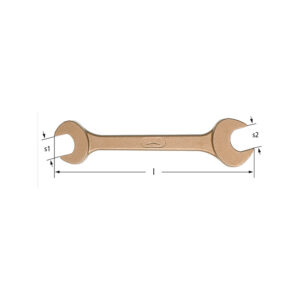
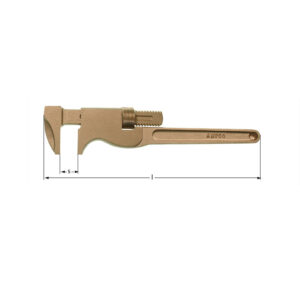
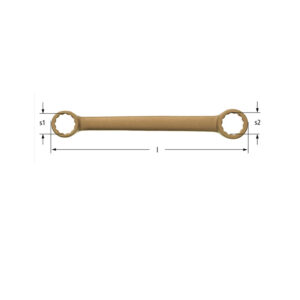
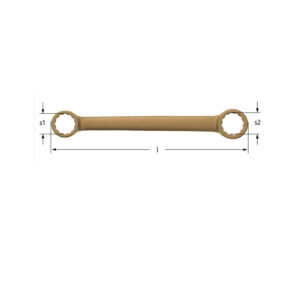
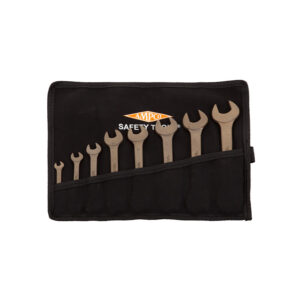
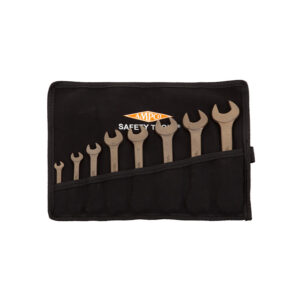
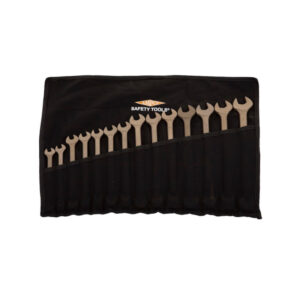
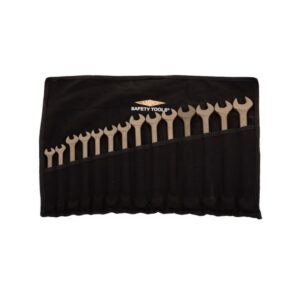
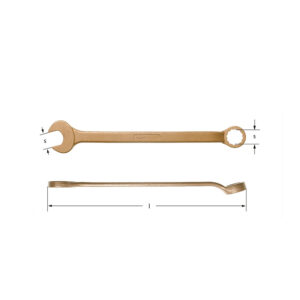
Non-sparking wrenches are tools manufactured from non-ferrous metals that emit no sparks when striking or rubbing against other materials. These materials include aluminium bronze and beryllium copper. Such wrenches are designed specifically for use in potentially explosive or flammable industrial environments, serving roles in maintenance, repair, and assembly where safety compliance is critical. They are commonly described as non-sparking tools, non-magnetic hand tools, and intrinsic safety wrenches.
This category lists non-sparking wrenches in both metric and inch sizes, made from aluminium bronze and beryllium copper. You will see combination wrenches, adjustable spanners, and rings wrenches supplied in both metric and inch systems. Extension tubes for box wrenches and open-end wrenches with long handles and specific bends (such as 90-degree or 45-degree) are also present. These wrenches include variants that conform to inch or metric standards depending on material type.
Non-sparking wrenches find applications in environments with flammable gases, vapours, or combustible dust—such as petrochemical plants, oil and gas operations, mining, and offshore facilities. These applications often involve intrinsic safety considerations and the need for tools suitable for hazardous areas. Wrenches made from beryllium copper are used where conductivity is acceptable but spark risk must be eliminated; aluminium bronze versions serve where stronger hardness and enhanced corrosion resistance are required.
Non-sparking wrenches are engineered from non-ferrous alloys—primarily aluminium bronze and beryllium copper. These materials lack ferromagnetic content and resist spark generation under impact or friction. Material hardness, tensile strength, and wear resistance vary between aluminium bronze (generally harder and more durable) and beryllium copper (often slightly softer but more easily fabricated). Dimensions adhere to metric or inch sizing, with tolerances typical in these alloys guided by relevant material standards. Finishes are often raw or lightly polished to avoid coatings that may degrade spark safety. Typical use cases include tightening or loosening fasteners, using box or open-end wrench heads, anticipating load limits imposed by alloy strength, and operating in explosive atmospheres where compliance with safety norms like ATEX, IECEx, or equivalent regulations is essential. Engineers must consider compatibility with bolt head sizes, torque requirements, environmental factors like corrosion, temperature extremes, and the possibility of non-magnetic requirements for sensitive instrumentation. Variations include adjustable spanners, rings, open ends, combination types, and extensions—each differing in reach, leverage, handle design, and bend angle.
MEMIDOS operates as a global B2B platform offering direct access to industrial products from manufacturers and verified suppliers, eliminating intermediaries. Buyers benefit from an escrow-based system where payments are held until order conditions, such as shipment, are fulfilled, ensuring protection of funds and supplier reliability. The platform simplifies international procurement by reducing layers of transaction, increasing transparency in sourcing, and improving efficiency. Industrial procurement professionals gain access to high-quality non-sparking wrenches from trusted sources around the world through a single interface.
English
Български (Bulgarian)
Hrvatski (Croatian)
Čeština (Czech)
Dansk (Danish)
Nederlands (Dutch)
Suomi (Finnish)
Français (French)
Deutsch (German)
Ελληνικά (Greek)
Magyar (Hungarian)
Italiano (Italian)
Norsk bokmål (Norwegian Bokmål)
Polski (Polish)
Português (Portuguese (Portugal))
Română (Romanian)
Русский (Russian)
Español (Spanish)
Svenska (Swedish)
Türkçe (Turkish)