
Cart
No products in the cart.
 English
 Български (Bulgarian)
 Hrvatski (Croatian)
 Čeština (Czech)
 Dansk (Danish)
 Nederlands (Dutch)
 Suomi (Finnish)
 Français (French)
 Deutsch (German)
 Ελληνικά (Greek)
 Magyar (Hungarian)
 Italiano (Italian)
 Norsk bokmål (Norwegian Bokmål)
 Polski (Polish)
 Português (Portuguese (Portugal))
 Română (Romanian)
 Русский (Russian)
 Español (Spanish)
 Svenska (Swedish)
 Türkçe (Turkish)
Showing 17–23 of 23 resultsSorted by popularity
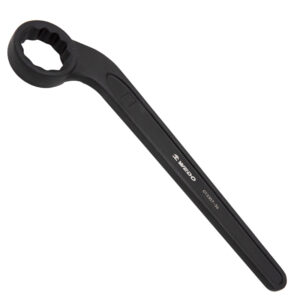
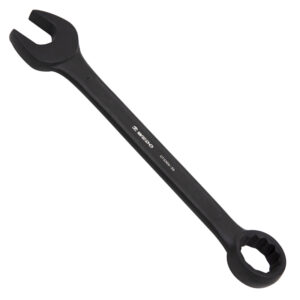
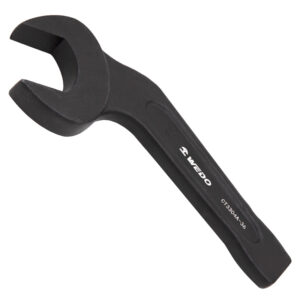
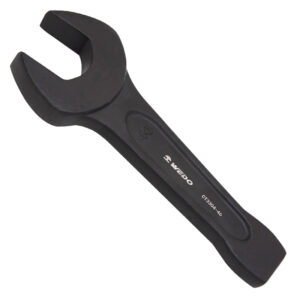
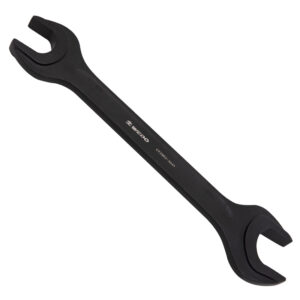
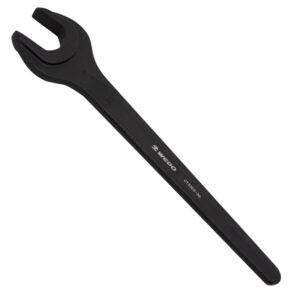
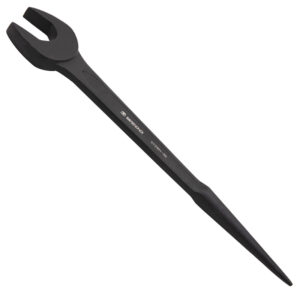
Wrenches refer to a category of hand tools designed to grip, turn, tighten, or loosen fasteners such as nuts, bolts, or threaded connectors. Industrial professionals often look for metric wrenches, inch-sized wrenches, torque-control wrenches, socket spanners, hex keys or Allen keys, and specialized wrench types. These tools are essential in maintenance, mechanical engineering, fabrication, and assembly work.
In this category you will find metric wrenches and inch wrenches, which cover imperial and metric sizing standards respectively. There are socket spanners for engaging fasteners with matching socket heads. Torque wrenches are included to apply precise turning force. Hex keys, or Allen keys in metric sizes, enable manipulation of hexagonal socket fasteners. You will also find special wrenches designed for non-standard or unique fastening needs.
These tools are used in industrial maintenance for tightening fasteners during machinery servicing. In fabrication workshops, metric wrenches and hex keys are essential for assembling metal structures and mounting components where precise fits are required. Torque wrenches are critical where accurate torque settings are required, for example in pressure vessel assembly or bolted joint integrity. Special wrenches are utilized in confined spaces, non-standard fasteners, or sectors requiring corrosion resistance or safety compliance.
Wrenches function by providing mechanical advantage to apply torque to fasteners. Key technical characteristics include the measurement scale (metric in millimetres or inch in fractions), the range of sizes, and the torque rating for torque wrenches. Material selection is crucial—commonly steel alloys for strength and hardness; special types may require non-magnetic or corrosion-resistant materials. Dimensions such as jaw width, handle length, and socket depth influence leverage and reach. Variations include open-end, box-end, combination, ratcheting, and striking box wrenches, each differing by shape of grip, force delivery, or impact tolerance. Standards such as DIN specifications for wrench dimensions or ISO guidelines for torque tools may apply. When selecting a wrench, consider the environment (e.g. exposure to chemicals or wet conditions), load requirements, the compatibility with fastener head types, and accuracy needs if torque control is involved.
As a global B2B platform for industrial products, MEMIDOS connects procurement professionals directly with manufacturers and verified suppliers, eliminating intermediaries. The platform offers a secure, escrow-based payment system, where funds are held until order conditions such as shipment are fulfilled, offering protection for buyers and reliability for suppliers. Buyers gain access to a wide selection of high-quality industrial tools including wrenches and related hand tools. MEMIDOS simplifies international sourcing by improving transparency in product origin, technical specifications, and supplier credentials, supporting efficient and trust-based procurement operations.
English
Български (Bulgarian)
Hrvatski (Croatian)
Čeština (Czech)
Dansk (Danish)
Nederlands (Dutch)
Suomi (Finnish)
Français (French)
Deutsch (German)
Ελληνικά (Greek)
Magyar (Hungarian)
Italiano (Italian)
Norsk bokmål (Norwegian Bokmål)
Polski (Polish)
Português (Portuguese (Portugal))
Română (Romanian)
Русский (Russian)
Español (Spanish)
Svenska (Swedish)
Türkçe (Turkish)