
Cart
No products in the cart.
 English
 Български (Bulgarian)
 Hrvatski (Croatian)
 Čeština (Czech)
 Dansk (Danish)
 Nederlands (Dutch)
 Suomi (Finnish)
 Français (French)
 Deutsch (German)
 Ελληνικά (Greek)
 Magyar (Hungarian)
 Italiano (Italian)
 Norsk bokmål (Norwegian Bokmål)
 Polski (Polish)
 Português (Portuguese (Portugal))
 Română (Romanian)
 Русский (Russian)
 Español (Spanish)
 Svenska (Swedish)
 Türkçe (Turkish)
Showing 17–20 of 20 resultsSorted by popularity
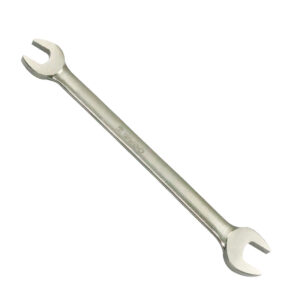
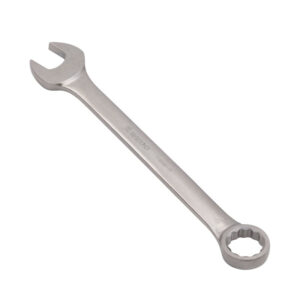
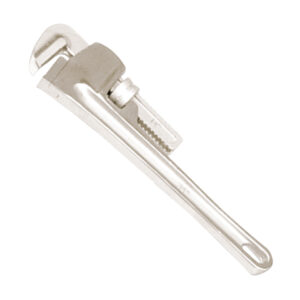
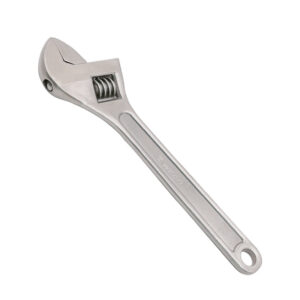
Titanium hand tools (non-magnetic) are a category of handheld tools made from titanium alloy that do not exhibit magnetic properties. These tools include wrenches, pliers, hammers, screwdrivers, and hex keys. They are designed for use in industrial, aerospace, electronics, medical, and other critical environments where magnetic sensitivity, weight, corrosion resistance, and strength are key quality requirements.
This category features several types of non-magnetic titanium hand tools. Metric wrenches made from titanium are included, suitable for standardized bolt sizing. Pliers in titanium serve for gripping, cutting, or shaping components without ferromagnetic interference. Titanium hammers provide striking tools with minimal magnetic response. Screwdrivers crafted in titanium are present, covering both slotted/flat and cross-head configurations. Finally hex keys or Allen keys in titanium are offered to reach recessed fasteners in tight spaces without magnetic influence.
These non-magnetic titanium hand tools are used in environments where magnetic interference must be avoided, such as inside magnetic resonance imaging (MRI) facilities, clean rooms, or sensitive electronic assembly. They are also useful in aerospace manufacturing, where weight savings and corrosion resistance—especially against humidity or salt—are essential. They are commonly used in aerospace and electronics applications. Titanium screwdrivers and pliers are especially critical for delicate electronic repair and precision work where magnetic materials could damage components.
Titanium hand tools are forged or machined from titanium or titanium alloy, chosen for its low magnetic permeability, high strength-to-weight ratio, and corrosion resistance. Primary function is to provide torque, striking, fastening, or holding capabilities in settings where magnetic fields and mass must be minimized. Key technical characteristics include tool size ranges (metric wrench sizes or hex key diameters), handle and head strength, hardness, yield strength, and tolerance in dimensions (tight fits between wrench jaws or screwdriver tips).
Typical use cases include working on components with magnetic sensors or instruments, in environments exposed to corrosive agents (e.g. marine or chemical), or where lightweight tools reduce fatigue. Variations within the category differ by tool type—wrenches vary by jaw style and torque capacity; pliers by jaw geometry and leverage; hammers by head mass and face type; screwdrivers by tip type and torque control; hex keys by size, length, and possible ball-end vs straight design. Standards or compliance relevant may include ASTM or ISO material specifications for titanium alloy, hardness tests, and dimensional tolerances for fastener tools. Selection considerations focus on operating temperature, exposure to corrosive atmosphere, magnetic environment, compatibility with fastener head types, and required torque or force without deformation.
MEMIDOS operates as a global B2B platform where industrial procurement professionals can source titanium hand tools directly from verified manufacturers and suppliers. Without intermediaries, the procurement process becomes more efficient and the prices more transparent. Payments are handled through a secure escrow system, in which funds are held until order conditions such as shipment are fulfilled, protecting both buyer and supplier. Access is provided to industrial-grade, non-magnetic titanium tools that meet professional specifications, simplifying international sourcing with clear product grades and supplier credentials.
English
Български (Bulgarian)
Hrvatski (Croatian)
Čeština (Czech)
Dansk (Danish)
Nederlands (Dutch)
Suomi (Finnish)
Français (French)
Deutsch (German)
Ελληνικά (Greek)
Magyar (Hungarian)
Italiano (Italian)
Norsk bokmål (Norwegian Bokmål)
Polski (Polish)
Português (Portuguese (Portugal))
Română (Romanian)
Русский (Russian)
Español (Spanish)
Svenska (Swedish)
Türkçe (Turkish)