
Cart
No products in the cart.
 English
 Български (Bulgarian)
 Hrvatski (Croatian)
 Čeština (Czech)
 Dansk (Danish)
 Nederlands (Dutch)
 Suomi (Finnish)
 Français (French)
 Deutsch (German)
 Ελληνικά (Greek)
 Magyar (Hungarian)
 Italiano (Italian)
 Norsk bokmål (Norwegian Bokmål)
 Polski (Polish)
 Português (Portuguese (Portugal))
 Română (Romanian)
 Русский (Russian)
 Español (Spanish)
 Svenska (Swedish)
 Türkçe (Turkish)
Showing 1–16 of 62 resultsSorted by popularity
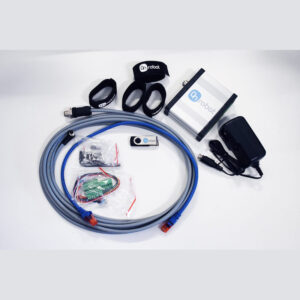
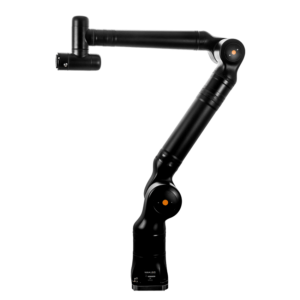
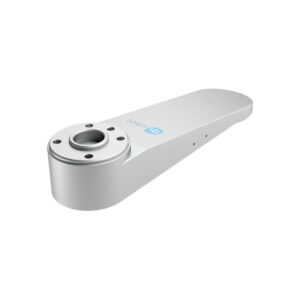
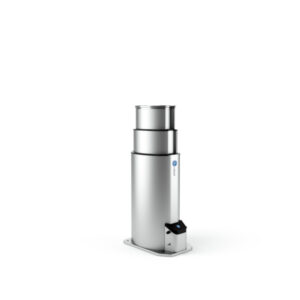
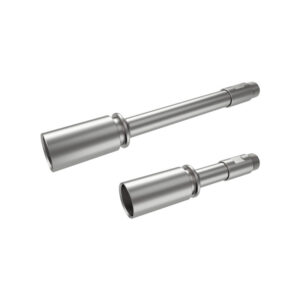
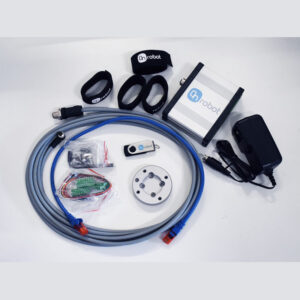
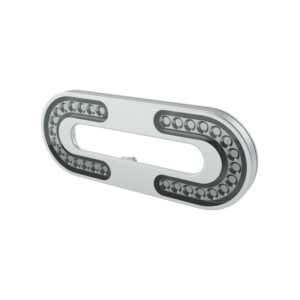
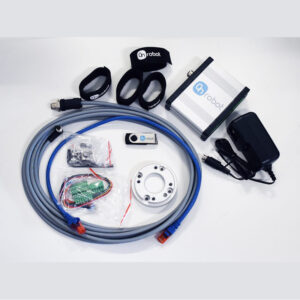
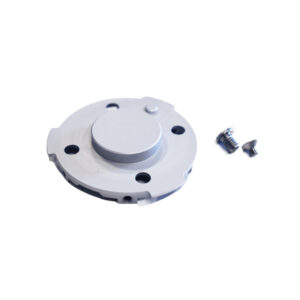
The Automation and Robotics category collects industrial robotics systems and automation equipment designed to perform tasks such as material handling, precision gripping, sensing, motion control, and interfacing. It caters to industrial professionals seeking components like collaborative robots, robot end-effectors, motion controllers, sensors, human-machine interface panels, power supplies, and accessories for robotics applications.
This section of the marketplace features collaborative robots—robotic arms or units designed to work alongside humans. Equipment for robots including grippers, suction cups, vision systems, finger sets, brackets, robot elevators, extenders, and adapter flanges. Also included are signal conditioners, torque sensors, weighing and force sensors, encoders; motor controllers (stepper, DC, multi-axis); power supplies and rectifier modules; human-machine interface panels and digital displays; server rack cabinets (indoor and outdoor); and components for robot accessory kits and mounting hardware.
These automation and robotics products are used in industrial settings such as manufacturing lines, assembly cells, pick-and-place operations, and laboratory automation. Collaborative robots help in tasks where human interaction or safety is important, while grippers, suction tools, and adapters are employed for handling materials or parts. Sensors and encoders provide feedback for motion control, torque measurement, or force regulation. Power supplies, controllers, and HMIs support the control and monitoring of these systems in automation cells and robotic workstations. Secondary focus includes retrofitting existing machinery and integrating new modules into production networks.
At its core, the automation and robotics category encompasses electromechanical systems composed of robotic manipulators combined with control electronics, sensing, and interface devices. Key technical characteristics include payload capacity (how much load the robot or gripper can carry), reach or workspace, precision (repeatability and positioning accuracy), torque or force rating, speed, and environmental resistances such as IP rating, temperature range, and vibration tolerance. Controllers vary: stepper motor controllers for precise stepping motion; DC motor controllers for simple continuous rotation; multi-axis controllers for coordinated movements in multiple directions.
Sensors such as force sensors, torque sensors, encoders, and weighing sensors provide feedback to motion control loops and safety systems. Human-machine interface panels and digital displays allow operators to monitor system status; power supplies and rectifier modules deliver appropriate voltage, current, and stability. Common variations exist in robot accessories—flange adapters, suction cup kits, lighting kits—that affect the end-effector functionality. Compliance considerations may include CE marking, safety standards like ISO 10218 for industrial robots or ISO/TS 15066 for collaborative robots. Selection should account for the intended application’s load, speed, environmental factors, compatibility with control protocols, mounting constraints, and required sensor feedback.
MEMIDOS is a global B2B platform where industrial buyers procure automation and robotics equipment directly from manufacturers and verified suppliers without intermediaries. The platform uses secure, escrow-based payment handling: funds are held until shipment conditions are fulfilled, ensuring protection for buyers and reliability for suppliers. By eliminating middle men, MEMIDOS supports more efficient procurement and competitive pricing. Industrial purchasers gain access to a broad range of high-quality components—from collaborative robots to controllers, sensors, power supplies, and accessories—simplifying international sourcing and increasing transparency in procurement.
English
Български (Bulgarian)
Hrvatski (Croatian)
Čeština (Czech)
Dansk (Danish)
Nederlands (Dutch)
Suomi (Finnish)
Français (French)
Deutsch (German)
Ελληνικά (Greek)
Magyar (Hungarian)
Italiano (Italian)
Norsk bokmål (Norwegian Bokmål)
Polski (Polish)
Português (Portuguese (Portugal))
Română (Romanian)
Русский (Russian)
Español (Spanish)
Svenska (Swedish)
Türkçe (Turkish)