
Cart
No products in the cart.
 English
 Български (Bulgarian)
 Hrvatski (Croatian)
 Čeština (Czech)
 Dansk (Danish)
 Nederlands (Dutch)
 Suomi (Finnish)
 Français (French)
 Deutsch (German)
 Ελληνικά (Greek)
 Magyar (Hungarian)
 Italiano (Italian)
 Norsk bokmål (Norwegian Bokmål)
 Polski (Polish)
 Português (Portuguese (Portugal))
 Română (Romanian)
 Русский (Russian)
 Español (Spanish)
 Svenska (Swedish)
 Türkçe (Turkish)
Showing 17–22 of 22 resultsSorted by popularity
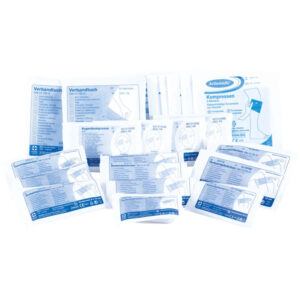
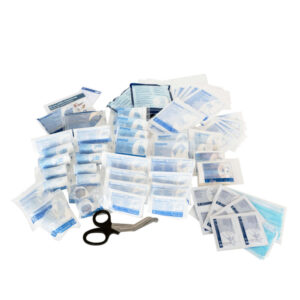
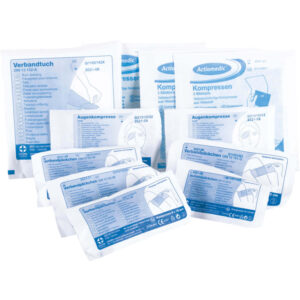
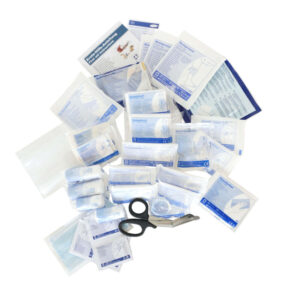
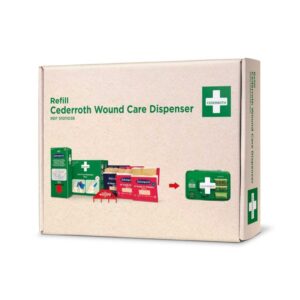
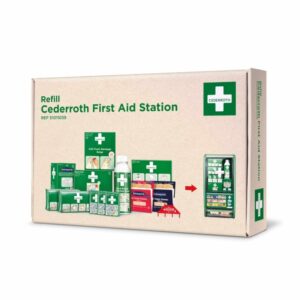
“First Aid Kit Refills” refers to replacement specialist supplies for industrial first aid kits and refillable dispensers. These include wound care items such as waterproof plasters, elastic bandages, detectable adhesives, and fingertip dressings. These refills are essential for maintaining safety compliance, ensuring readiness for on‐site emergencies, and meeting occupational health and safety regulations.
Within this category you will find refill kits for wound plasters in various formats: standard wound plaster refill kits, fingertip plaster refill kits, aquatic waterproof versions, elastic fabric plasters, detectable variants suitable for food‐safe or hygiene‐critical areas and textile or plastic materials. The offerings also include burn care items like gel bandages and wound cleaning wipe refills for dressing dispensers or first aid stations. Each product is designed to fit refillable dispensers or first aid cabinet configurations in industrial environments.
These refill products are typically deployed in manufacturing plants, commercial kitchens, laboratories, and construction sites where frequency of minor injuries necessitates fast access to wound protection. Detectable plasters are used in food processing and pharmaceutical industries to prevent foreign body contamination. Elastic or flexible plasters serve environments where abrasion and movement are common, such as in maintenance or assembly operations. Waterproof or aquatic styles suit operations with high moisture, plumbing, or outdoor exposure. Wound cleaning wipes are critical for maintaining aseptic dressing changes in healthcare or cleanroom settings.
First aid kit refills are consumable wound care components designed to restore or restock kits to compliance with safety standards. Key technical characteristics include plaster material (plastic, textile, PE film), flexibility, waterproofing, and whether they are detectable by metal‐detection equipment. Sizes vary depending on wound location: fingertip plasters (e.g. approx. 43 x 68 mm) through standard strips (e.g. 19 x 72 mm). For burn care, gel bandage dimensions are typically specified (e.g. 10 × 10 cm). Packaging must be individually wrapped to maintain sterility until use.
Regarding standards and certifications, many refills carry CE marking to conform to European safety and health directives. Detectable versions meet guidelines for hygiene and contamination prevention in sensitive industries. Common variations include waterproof vs breathable types, detectable vs non‐detectable, fabric vs plastic material, and elastic vs rigid backing. Selection considerations include environmental conditions (humidity, temperature), compatibility with existing dispensers, skin sensitivity (hypoallergenic materials), and required durability under movement. Capacity concerns are minimal since individual kits restock parts rather than bulk supplies, but inventory management demands enough units per refill kit to match expected usage.
MEMIDOS offers a global B2B marketplace where industrial buyers gain direct access to manufacturers and verified suppliers, eliminating intermediaries. This structure supports more efficient procurement and competitive pricing. Payment is handled via a secure escrow system: funds are held until delivery conditions—such as shipment—are met, ensuring buyer protection and supplier payment reliability. Buyers benefit from access to high‐quality industrial first aid supplies and transparency in sourcing, simplifying international procurement and supporting safety compliance across operations.
English
Български (Bulgarian)
Hrvatski (Croatian)
Čeština (Czech)
Dansk (Danish)
Nederlands (Dutch)
Suomi (Finnish)
Français (French)
Deutsch (German)
Ελληνικά (Greek)
Magyar (Hungarian)
Italiano (Italian)
Norsk bokmål (Norwegian Bokmål)
Polski (Polish)
Português (Portuguese (Portugal))
Română (Romanian)
Русский (Russian)
Español (Spanish)
Svenska (Swedish)
Türkçe (Turkish)