
Cart
No products in the cart.
 English
 Български (Bulgarian)
 Hrvatski (Croatian)
 Čeština (Czech)
 Dansk (Danish)
 Nederlands (Dutch)
 Suomi (Finnish)
 Français (French)
 Deutsch (German)
 Ελληνικά (Greek)
 Magyar (Hungarian)
 Italiano (Italian)
 Norsk bokmål (Norwegian Bokmål)
 Polski (Polish)
 Português (Portuguese (Portugal))
 Română (Romanian)
 Русский (Russian)
 Español (Spanish)
 Svenska (Swedish)
 Türkçe (Turkish)
Showing 17–18 of 18 resultsSorted by popularity
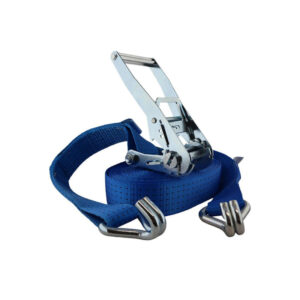
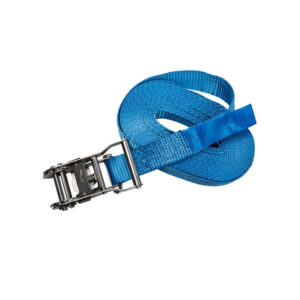
Lashing equipment refers to tools and accessories designed for securing loads during transport, such as cargo straps, ratchets, and fittings. These industrial products are essential for logistics, transport safety, freight handling, and load restraint operations. The category targets engineers, fleet operators, and procurement professionals sourcing quality lashing gear to prevent movement, damage, or instability when shipping goods.
Within this Lashing Equipment category you will find a variety of load restraint products. These include cargo straps with ratchets in different widths (such as 25 mm, 35 mm, 50 mm) and load-bearing capacities, strap winders—manual and electric—that help manage strap storage and tension, fitting components like lashing eyes for securing rails, and clips or accessories for organizing straps. Ratchet straps with J-hooks and various lengths appear alongside accessories such as multi-piece clip sets for strap width matching.
This equipment is used across transport, logistics, shipping, and warehousing to secure goods on trucks, trailers, pallet racks, or containers. Ratchet cargo straps prevent shifting during transit, while strap winders assist in tensioning and managing slack. Lashing eyes or fittings integrate with anchor rails to attach load restraints safely. Accessories such as clips help maintenance teams and operators keep restraint accessories organized and reduce wear. These products are commonly described as load securing, tie-down straps, and cargo protection.
Lashing equipment serves the primary function of holding cargo firmly during transportation, preventing displacement, vibration damage, or safety hazards. Key technical characteristics include strap width (e.g., 25 mm, 35 mm, 50 mm), webbing material (commonly polyester for UV and abrasion resistance), load ratings or utility/tensile load (shown in kilograms or daN), hook type (e.g., J-hooks), and the mechanical design of ratchets or fastening mechanisms. Fittings like lashing eyes must fit specific rail dimensions (e.g., opening size 13 × 61 mm) and provide rated load capacity, while clips should match strap width and material thickness.
Common variations include different strap widths and lengths, direct-lashing versus top-over-lashing capacity, manual versus electric winders, and fittings for various anchor systems. Standards such as EN 12195-2 and CE marking often apply for straps in Europe, ensuring safety and performance requirements are met. When selecting lashing gear, industrial buyers should consider the environment (e.g., temperature, moisture, salt spray), compatibility with trailer or vehicle anchor systems, expected load dynamic forces, and regulatory or certification compliance.
MEMIDOS serves as a global B2B platform connecting industrial buyers directly with verified manufacturers and suppliers of lashing equipment. Without intermediaries, procurement professionals benefit from more efficient acquisition and clearer cost structures. MEMIDOS handles payments via a secure escrow-based system, retaining funds until the order meets defined conditions such as shipment, which enhances protection for purchasers and ensures reliability for suppliers. Buyers gain transparent access to high-quality products globally, simplifying international sourcing and improving visibility in supply chains.
English
Български (Bulgarian)
Hrvatski (Croatian)
Čeština (Czech)
Dansk (Danish)
Nederlands (Dutch)
Suomi (Finnish)
Français (French)
Deutsch (German)
Ελληνικά (Greek)
Magyar (Hungarian)
Italiano (Italian)
Norsk bokmål (Norwegian Bokmål)
Polski (Polish)
Português (Portuguese (Portugal))
Română (Romanian)
Русский (Russian)
Español (Spanish)
Svenska (Swedish)
Türkçe (Turkish)